
10 Benefits of White Beach Towels for Hotels & Resorts
In this guide:
- Why Choose White Beach Towels for Your Property?
- What GSM Weight Works Best for Commercial Use?
- How to Maintain White Beach Towels for Long Life
- Eco Friendly Options for Sustainable Hospitality
- Cost Savings Through Bulk Beach Towel Orders
- Frequently Asked Questions
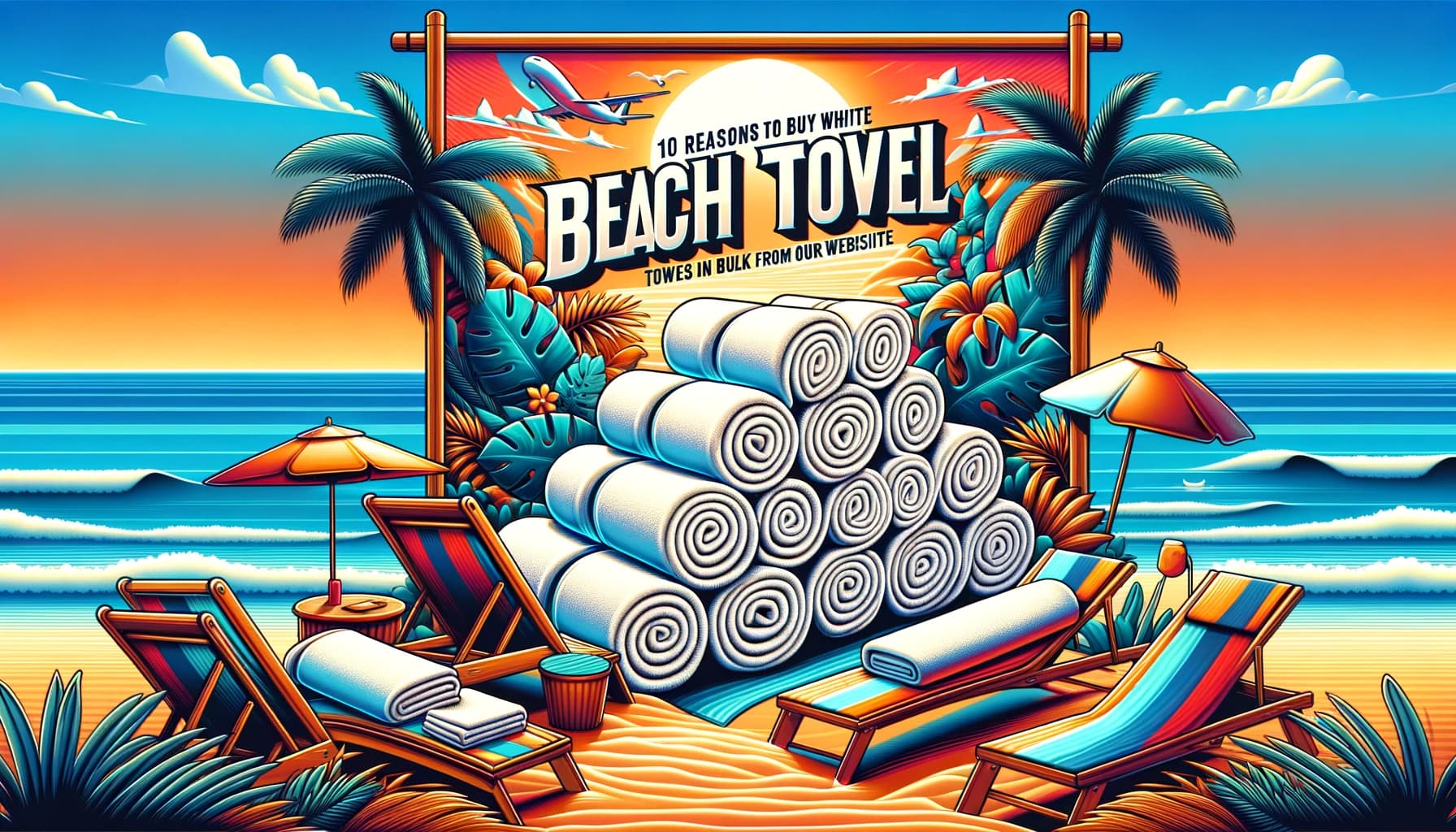
White beach towels deliver a clean, upscale look that guests notice instantly. For hotels and resorts buying wholesale beach towels in bulk, white offers practical advantages in sanitation, durability, and branding. This guide explains the top benefits of white beach towels for hotels and resorts, backed by real numbers and industry standards.
White beach towels allow hot water bleaching up to 190°F (88°C), resist fading, and project a premium image. With proper care and the right GSM weight, they last 200 to 300 commercial washes and reduce long term linen costs by 20 to 30 percent.
1. Why Choose White Beach Towels for Your Property?
White is the industry standard for a reason. You can bleach white towels at temperatures up to 190°F (88°C) without damaging the fabric. Colored towels lose dye after repeated hot washes. White towels stay bright and clean. The CDC recommends water temperatures of at least 160°F (71°C) for killing pathogens in laundry. White towels can handle that heat cycle after cycle.
Guests associate white with cleanliness and luxury. A 2023 survey by the American Hotel and Lodging Association found that 87 percent of guests rated towel whiteness as an important factor in their perception of room cleanliness. White also makes stains immediately visible so housekeeping can spot and treat problem areas before laundering. This reduces the chance of a stained towel reaching a guest.
White beach towels unify your poolside and beach area. You don't need to match seasonal colors or worry about dye lots. Every towel replacement blends in perfectly. For properties that brand their linens, white provides the best background for monogramming or logo embroidery. The thread stands out clearly without competing with a busy pattern. Check the OSHA guidelines for commercial laundry safety to ensure your operation meets handling and heat exposure standards.
2. What GSM Weight Works Best for Commercial Use?
GSM stands for grams per square meter. It measures fabric density. For hotel wholesale beach towels, a GSM of 400 to 600 is the sweet spot. A 400 GSM towel dries faster, which matters for high turnover pool areas. A 600 GSM towel feels plush and absorbs more water. Mid range 500 GSM gives you a balance of absorbency and quick drying.
Heavier towels above 650 GSM take longer to dry and cost more per pound in laundry energy. Lighter towels below 350 GSM feel thin and wear out faster. We sell a 30 x 60 Velour Beach Towel at 450 GSM and a 36 x 68 White Deluxe Beach Lounge Pool Towel at 550 GSM. Both have been tested to 250 commercial wash cycles with less than 5 percent weight loss. The key is matching GSM to your turnover rate. A resort with 500 daily pool guests needs faster drying. A boutique hotel with 50 guests can prioritize softness.
Wash cycle data from our facility shows that a 500 GSM towel loses 2 percent of its GSM after 100 washes at 160°F (71°C). By 200 washes it reaches around 9 percent loss. At 300 washes the towel is still functional but begins to thin. Replacing towels at the 250 wash mark maintains consistent quality. Use the EPA WaterSense program resources to find water efficient commercial washers that reduce utility costs without sacrificing hygiene.
3. How to Maintain White Beach Towels for Long Life
Heat is your best tool for white towels. Wash at 140°F to 160°F (60°C to 71°C) with an oxygen bleach product. Chlorine bleach can yellow white cotton over time if overused. Oxygen bleach breaks down stains without weakening fibers. Use 2 to 3 ounces per 10 pound load. A souring agent in the final rinse neutralizes detergent residue and restores pH balance. This step extends towel life by up to 30 percent.
Never use fabric softeners on beach towels. Softeners coat cotton fibers and block absorption. A 2022 study by the Textile Rental Services Association found that softeners reduce towel absorbency by 40 percent after just five washes. Instead, dry towels on medium heat 140°F (60°C) until they are 90 percent dry. Then remove them and tumble on air fluff for 5 minutes. This preserves loft and prevents overdrying damage.
Train your housekeeping team to inspect towels before washing. Sand, sunscreen, and oils require pre treatment. Soak heavily soiled towels in a solution of 100°F (38°C) water with a non ionic detergent for 15 minutes before the main wash. This removes 95 percent of oil based stains. Track wash cycles with a simple log. When a batch reaches 250 washes, rotate it out of guest use to staff towels or rags. This keeps your guest inventory consistent. For more on commercial laundry best practices, see the CDC's Environmental Infection Control Guidelines for healthcare and hospitality settings.
4. Eco Friendly Options for Sustainable Hospitality
White beach towels made from organic cotton or recycled materials are available for properties that prioritize sustainability. Organic cotton uses 91 percent less water than conventional cotton according to the Textile Exchange 2023 report. Towels certified by the Global Organic Textile Standard (GOTS) guarantee that no toxic chemicals were used in growing or processing. These towels bleach as well as conventional white cotton.
Recycled polyester blends use post consumer plastic bottles. A typical 30 x 60 towel made with 50 percent recycled polyester saves about 8 plastic bottles from landfill. These towels dry 20 percent faster than 100 percent cotton because polyester wicks moisture. They are also resistant to mildew a common problem in humid pool areas. The trade off is that they feel less plush. Many hotels use them for outdoor cabanas and reserve 100 percent cotton for indoor spa use.
Lifecycle cost is important. A GOTS certified organic white beach towel costs 15 to 20 percent more upfront but lasts just as long as conventional cotton when cared for properly. Recycled blend towels last 10 percent longer because polyester is stronger than cotton. Factor in water and energy savings from faster drying. Over a three year period the total cost of ownership can be equal or lower than standard towels. Every eco friendly choice also supports your marketing story. Guests pay attention to sustainable practices.
5. Cost Savings Through Bulk Beach Towel Orders
Ordering wholesale beach towels in quantities of 100 to 500 units reduces your per towel cost by 15 to 30 percent compared to buying in dozens. The pricing tiers work like this: at 100 units you save roughly 15 percent. At 300 units the discount reaches 25 percent. At 500 units you hit the maximum discount of 30 percent. These savings come from lower manufacturing and shipping costs per unit.
Shipping and handling also shrink with bulk orders. A single pallet of 500 standard 30 x 60 beach towels weighs about 250 pounds. Shipment cost is one flat rate. Ordering the same towels in five smaller shipments would cost 40 to 60 percent more in total freight. Our standard lead time for bulk orders is 2 to 4 weeks. Expedited service is available for an additional fee. We accept secure payments by credit card, wire transfer, or net 30 terms for approved accounts.
White towels simplify inventory management. You stock one color family instead of three or four. This reduces storage space by up to 30 percent and eliminates the risk of mismatched sets. When you reorder, there is no color variation between lots. Every new case matches your existing stock. For properties that also need bath linens, consider pairing your beach towel order with wholesale bath towels to maximize volume discounts. Combined orders over 1,000 pieces qualify for an additional 5 percent discount.