
Towels are one of the largest recurring linen expenses for any hotel, spa, salon, or gym, and most of that spending is decided by two things: what you buy and how you wash it. Get either wrong and you are reordering twice a year. Here are the five questions our team hears most from buyers.
Buy commercial-grade towels by lbs/dz and size, inspect cotton, yarn, and stitching before you commit, calculate cost per use instead of sticker price, wash warm with measured detergent, and pick white or black based on how you launder.
What GSM range should hotels, spas, and salons look for when ordering bath towels in bulk, and how does weight affect both guest experience and durability?
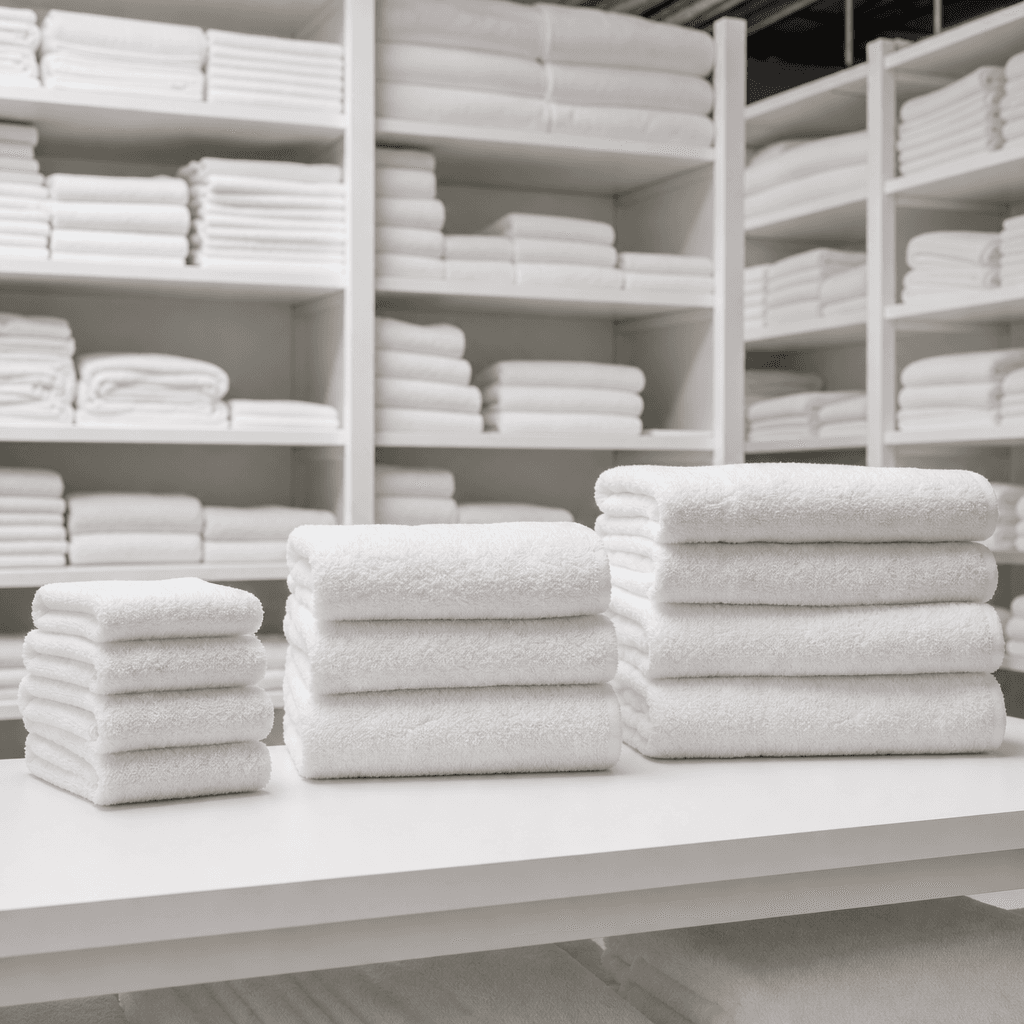
Short answer: stop shopping by GSM. Retail brands quote it, but in wholesale we weigh towels by the dozen. Weight is stated in lbs/dz alongside the size, because a heavier dozen at the same dimensions means more cotton in every towel. An economy 20x40 bath towel runs about 4 lbs/dz. A premium 24x50 runs about 10 lbs/dz. GSM only makes sense for specialty items, such as 900 GSM microfiber or specific 240 and 320 GSM products.
Weight shapes both the guest's first impression and the life of the towel. A 4 lbs/dz towel is light, dries quickly, and suits budget motels, pool decks, and high-turnover gyms where towels walk out the door. Our motel grade is typically an 86% cotton, 14% polyester blend, which holds up to hot dryers. A 10 lbs/dz towel feels dense and absorbent, which is what guests expect at a full-service hotel or day spa. It also takes longer to dry, so factor in dryer time and energy.
Match the size and weight to the job. Standard bath towels start at 20x40 and go up to 27x54. Bath sheets at 30x60 suit spa and resort guests. Pair them with wholesale hand towels at 16x27 and washcloths at 12x12 so the whole set feels consistent. Mixing weights within one room set is a mistake we see often, and guests notice it immediately.
How can purchasing managers evaluate towel quality before placing a large wholesale order, including cotton type, yarn construction, and stitching?
Order a sample dozen and test it before you commit to hundreds of units. Start with the fiber. Commercial towels are 100% cotton for most hospitality uses, and the best ones use ring spun cotton. People search "what is ring spun cotton towels" for good reason. Ring spinning twists and thins the fibers into a finer, stronger yarn, which gives a softer hand and fewer loose fibers that become lint. Open-end yarns cost less but shed more and wear faster.
Next, check the pile and the weight. Pull the towel taut and hold it to the light. If you can see through the loops, the pile is thin. Weigh a dozen against the spec. A dozen sold as 10 lbs/dz that comes in noticeably under is a red flag. Then look at the stitching. The hem should have tight, even stitches with no skipped sections, and the border should lie flat. Tug the corners hard. Weak hems and loose selvage edges are where commercial towels fail first, long before the terry itself wears out.
Finally, run a wash test. Launder one sample ten times, then measure it. Shrinkage over about 3 to 5 percent, heavy lint, or a loss of absorbency tells you what year two will look like. We build our bulk towels for 200+ wash cycles. Consumer retail towels usually give out between 50 and 100. A sample test is the cheapest insurance in your whole purchasing process. For background on how fiber quality affects fabric performance, Cotton Incorporated publishes useful fiber research.
How does bulk pricing work for wholesale towels, and what is the true cost per use once laundering and replacement cycles are factored in?
Our pricing is tiered, and the tiers are published. Order 5 units and you get 5% off. At 10 units it is 10%, and at 15 or more units it is 15%. Most commercial buyers place orders of 100 to 500+ units, so they land in the top tier from day one. When you compare wholesale bath towels or any listing of hotel towels wholesale, check that the quoted price reflects those tiers and that the weight per dozen is stated. A cheap price on an unspecified weight tells you nothing.
The sticker price is the smallest part of the real cost. Here is an example with round numbers. Say a commercial bath towel costs $4.00 and you get the 15% tier, so you pay $3.40. Over 200 washes, that is 1.7 cents per use. A consumer-grade towel at $3.00 that fails at 75 washes costs 4 cents per use. Now add laundering. If your wash, dry, and labor run about 10 cents per towel, the commercial towel costs roughly 11.7 cents per use against 14 cents for the cheap one. Your own laundering cost will differ, but the gap holds.
The replacement cycle matters even more than the math suggests. The most common mistake we see is a buyer using consumer-grade towels in a commercial setting and replacing them every 3 to 6 months. Commercial grade typically lasts 2 to 3 years. Every replacement means a reorder, receiving, restocking, and a stretch of mismatched towels on the floor. Standard orders ship in 2 to 3 business days, and custom or embroidered orders take 7 to 10, so plan reorders before your par levels run low.
What commercial laundering practices extend towel life, including water temperature, detergent choice, and how to prevent fading, stiffness, and lint buildup?
Start with temperature, since "best temperature to wash towels" is the question we hear most. For white cotton towels in a commercial setting, a main wash around 140 to 160 degrees Fahrenheit cleans body oils and sanitizes effectively. Colored towels do better at 100 to 120 degrees to protect dye. Blended motel-grade towels with polyester should stay at the lower end of the range, because high heat can set oils into the fibers. If you handle healthcare or spa linens, check your local health code for required temperatures and times.
Detergent is where most stiffness and dullness comes from. Too much detergent leaves residue that coats the loops, so towels feel rough and stop absorbing. Measure doses by load weight and water hardness, not by habit. Skip fabric softener entirely. It leaves a waxy film that kills absorbency, and a towel that cannot absorb is a failed towel. Use an oxygen-based booster or a sour rinse to bring the pH down and keep the cotton soft. Bleach is fine on whites in a diluted, measured dose, but overdosing weakens cotton and shortens its life.
Lint buildup is mostly a process issue. Do not overload washers, since towels need room to agitate and rinse. Wash towels separately from linens that shed or snag. Clean dryer lint screens every shift. Over-drying is another culprit, because bone-dry cotton at high heat becomes brittle and sheds more. Pull towels while they still hold a trace of moisture. Rotate your stock evenly, too. If the top of the shelf gets all the use, those towels age out in a year while the bottom of the stack stays new.
How should salons, gyms, and short-term rental hosts choose between towel colors and fabric blends to hide stains, resist bleach damage, and reduce replacement costs?
White is still the top choice for hotels and salons. It can be bleached, it shows cleanliness, and guests read it as fresh. For salons that use hair color, though, white towels pick up stains quickly. Black is growing fast in salons because it hides dye, and it makes sense if you expect color transfer. The trade-off is that black cannot take bleach. Dye fades with every wash and bleach spots show immediately, so use color-safe detergent and cooler water for black towels.
Gyms and short-term rental hosts have different needs. A gym sees sweat, sunscreen, and equipment cleaner, so darker towels in gray or navy hide marks but still launder well at lower temperatures. Airbnb hosts usually want white, because guests expect it and a quick bleach cycle between stays resets the set. Keep at least three full sets per bed so you can turn over a booking without waiting on the dryer. Buying bulk towels in a single color and weight keeps the stack interchangeable.
For blends, the choice is simple. A 100% cotton towel offers the best absorbency and softness and handles bleach better than most dyed alternatives. An 86% cotton, 14% polyester blend costs less, dries faster, and resists shrinking, which suits motels, gyms, and high-volume rentals. The blend is a little less absorbent, but it often lasts longer in rough industrial dryers. Buyers searching for bulk bath towels should decide first how they launder, then choose color and fiber to match. Our 59 years of family-owned wholesale experience, serving over 10,000 B2B clients, keep pointing to the same lesson: the right towel for your laundry routine always outlasts the cheapest one.
Frequently Asked Questions
- What GSM range should hotels, spas, and salons look for when ordering bath towels in bulk, and how does weight affect both guest experience and durability?
- Wholesale towels are specified by lbs/dz and size, not GSM. An economy 20x40 runs about 4 lbs/dz, while a premium 24x50 runs about 10 lbs/dz. Heavier towels feel plusher and last longer but take more time to dry.
- How can purchasing managers evaluate towel quality before placing a large wholesale order, including cotton type, yarn construction, and stitching?
- Order a sample dozen and check the weight against the spec. Look for ring spun cotton, a dense pile, and tight, even hems. Wash the sample ten times to see shrinkage, lint, and absorbency before you buy in volume.
- How does bulk pricing work for wholesale towels, and what is the true cost per use once laundering and replacement cycles are factored in?
- Our tiers give 5% off at 5 units, 10% at 10 units, and 15% at 15 or more. Divide the towel price by expected washes, then add your laundering cost. Commercial grade at 200+ washes usually beats consumer towels that fail at 50 to 100.
- What commercial laundering practices extend towel life, including water temperature, detergent choice, and how to prevent fading, stiffness, and lint buildup?
- Wash whites at 140 to 160 degrees Fahrenheit and colors at 100 to 120. Measure detergent, skip fabric softener, and do not overload washers. Pull towels from the dryer before they are bone dry to protect the fibers.
- How should salons, gyms, and short-term rental hosts choose between towel colors and fabric blends to hide stains, resist bleach damage, and reduce replacement costs?
- Choose white if you bleach, and black if you need to hide hair dye and can launder without bleach. Use 100% cotton for absorbency and bleach tolerance. Use an 86% cotton, 14% polyester blend for lower cost and faster drying.