
Shop Rags Wholesale Buyer Guide: Bulk Specs, Cost and Care
Shop rags look like the cheapest line on a purchase order, which is exactly why they get bought badly. The wrong rag smears grease, sheds lint onto a finished surface, or turns to loose threads in a month, and the replacement cost lands on your budget. These are five questions we hear from salon owners, spa operators, hotel housekeeping directors, and shop managers, answered from 59 years of wholesale linen work at Towel Depot.
Buy reclaimed 100% cotton surgical huck rags by weight and size, check edges and weave before you commit, price them per wash cycle instead of per rag, launder them hot without softener, and choose flat-weave cotton over microfiber whenever grease or lint is the problem.
What GSM should wholesale buyers look for when choosing shop rags for salons, spas, and hotel housekeeping?
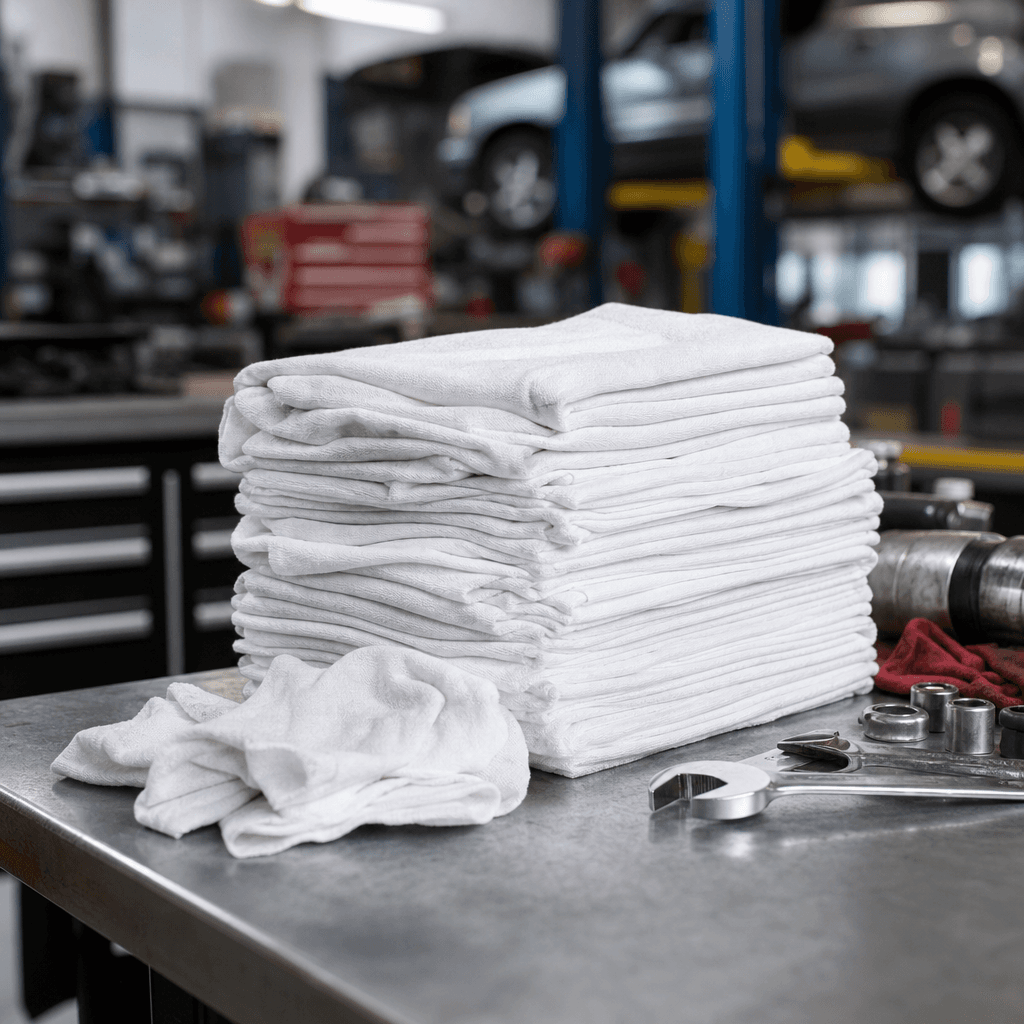
Short answer: stop chasing a density number. Shop rags are not sold that way, and we do not quote it. Our rags are sold by weight and by size, and those two specs tell you far more about what you are buying. Reclaimed 100% cotton surgical huck comes in 10 lb bags, 50 lb bags, and 1000 lb bales for large operations. Weight is how you size the order, and size is how you match the rag to the job.
For individual huck towels, we stock 14x14 and 15x26, in blue or white. The 14x14 is the workhorse for salon stations, wiping tools, buffing mirrors, and quick spill control at a spa front desk. The 15x26 gives you enough length to fold in thirds and still have a clean face, which housekeeping teams like for glass and bathroom fixtures. When you need more coverage, our 16x16 and 24x36 utility rags handle equipment wipe-downs, treatment room surfaces, and bigger spills.
Color matters more than people expect. White is the top choice for salons and hotels because you can bleach it and a clean white rag shows the guest that you are clean. Blue works well for shops and back-of-house, where you want rags visibly separate from guest linens. Mixing colors by task is a cheap way to stop a glass rag from becoming a floor rag. If you are also stocking terry for hands and faces, our wholesale hand towels cover that side so your rags stay on rag duty.
How do you tell a durable shop rag from one that will fall apart after a few commercial wash cycles?
Start with the origin. Reclaimed surgical huck has already lived a hard life in healthcare linens programs, where cotton is washed hot and often. A fabric that survived that and still has body is a better bet than a new rag that has never been tested. Commercial grade textiles are built for 200+ wash cycles. Consumer retail goods tend to give out at 50 to 100. That gap is the whole story behind most rag complaints.
When a sample lands on your desk, check three things. First, hold it up to a window. A tight, even weave with no thin patches holds up, while see-through zones wear into holes first. Second, look at the edges. Clean, finished hems resist unraveling, and cut edges shed threads into your wash and onto your surfaces. Third, pull the fabric diagonally and see whether it distorts. Good huck springs back, and tired cotton stays stretched.
Then do the test that costs you nothing. Take a few rags from the sample, run them through your actual wash formula ten times, and compare them with a fresh one. You are looking for lint in the dryer trap, fraying at the corners, and any loss of absorbency. We see one mistake constantly: buyers purchase consumer-grade towels for commercial use and end up replacing them every 3 to 6 months. Commercial grade stock typically runs 2 to 3 years in the same job. The purchase order looks cheaper until the third reorder.
What is the real cost per use of bulk shop rags, and when does buying in larger case quantities actually save money?
Divide the price by the wash cycles, not by the rag. Here is a simple example with round numbers. A rag that costs $1.00 and survives 200 cycles runs half a cent per use. A cheaper rag at $0.60 that quits after 75 cycles runs 0.8 of a cent per use, and that is before you count the labor of sorting, bagging, and restocking replacements. The rag with the higher sticker price wins every time once you track real service life. Your own laundry cost per pound sits on top of both figures, and it is identical either way, so a rag that dies early makes you pay for washing it more often per year of service.
Quantity is where buying bulk shop rags starts to pay. Our tier pricing is transparent: 5% off at 5 units, 10% at 10 units, and 15% at 15 or more. A unit here is a bag, so a salon group ordering for several locations can reach the 15% tier without much strain. Hotel and cruise line buyers placing 100 to 500+ unit orders will notice the difference on the invoice immediately. Our minimums and pricing are built for real commercial volume, not for a one-off shopper.
Be honest about storage before you jump to a 1000 lb bale. A bale is the right call for a big laundry operation or a multi-site industrial buyer with dedicated floor space and a steady burn rate. A small spa that buys a bale will have rags sitting on a shelf for a year, which ties up cash and floor area for no gain. Most boutique operations do best on 10 lb or 50 lb bags, reordered on a schedule. Standard orders ship in 2 to 3 business days, so you do not have to stockpile out of fear. If you are comparing quotes for bulk shop towels or shop rags bulk from other sources, ask for the weight, the count, and whether the cotton is reclaimed surgical or mixed blend. Those three answers explain most price gaps.
How should hospitality and wellness businesses launder shop rags to extend their life and prevent lint, staining, and odor?
Start with the question we get most: can I wash oily rags in a washing machine? For cosmetic oils, massage oil, and kitchen grease, yes, with a hot wash and a good detergent. For rags soaked in solvents, gasoline, or other flammable liquids, no. Those belong in an approved oily waste container until a licensed service picks them up. OSHA's flammable liquids rule, 29 CFR 1910.106, covers how oily waste must be handled. Check it with your safety lead before you decide where a borderline rag goes.
For the rags that do go in the machine, the formula is simple. Wash them hot with a strong detergent and run an extra rinse if the load was heavy with oil. Skip fabric softener completely. Softener coats cotton fibers, kills absorbency, and holds odor. Use chlorine bleach only on white rags and keep it off blue. Wash rags apart from terry towels and robes, because a rag load of loose terry lint defeats the purpose of buying lint-free huck. Do not overload the drum. Rags need room to flex and rinse, and a packed machine leaves detergent and soil behind.
Odor almost always comes from storage, not from the wash. A damp rag left in a bin overnight starts to sour within a day, and no detergent fully fixes that. Use ventilated bins, empty them at the end of every shift, and dry rags completely before folding. Dry them on a medium to high setting and clean the lint trap every load so you are not baking old lint back into clean cloth. Staining on white rags is easier to manage than most people think, because white can be bleached back, and that is one more reason it is our top seller for salons and hotels.
Which fabric is best for shop rags in a commercial setting: cotton terry, microfiber, or flat-weave, and how do they compare for absorbency and lifespan?
The terry cloth vs microfiber debate misses the third option, which is usually the right one. Flat-weave cotton huck, the reclaimed surgical type we sell, is lint-free, absorbs quickly, releases soil in the wash, and has no synthetic fibers to smear grease across a surface. Microfiber is excellent for dusting and for streak-free glass, but it is synthetic. It pushes oil around rather than lifting it, it can melt or glaze under high dryer heat, and it traps odor when it meets softener or body oils. On a greasy bench, microfiber looks clean and leaves a film.
Cotton terry sits in the middle. The loops hold a lot of liquid, which is why terry is the standard for hands, bodies, and spa service. As a shop rag it is bulky, slow to dry, and it sheds lint, especially in its first dozen washes. That loose lint is trouble on a freshly polished finish, a dark chair, or a treatment surface. Terry earns its place in guest-facing roles. Our wholesale hand towels are the better pick for that work, while huck handles the cleaning.
On lifespan, properly handled commercial cotton gives you 200+ cycles, and huck is the easiest of the three to keep in that range because it tolerates hot water and bleach on white. Microfiber lasts a long time in cool, gentle washes but fails fast when treated like cotton. Our advice to buyers is to assign by task. Use huck for grease, polish, and anything that cannot carry lint. Use microfiber for glass and dusting only. Use terry where a guest touches it. Matching fabric to task is cheaper than buying one rag and asking it to do everything.