
Mechanic Rags in Bulk: Buyer's Guide to Shop Rags & Pricing
Mechanic rags look like the cheapest line item on a purchase order. They are also the one that quietly eats budget when the wrong cloth smears grease, sheds lint, or falls apart after a few washes. Buying them well comes down to fiber, size, and per-pound math, and most buyers only learn that after a bad first order.
Buy reclaimed 100% cotton surgical huck rags by weight in 10 lb bags, 50 lb bags, or 1000 lb bales, and judge suppliers on fiber, size, and wash life rather than the lowest sticker price.
Which GSM and fabric weight should purchasing managers choose when buying mechanic rags in bulk for salons, gyms, and spas?
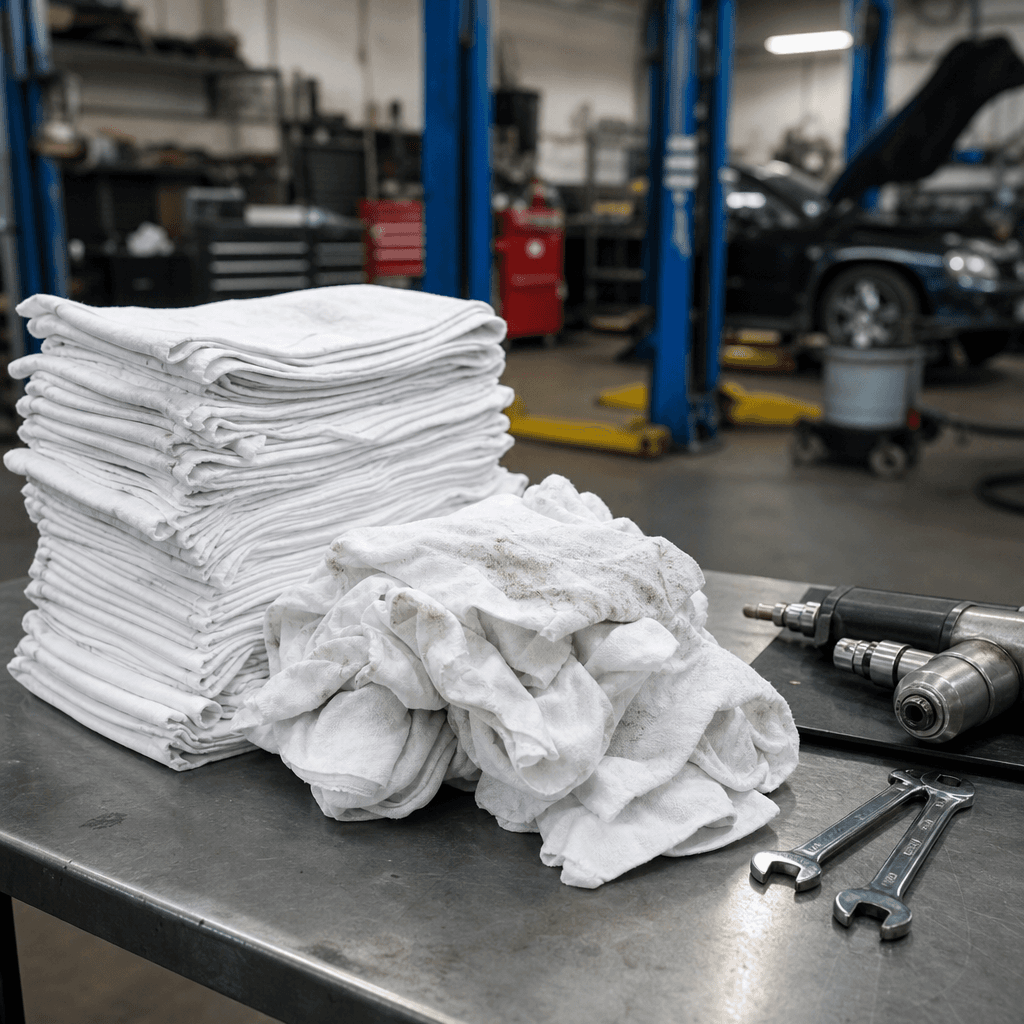
Ignore GSM. It is a terry towel measurement, and shop rags do not work that way. Mechanic rags are sold by weight and by size, and that is how you should compare quotes. Our bulk shop rags are reclaimed 100% cotton surgical huck rags, sold in 10 lb bags, 50 lb bags, or 1000 lb bales for large operations. Huck is a flat, tight weave with a slightly raised surface. It does not have a pile, so a thickness number tells you very little about how it performs.
Size is where you should spend your thinking time. Individual huck towels come in 14x14 or 15x26, in blue or white. We also stock 16x16 and 24x36 utility rags. The 14x14 is the everyday wiper for tools, mirrors, clippers, and equipment handles. The 15x26 covers a wider surface, which suits spa treatment tables, salon stations, and gym bench wipe-downs. The 24x36 is for floor spills and wrapping parts. Buyers who order one size for every job usually end up with rags that are too big for detail work and too small for cleanup.
Fiber matters more than any weight figure. Reclaimed surgical cotton gives you the highest absorbency you can buy in a rag, it is lint-free, and it has no synthetic fibers that smear grease or oil across a surface instead of lifting it. Salons and spas care about the lint part, because a rag that leaves fuzz on glass or chrome gets rejected by staff within a week. White is the usual pick for salons and spas because it bleaches and shows cleanliness. Blue helps when you need to keep rags visibly separate from guest-facing linens.
How do you tell a quality mechanic rag from a cheap one before you place a wholesale order?
Start with the fiber content. Ask for it in writing. A real surgical huck rag is 100% cotton, and you can test a sample in thirty seconds. Drop a few drops of water on it and watch. Cotton pulls the water in right away. A polyester blend lets it bead and roll. Then wipe a smear of motor oil across a clean steel surface. Cotton lifts it. Blends push it around and leave a film. That film is exactly what a mechanic or a salon tech will complain about.
Next, check the lint. Rub a dry rag on a dark surface or a piece of glass and look at what it leaves. Cheap mixed-bag rags often come from cut-up T-shirts, sweatshirts, and fleece, which shed heavily and carry seams, buttons, and printed graphics. Those are fine for a one-time garage cleanup. They are a poor fit for a spa that wipes down mirrors or a gym that wipes equipment pads all day. Consistent sizing is another tell. If a bag holds a random mix of shapes, your staff will waste time sorting, and you cannot estimate how many wipes you are getting per pound.
Finally, look at the edges and the condition of the weave. Hemmed or cleanly finished edges and an intact weave last longer than ragged cut edges that unravel in the first wash. We see a common mistake across all our linen categories: buyers purchase consumer-grade goods for commercial use and replace them every three to six months, when commercial-grade product would run two to three years. Mechanic shop rags follow the same logic. Ask the supplier where the material comes from, whether it is sorted, and whether you can see a physical sample before committing to a bale.
What does bulk pricing for mechanic rags typically look like, and how do per-pound and per-piece costs compare at volume?
Buying towels by the pound sounds loose, but it is the most honest way to price a reclaimed rag. You pay for fiber, not packaging or branding. At the small end, a 10 lb bag suits a salon or a single-bay shop that wants to test the product. A 50 lb bag fits a busy gym, a multi-chair salon, or a hotel maintenance department. A 1000 lb bale makes sense for fleet garages, large facilities, and distributors, and it carries the lowest price per pound because you are buying in volume and cutting down on handling.
Per-piece pricing applies when you order individual huck towels in a fixed size like 14x14 or 15x26. Here the cost per rag is predictable, which helps when you budget by department. The trade-off is that piece pricing runs higher than weight pricing, because uniform sizing and counting add labor. For high-volume wiping where a rag is used and discarded or laundered until it frays, per-pound buying wins. For guest-facing or client-facing uses where consistency matters, per-piece is usually worth the premium. Many of our clients do both, buying shop rags bulk for back-of-house work and sized huck towels for the front.
When you compare quotes, work out the cost per usable wipe, not the cost per pound. A cheap bag full of thin, shedding scraps can deliver fewer effective wipes than a pricier bag of intact huck rags. Check shipping too. A 1000 lb bale moves freight, so delivered cost matters more than the product price. On our standard orders, we offer transparent volume tiers of 5% off at 5 units, 10% at 10 units, and 15% at 15 or more units, and standard orders ship in 2 to 3 business days. We are family-owned and have been in wholesale linen since 1967, so the numbers you see are the numbers you pay. We are not a marketplace or a dropshipper.
How should hotels and Airbnb hosts care for mechanic rags to extend their lifespan and keep them from contaminating guest linens?
Separation comes first. Mechanic rags and guest linens should never share a bin, a cart, or a wash load. Hotels that run housekeeping and engineering out of the same laundry room need a physical system, not a verbal one. Color helps. Blue rags for maintenance and white towels for guest areas makes mix-ups easy to spot at a glance. For hosts managing vacation rental linens, a lidded bin in the utility closet, clearly labeled for cleaning cloths, does the same job at a smaller scale.
Wash them apart, every time. Rags carrying oil, solvent, or grease should go through a dedicated machine, or at minimum a dedicated load with extra rinse, and never alongside sheets or bath towels. Use a hot wash with a degreasing detergent and avoid fabric softener, which coats cotton fibers and cuts absorbency fast. Rags soaked with flammable solvents are a safety issue before they are a laundry issue. OSHA's rule on flammable liquids, 29 CFR 1910.106, covers oily waste storage, so check your local requirements before you let soiled rags pile up in a closet.
Dry them completely before storage. Damp rags in a sealed bin go sour within days. For lighter housekeeping duties like wiping bathroom fixtures or windows, a clean white huck towel works well and can be bleached when it stains. For hand and face use, step up to wholesale hand towels instead of a rag. Keeping those roles distinct is the cheapest contamination control you can buy, and it protects your reviews as well as your linens.
How many wash cycles can a mechanic rag withstand, and what durability factors should buyers weigh when comparing suppliers?
Here is the honest answer. Commercial-grade linen from Towel Depot is built for 200 or more wash cycles, compared with 50 to 100 cycles for consumer retail goods. A reclaimed rag is a different animal. It has already lived a prior life in a surgical setting, so you should not expect it to match a new commercial towel. Treat a reclaimed huck rag as a working cloth that earns its keep through absorbency and lint-free performance, and expect it to be laundered repeatedly until it frays or stains past use. Rags used for oily work often retire sooner than rags used for glass and fixtures.
Durability comes down to a few things you can check. The first is fiber. Pure cotton tolerates hot water and bleach, while blends degrade faster and hold odor. The second is weave condition. Rags with thin spots, holes, or broken threads will tear in the first few cycles, so ask what grading the supplier applies before bagging. The third is how you launder. Overloading the machine, skipping rinse cycles, and using harsh chlorine on colored rags all shorten life. White rags tolerate bleach. Blue rags need more care to hold their shade.
When you compare suppliers, ask direct questions. Where does the material come from, and how is it sorted? Can you see a sample before you commit to a bale? What are the minimums, and how fast does it ship? B2B buyers place orders of 100 to 500 units or more, and your supplier should have pricing and minimums built for that volume. We serve more than 10,000 business clients, including hotels, salons, spas, gyms, hospitals, restaurants, Airbnbs, and cruise lines, and after 59 years the pattern is consistent. The buyers who save the most are the ones who match the rag to the job and ask about lifespan before they ask about price.
Frequently Asked Questions
- Which GSM and fabric weight should purchasing managers choose when buying mechanic rags in bulk for salons, gyms, and spas?
- Skip GSM, because shop rags are sold by weight and size. Choose reclaimed 100% cotton surgical huck rags in 10 lb bags, 50 lb bags, or 1000 lb bales, then match size to the job: 14x14 or 15x26 huck towels, or 16x16 and 24x36 utility rags.
- How do you tell a quality mechanic rag from a cheap one before you place a wholesale order?
- Confirm 100% cotton in writing, then test a sample with water, oil, and a dark surface to check absorbency and lint. Consistent sizing and intact edges are the other signs of a rag worth buying.
- What does bulk pricing for mechanic rags typically look like, and how do per-pound and per-piece costs compare at volume?
- Per-pound pricing drops as you move from 10 lb bags to 50 lb bags to 1000 lb bales, and it is usually cheaper than per-piece pricing for back-of-house wiping. Per-piece suits sized huck towels where consistency matters, and our tier discounts run 5% at 5 units, 10% at 10, and 15% at 15 or more.
- How should hotels and Airbnb hosts care for mechanic rags to extend their lifespan and keep them from contaminating guest linens?
- Keep rags in separate bins, use blue rags for maintenance and white towels for guests, and wash them in dedicated hot loads with degreasing detergent and no fabric softener. Dry fully before storage and follow OSHA guidance on oily waste.
- How many wash cycles can a mechanic rag withstand, and what durability factors should buyers weigh when comparing suppliers?
- Commercial-grade linen is built for 200 or more cycles, while reclaimed rags are working cloths used until they fray. Weigh fiber content, weave condition, sorting standards, and your own laundry practice before comparing price.