
Healthcare Linens Wholesale: A Buyer's Guide to Bulk Orders
Healthcare linens take more punishment than almost anything else a facility buys. They get washed hot, washed often, and bleached hard, and a bad purchase shows up in your laundry budget within a year. We have supplied 10,000+ B2B clients since 1967, and the buyers who save money are the ones who ask these five questions before the PO goes out.
Specify by weave grade and fiber blend, test samples before you commit, calculate cost per wash instead of price per piece, follow hot-water laundering rules, and expect 200+ cycles from true commercial goods.
What GSM range should purchasing managers specify for healthcare linens such as patient towels, washcloths, and bath blankets?
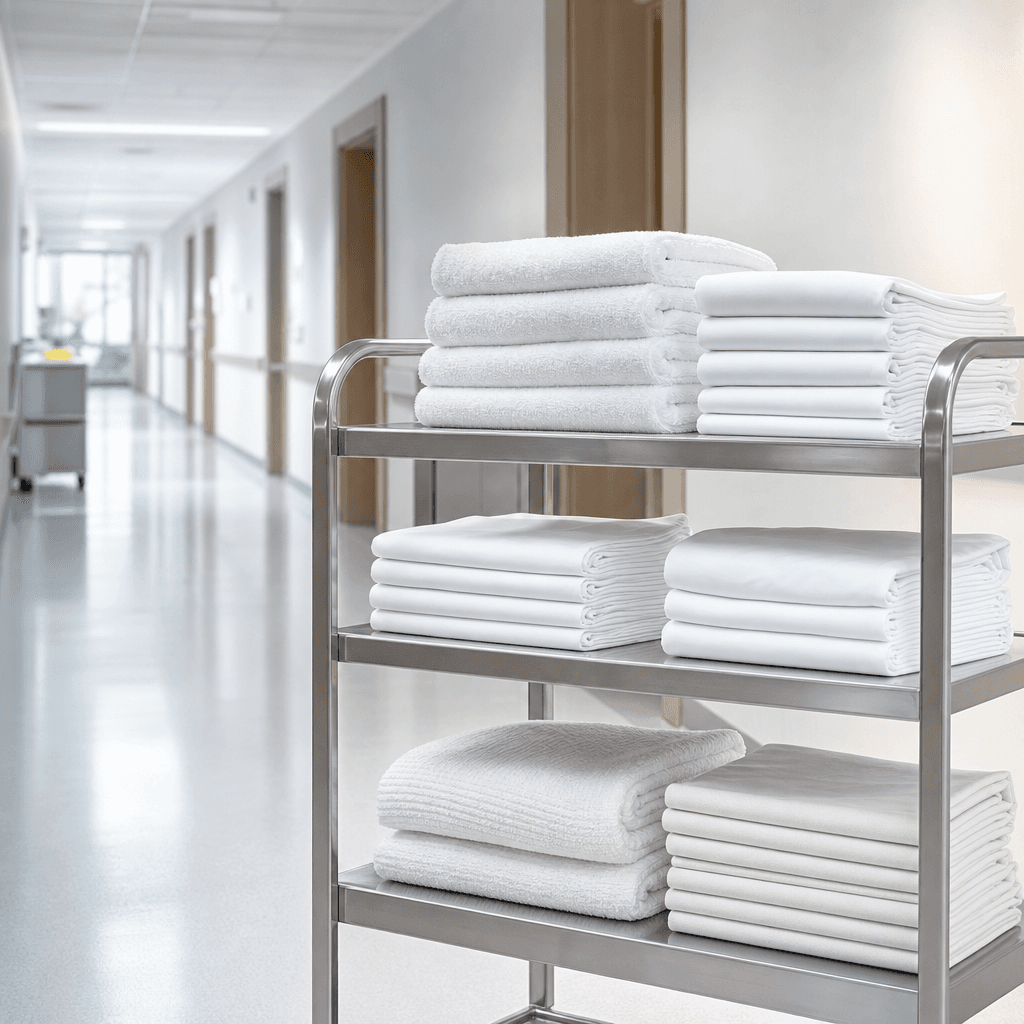
Here is the honest answer from 59 years of wholesale work: a GSM number alone will mislead you. A heavy towel woven loose dries slowly, sheds lint, and wears out at the hems. A tighter, slightly lighter one can outlast it by a year. For terry products like patient towels and washcloths, compare the listed weight on each product page against other items of the same size and construction, then confirm with a physical sample. Do not buy off a weight figure in a spreadsheet.
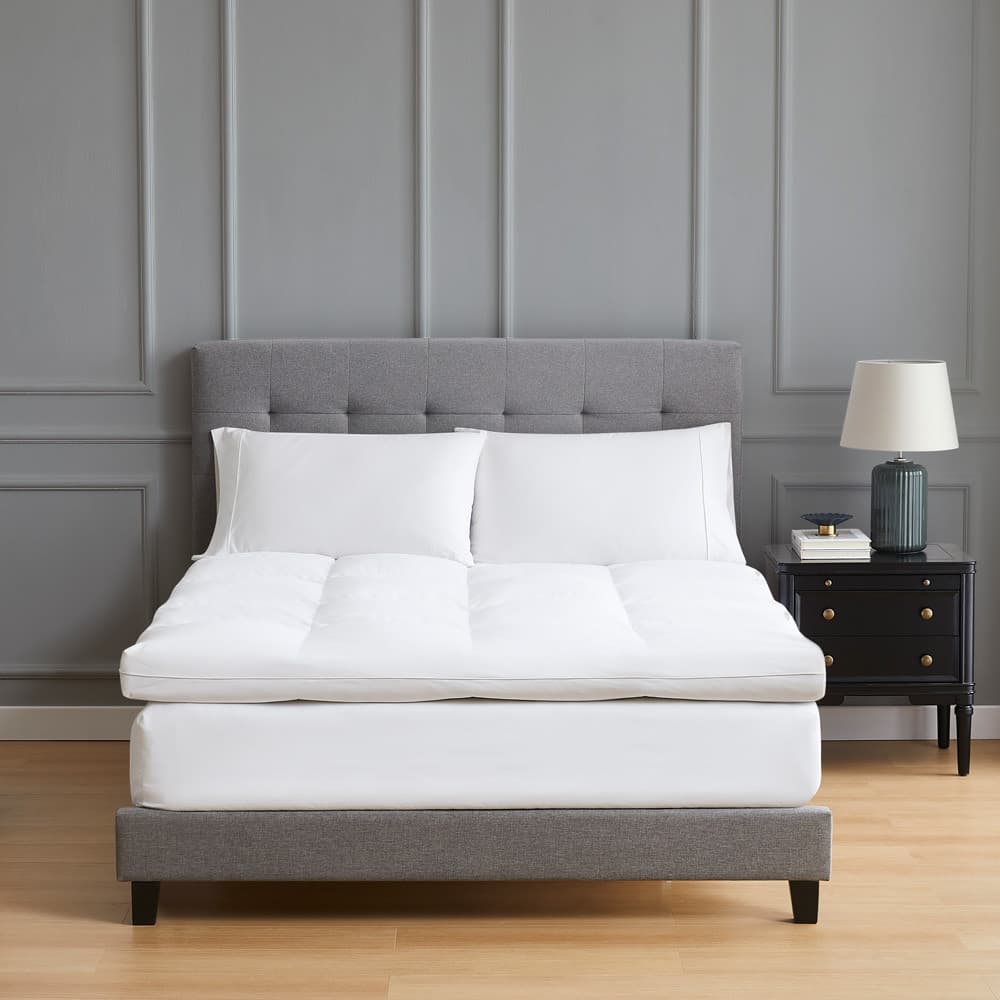
For flat goods we specify differently. Bed linens are graded by T-number. T-130 is the economy tier, a 60% Cotton 40% Polyester blend that is the most common hotel and facility grade. T-180 is standard, T-200 is mid-premium, and T-250 and T-300 are premium, with T-300 available in a No Iron Finish or mercerized. We say T-200 grade, not a thread count claim, because the grade tells you how the whole fabric performs, not one measurement. For clinics and medical spas, T-180 to T-200 covers most exam table and treatment bed use. Sizes matter too. A twin is 39x80, a full 54x80, a queen 60x80, and a king 78x80. Specify fitted depth, such as 39x80x12, and measure your actual mattress first, because a sheet that pops off a thick pad costs staff time every shift.
Microfiber is the one place we quote GSM directly, at 900 GSM. It is dense and quick to absorb, which suits cleaning and wrap applications, but it is not the choice for goods that need heavy bleaching. For softer items, wholesale washcloths are where buyers ask about the best washcloths for body use. Pick a smooth, fine-loop cotton or cotton blend for skin contact, and keep rougher textures for housekeeping. As for what hospital blankets are made of, most are cotton thermal or waffle weave, or a cotton and polyester blend, because those survive repeated hot washing. Our wholesale blankets follow the same logic.
How do you evaluate the quality of healthcare linens before placing a bulk order, from fiber content to hemming and stitch density?
Start with the fiber label. A 60% Cotton 40% Polyester blend gives you shrink resistance, faster drying, and lower wrinkle, which is why it dominates hospital and hotel sheet programs. Higher cotton content feels better on skin and absorbs more, which is why it leads for towels. Be wary of any product that will not state its blend. If a supplier cannot tell you what is in the fabric, they probably do not know, and that usually means a marketplace reseller rather than a mill-connected wholesaler. We are family-owned and we buy direct, so we can answer that question on any item.
Next, look at the edges. Hems fail first. Flip a towel or sheet over and inspect the stitching along the border. You want even, tight stitches with no skipped sections and no loose thread tails. Compare two samples side by side and count stitches along an inch of each. The tighter count wins, because a looser hem unravels in the washer's agitation and starts a run. Check the corners of fitted sheets for reinforced stitching, since that is where elastic pulls hardest. Then check the weave itself by holding the fabric up to a light. Thin, see-through patches in a T-130 are normal for the economy tier, but they should be even, not blotchy.
The best test is the cheapest one. Order samples and wash them ten times at your actual laundry settings, with your detergent and your bleach. Measure shrinkage, check for pilling, and see whether the color holds. Hospital towels in particular should come out flat, absorbent, and free of lint. A sample that looks fine out of the bag and falls apart by cycle ten has saved you from a 300-unit mistake. Buyers who skip this step are the same ones who call us six months later.
What is the true cost per use of healthcare linens, and how do bulk pricing tiers change the math for spas, clinics, and hotels with medical wellness services?
Price per piece is the number everyone looks at and the least useful one. Cost per use is what counts. Here is an illustration with made-up round prices, not a quote. A consumer-grade towel at $4.00 that fails at 75 washes costs about 5.3 cents per use. A commercial towel at $6.00 that lasts 200 washes costs 3 cents per use. The cheaper towel is the more expensive one. And that math ignores labor, because every replacement cycle means reordering, receiving, and tagging new stock.
The most common mistake we see is buyers purchasing consumer-grade towels for commercial use. They replace them every 3 to 6 months. Facilities running commercial-grade goods replace them every 2 to 3 years. Consumer retail towels typically fail at 50 to 100 cycles, and commercial-grade product is built for 200+. For spa towels bulk buyers, that gap is the entire budget conversation, and it is why a medical wellness wing inside a hotel should not share a linen spec with the gift shop's beach towels.
Tier pricing then moves the number again. Our volume discounts are transparent: 5% at 5 units, 10% at 10 units, and 15% at 15+ units. Most of our B2B buyers place orders of 100 to 500+ units, so our minimums and tiers are built for real commercial volume. Take that $6.00 towel at the 15% tier. It drops to $5.10, and at 200 washes the cost falls to about 2.55 cents per use. Add timing. Standard orders ship in 2 to 3 business days, and custom or embroidered work takes 7 to 10 days, so plan embroidered clinic logos into your par-level schedule rather than discovering the lead time during a stockout.
How should healthcare linens be laundered to stay hygienic and last longer, including wash temperatures, detergent choices, and bleach tolerance?
Hygiene standards come first. The CDC's healthcare laundry guidance describes hot-water washing at a minimum of 160°F for 25 minutes, or lower-temperature cycles that rely on chemical disinfection when the detergent and bleach are matched correctly. OSHA's bloodborne pathogens standard also covers how soiled linen is bagged and handled before it ever reaches the machine. Know which rule your facility follows, because your wash formula, and the fabric you buy to survive it, depends on that answer.
Fabric choice then follows from the formula. White towels are the top choice for salons and hotels because they bleach cleanly and show cleanliness at a glance. Black towels are growing in salons because they hide hair dye, but they cannot take chlorine bleach without fading and spotting. Buyers searching for bleach proof salon towels wholesale are usually trying to solve exactly that conflict. The practical answer is to separate your stock. Keep white for anything that needs disinfecting with bleach, and run dark color-dyed towels for dye-prone services with an oxygen-based product instead. Do not assume a dyed towel is bleach safe unless the product page says so.
Detergent and finishing habits decide how long goods last. Use a properly dosed alkaline detergent and rinse thoroughly, because leftover residue stiffens terry and traps odors. Skip fabric softener on towels. It coats the fibers and cuts absorbency, which is a nasty surprise on a patient towel that should be drying skin. Avoid overloading the washer, since crowded loads do not rinse well and wear hems. In the dryer, high heat is fine for 60/40 poly-cotton sheets but over-drying cotton terry makes it brittle. Pull items while they still hold a trace of moisture and they will last noticeably longer.
How many wash cycles should you expect from healthcare linens, and which fabric blends and weaves hold up best to commercial laundering?
Plan on 200+ cycles from properly built commercial goods, against 50 to 100 for consumer retail. That is the spec we build our healthcare linens range around. Real life lands below the ceiling if your wash formula is aggressive, so treat 200 as a target, not a promise. Facilities that track it find the pattern quickly. Linens do not fail at one moment. They go thin, then gray, then the hems start to open.
Blend and weave drive the result. For sheets, a 60% Cotton 40% Polyester blend at T-180 or T-200 is the workhorse because the polyester holds shape and the weave resists the abrasion that kills softer goods. T-250 and T-300 feel better and are the right call where patients or guests notice, but a tighter premium weave in a mercerized or No Iron Finish costs more upfront, so reserve it for settings where comfort is part of the service. For towels and blankets, tightly looped cotton and cotton-rich blends outlast loose, fluffy construction. Hospital towels get judged on absorbency after the fiftieth wash, not the first, so test for that.
Finally, manage the rotation. We suggest buying to three par levels, one in use, one in the laundry, one on the shelf, so no single item takes every wash. Mark order dates on the stock log, and retire pieces when they thin out rather than waiting for failure in front of a patient. A facility that does this and buys commercial grade typically reorders every 2 to 3 years, not every 3 to 6 months. That is the whole case for buying from a wholesaler that has been doing this since 1967.
Frequently Asked Questions
- What GSM range should purchasing managers specify for healthcare linens such as patient towels, washcloths, and bath blankets?
- Do not rely on GSM alone for terry goods. Compare listed weights within the same size, then confirm with a sample. For sheets, specify by T-grade, T-180 to T-200 for most clinics, and use 900 GSM only when you are talking about microfiber.
- How do you evaluate the quality of healthcare linens before placing a bulk order, from fiber content to hemming and stitch density?
- Confirm the fiber blend in writing, inspect hems for even, tight stitching, and compare stitch counts across samples. Then wash samples ten times at your own settings and check shrinkage, pilling, and color.
- What is the true cost per use of healthcare linens, and how do bulk pricing tiers change the math for spas, clinics, and hotels with medical wellness services?
- Divide the unit price by expected washes. Commercial goods built for 200+ cycles usually beat consumer towels that fail at 50 to 100. Our tiers of 5% at 5 units, 10% at 10, and 15% at 15+ lower that figure further.
- How should healthcare linens be laundered to stay hygienic and last longer, including wash temperatures, detergent choices, and bleach tolerance?
- Follow CDC guidance, which includes hot-water washing at 160°F for 25 minutes, or a validated low-temperature chemical cycle. Use white goods where you need bleach, skip fabric softener on towels, and avoid over-drying.
- How many wash cycles should you expect from healthcare linens, and which fabric blends and weaves hold up best to commercial laundering?
- Expect 200+ cycles from commercial-grade goods. A 60% Cotton 40% Polyester blend at T-180 to T-200 is the most durable sheet choice, and tight-loop cotton terry holds up best for towels. Rotate stock across three par levels to spread the wear.