
Bulk Towels Buyer's Guide for Hotels, Spas, Salons & Gyms
Buying bulk towels is not the same as buying a lot of retail towels. One wrong spec on a 500-unit order and you are reordering twice a year. Below are five questions we hear from hotel, spa, salon and gym buyers, answered the way we would answer them across a desk.
[TLDR]TLDR: Match towel weight and size to the job, test construction before you commit, use the 5, 10 and 15 percent volume tiers, choose cotton or microfiber by use case, and wash warm with less detergent to reach 200+ cycles.[/TLDR]
What GSM should hotels, spas, and salons look for when buying bulk towels for each use case?
Short answer: ignore GSM on standard terry and shop by size and weight per dozen. That is how mills and commercial laundries have specified towels for decades, and it is how we have sold them since 1967. An economy 20x40 bath towel runs about 4 lbs/dz. A premium 24x50 runs about 10 lbs/dz. That gap is the difference between a towel that feels thin after a month and one that still feels full after a year of weekly laundering. GSM only makes sense for specialty items like 900 GSM microfiber.
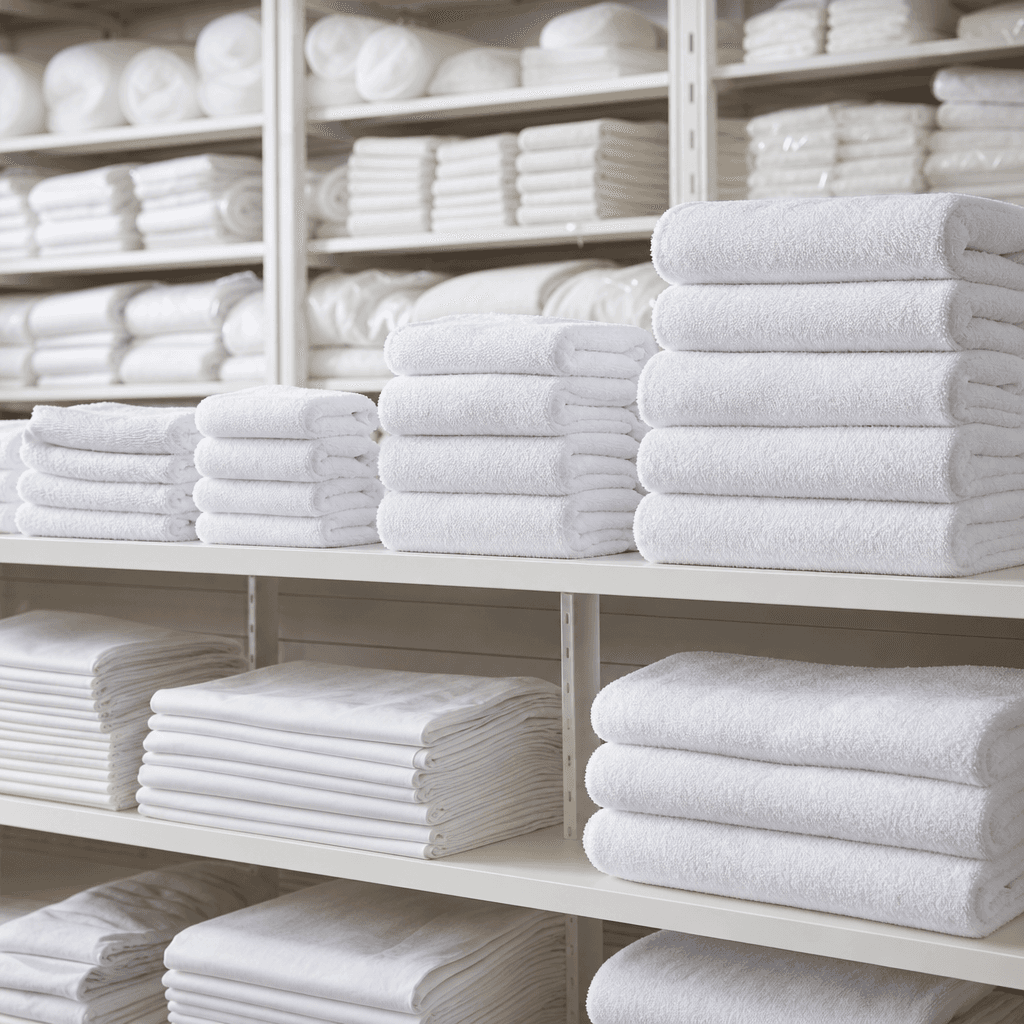
For hotels, the weight you pick should follow your star level. Budget and motel properties do well with lighter bath towels, and many choose the 86% cotton 14% polyester blend because the polyester helps the towel hold up in high-heat dryers. Midscale and upscale properties should look at 24x50 through 27x54 in 100% cotton at the heavier end of the range. Guests judge a hotel by the bath towel in the first thirty seconds, and a search for hotel towels bulk will show you plenty of lookalikes. Weigh the sample before you believe the listing.
Spas and salons buy differently. Spas typically stock 30x60 bath sheets for treatment tables and wraps, plus 12x12 washcloths. Salons live on wholesale hand towels in the 16x27 size, and white is still the top choice because you can bleach it and clients can see it is clean. Black is growing fast in color services because it hides dye stains. Salons rarely need heavy weight on a hand towel. They need volume, so a mid-weight 16x27 you can afford to buy by the hundred usually beats a luxury one you ration.
How do you evaluate bulk towel quality before placing a large wholesale order?
Start with the label and the scale. Confirm the fiber content in writing, 100% cotton or 86/14 blend, then weigh a dozen of the sample size. If a supplier says a 24x50 is premium but the dozen comes in far under 10 lbs, you have your answer. Next, check the hems. Look for tight, even stitching with no skipped loops, and a dobby border that is flat rather than puckered. Weak hems are where commercial towels fail first, long before the terry wears out.
Then run your own test. Order a sample set and put it through at least ten wash and dry cycles in your actual laundry setup, not a gentle home machine. Measure before and after. Normal shrinkage is a small percentage in length, and you should plan for it when you pick size. Drop a corner in a bowl of water and time how fast it soaks through, then do it again after ten washes. Fresh towels often repel water because of finishing agents, so the second test tells you the truth. Count the lint in the dryer trap too. Heavy lint on early cycles means short fibers.
The most common mistake we see is a buyer who orders consumer-grade towels for commercial use because the photo looked right. Retail towels are built for 50 to 100 washes. Commercial-grade towels are built for 200 or more. The consumer towel gets replaced every 3 to 6 months, while commercial grade lasts 2 to 3 years. Our 10,000+ B2B clients include hospitals, cruise lines and restaurants, and none of them can afford to test that difference with a full order. Test with a sample first.
How much should a business expect to pay per towel when buying in bulk, and where are the real savings?
Price per towel tracks weight, because cotton is bought by the pound. A 4 lbs/dz economy 20x40 will always cost less than a 10 lbs/dz premium 24x50, so compare quotes on a per-pound or per-dozen basis, not by the sticker on a single piece. If two suppliers quote the same bath towel at different prices, check the lbs/dz first. Nine times out of ten the cheaper one is lighter. Anyone searching bulk towels wholesale should ask for weight and fiber content in the quote itself.
The first real saving is the volume tier. Our pricing is transparent: 5% off at 5 units, 10% at 10 units, and 15% at 15 or more. Most of our buyers place orders of 100 to 500+ units, so they sit in the top tier from the first order. Because we are a family-owned wholesaler and not a marketplace or dropshipper, the tier you see is the tier you get, with no surprise fees at checkout. Standard orders ship in 2 to 3 business days. Custom or embroidered work takes 7 to 10 days, so build that lead time into your reorder calendar.
The bigger saving is replacement cycle. If you replace consumer towels every 3 to 6 months and commercial towels every 2 to 3 years, you buy somewhere between four and twelve times as many towels over the same period. Even when the commercial towel costs noticeably more up front, the cost per wash is lower, and you stop paying for the labor of unpacking, tagging and rotating replacements. Run that math on your own par level before you chase the lowest unit price.
How should gyms and Airbnb hosts choose between cotton and microfiber towels for high-volume use?
The terry cloth vs microfiber question comes down to feel, drying time and laundry reality. Microfiber, especially in a 900 GSM weight, is light, packs small and dries quickly. That helps a gym that turns over hundreds of sweaty workouts a day and runs its dryers hard. It also grabs oil and sweat well. The tradeoff is hand feel. Members and guests tend to read cotton as nicer, and microfiber can feel slick to people who expect a plush towel after a shower.
For gyms, we usually suggest a split. Use 16x27 or 20x40 cotton for the locker room and shower area, where people expect a real towel, and stock microfiber for the floor, where towels are used to wipe equipment and dry off quickly. Economy cotton in the 86/14 blend suits a budget gym well, and its dry time is shorter than 100% cotton. Keep microfiber out of fabric softener and away from high heat, or it loses grip.
Airbnb hosts have a different problem. Turnover is fast, guests are not careful, and photos sell the listing. White 100% cotton in the 24x50 range reads clean and holds up to bleach between stays, and it is the backbone of our vacation rental linens for that reason. Hosts who outsource laundry often prefer a mid-weight cotton that dries in one cycle, since commercial laundries charge by the pound. Buy two to three full sets per bed so a late checkout never leaves you short.
What laundering practices keep bulk towels soft, absorbent, and durable across hundreds of wash cycles?
Detergent and softener cause more damage than heat or friction. Too much detergent leaves residue that stiffens terry and cuts absorbency. Fabric softener is worse, because it coats fibers with a waxy film so towels feel soft but stop drinking water. Skip it. Use the detergent amount your chemical rep specifies for the load weight, and run an extra rinse if towels come out dull. Every few months, a vinegar or commercial sour rinse can strip buildup from towels that have gone slick.
On the best temperature to wash towels, most commercial laundries run whites warm to hot, roughly 130 to 140°F, with a bleach-safe cycle. That range handles body oils and sanitizes well. Colored and black towels should go cooler and separately, with no chlorine bleach, which is why salons using black towels keep a dedicated load. For spas and salons handling soiled linen, review the OSHA bloodborne pathogens guidance for handling and laundering contaminated items. Do not overload machines. A washer packed past about three quarters full cannot rinse properly, and that is where the stiffness starts.
Dry towels until just dry, not bone dry. Over-drying at high heat shortens cotton fibers and makes hems brittle, and it is a frequent reason a towel that should last 200 cycles dies at 120. Fold or rotate stock so every towel sees the same number of washes, and retire any piece with frayed hems or thin patches. Treated this way, commercial-grade towels from Towel Depot routinely stay in service for 2 to 3 years. Treated badly, the best towel on the market ends up looking like retail after a season.
Frequently Asked Questions
- What GSM should hotels, spas, and salons look for when buying bulk towels for each use case?
- Standard towels are specified by size and lbs/dz, not GSM. An economy 20x40 runs about 4 lbs/dz and a premium 24x50 about 10 lbs/dz. Hotels choose by star level, spas add 30x60 bath sheets, and salons mostly need 16x27 hand towels in white or black.
- How do you evaluate bulk towel quality before placing a large wholesale order?
- Confirm fiber content, weigh a dozen, and inspect the hems. Then wash a sample set ten times and recheck size, absorbency and lint. Commercial-grade towels are built for 200+ cycles, while consumer towels fail at 50 to 100.
- How much should a business expect to pay per towel when buying in bulk, and where are the real savings?
- Price follows weight, so compare quotes by lbs/dz. Volume tiers give 5% off at 5 units, 10% at 10, and 15% at 15 or more. The larger saving is replacing commercial towels every 2 to 3 years instead of consumer towels every 3 to 6 months.
- How should gyms and Airbnb hosts choose between cotton and microfiber towels for high-volume use?
- Gyms do well with microfiber, around 900 GSM, for quick-drying floor use and cotton for locker rooms. Airbnb hosts should choose white 100% cotton for a clean look and bleach tolerance. Economy 86/14 blends suit tight budgets.
- What laundering practices keep bulk towels soft, absorbent, and durable across hundreds of wash cycles?
- Skip fabric softener, measure detergent by load weight, and wash whites warm to hot at roughly 130 to 140°F. Do not overload the washer, and dry until just dry. These habits help towels reach 200+ cycles.