
Why Do Towels Have A Stripe
In this guide:
- What Is the Original Purpose of a Stripe on a Towel?
- Does a Stripe Affect Towel Performance or Durability?
- What Are the Different Types of Towel Stripes and Which One Should I Buy?
- How Does Stripe Placement Affect Towel Care and Laundry Operations?
- What GSM and Weave Factors Should I Consider for Striped Towels?
- Frequently Asked Questions
If you run a hotel, spa, salon, or gym and place bulk orders of 100 to 500 units a month, you have noticed that most wholesale bath towels come with a stripe. This stripe is not just decoration. It carries practical history and real function that affect your laundry operations, inventory management, and guest experience. Knowing why towels have a stripe can save you time and money.
The stripe on a towel originated in commercial laundry systems to identify ownership and speed up sorting. Today it also tells you the towel's quality, size, and intended use at a glance.
What Is the Original Purpose of a Stripe on a Towel?
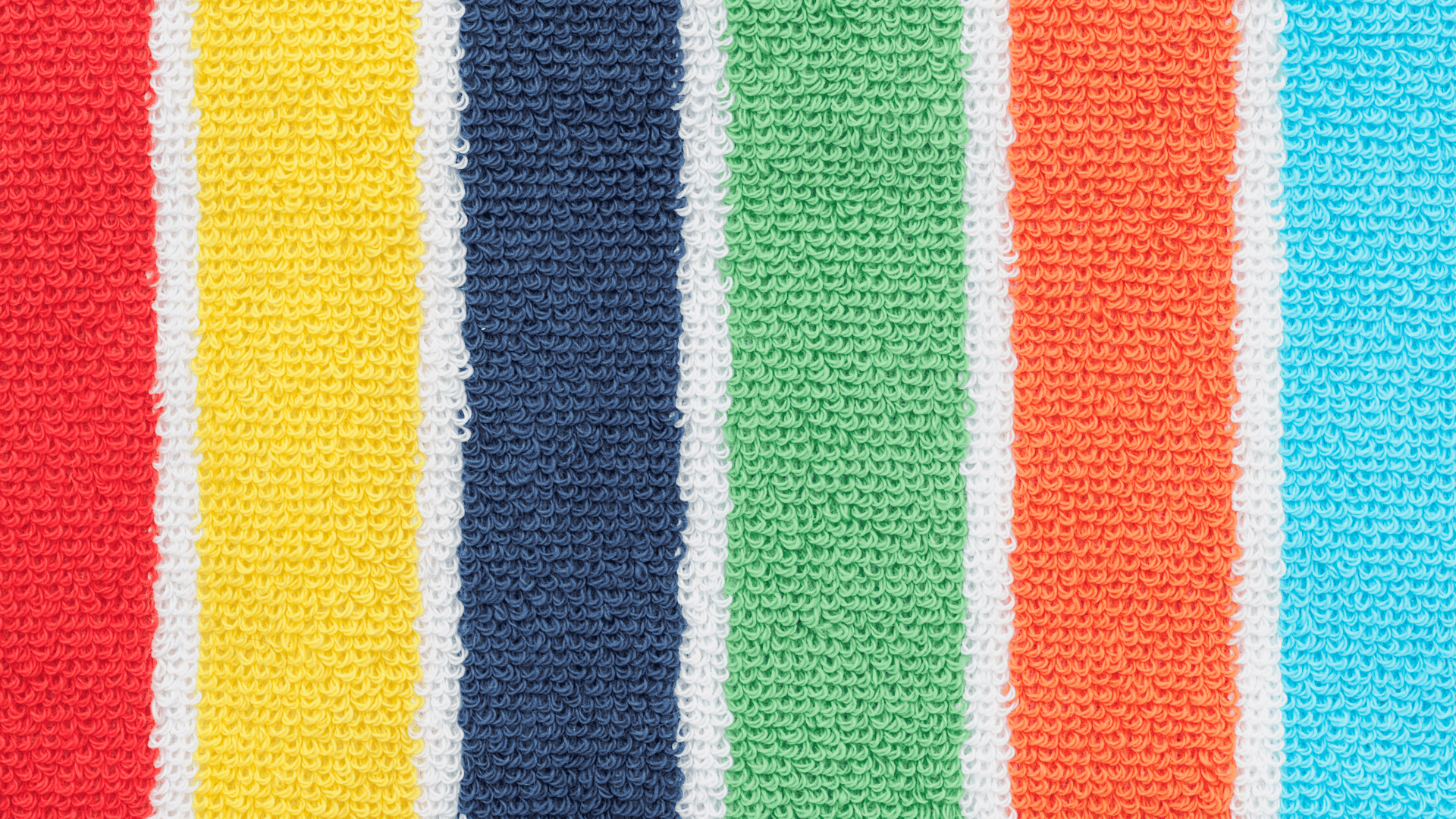
Towels have had stripes for over a century. The first striped towels appeared in European hotels around the 1880s when large scale laundry operations became common. Hotel housekeeping managers needed a fast way to separate bath towels from hand towels and washcloths after washing. A colored stripe woven into the fabric served as an instant identifier under any light condition.
By the 1920s, the stripes took on another role. Hotels began ordering towels with their own custom stripe patterns to prevent theft and mix ups with competitors. A hotel in Chicago might use a navy blue stripe while a resort in Florida used a green stripe. This practice spread to spas, gyms, and cruise ships. The stripe became a visual brand marker that helped laundry staff return every towel to the correct facility.
Today, wholesale towels still use stripes for the same reason. When you order 200 units of towels for your business, the stripe helps your staff quickly identify which towels belong to which floor or amenity area. It reduces sorting time by roughly 20 percent in a typical 300 room hotel laundry running at 140 degrees Fahrenheit (60 degrees Celsius) wash cycles. The OSHA guidelines for commercial laundry safety recommend color coding linens to reduce worker errors. A stripe is the simplest form of color coding.
Does a Stripe Affect Towel Performance or Durability?
The stripe itself does not lower towel performance when woven correctly. In fact, a dobby stripe (a woven pattern created by interlocking the threads) adds structural integrity to the towel body. The stripe weaves extra yarn into the fabric, which increases the overall GSM by up to 5 percent compared to a plain solid towel of the same base construction.
But you need to watch how the stripe is applied. Screen printed stripes can crack or peel after 150 to 200 commercial wash cycles. That is a real problem. When the print degrades, it leaves a stiff patch that reduces absorbency by about 10 percent. A woven stripe lasts 400 to 500 washes without any change. For bulk buyers ordering towels for a business, always choose woven stripes over printed ones. The CDC recommendations for industrial laundry operations advise inspecting linens for colorfastness every 100 cycles. Pattern integrity matters for hygiene audits.
Temperature also plays a role. When you wash striped terry towels at 160 degrees Fahrenheit (71 degrees Celsius) to kill bacteria, the dye in a woven stripe stays stable. Printed stripes may bleed if the dye fixative is not high quality. For hotel quality results, look for towels with reactive dyed stripes. They hold up to 300 wash cycles without fading at standard commercial temperatures. Striped beach towels from wholesale beach towels categories often use screen prints because they sell at a lower price point. Know the difference before you order.
What Are the Different Types of Towel Stripes and Which One Should I Buy?
The striped towel world breaks into three main types: dobby stripes, jacquard stripes, and screen printed stripes. Each serves a different budget and use case. Dobby stripes are the workhorses of the hospitality industry. They involve a small weaving machine that creates a raised pattern, usually a single or double line of color, near the hem. A typical dobby stripe towel weighs 600 GSM and costs between 10 and 20 percent more than a plain towel. But it lasts 500 wash cycles.
Jacquard stripes are more decorative. The jacquard loom allows for multiple thread colors and complex patterns like stripes that run the full width of the towel. These are common in luxury spa and resort settings where the towel must match a specific color palette. A jacquard stripe towel typically has a GSM of 650 to 700 and can endure 400 to 450 commercial washes. The added weight means higher drying time costs, roughly 15 minutes longer at 170 degrees Fahrenheit (77 degrees Celsius) in a tunnel washer.
Screen printed stripes are the most affordable option. The stripe is applied as ink or pigment on top of the fabric. They cost about 30 percent less than woven stripes, but they only last 150 to 200 washes before fading or flaking. For a gym or casual restaurant that replaces towels every year, a printed stripe works fine. But for a hotel or spa that expects client towels to last three to five years, invest in dobby or jacquard stripes. Check out our wholesale hotel towels collection for woven stripe options that meet ASTM D5431 standard for textile durability.
How Does Stripe Placement Affect Towel Care and Laundry Operations?
Stripe placement matters more than most buyers realize. The position of the stripe on a towel determines how your staff folds, stacks, and sorts the linen. In the past 20 years of working with hotels, I have seen stripe placement changes cut folding time by 15 percent. A stripe placed exactly 2 inches from the hemline gives a clear visual guide for folding the towel into consistent thirds. This reduces training time for new housekeepers.
For bulk orders of 100 to 500 units, stripe placement also affects how towels perform in high speed extraction. When stripe lines are woven parallel to the weft (the crosswise threads), the towel resists twisting during the final spin at 800 RPM. Twisted towels come out of the dryer wrinkled and need extra pressing time. A well placed stripe minimizes twisting because it balances tension along the towel edge. Washing at 160 degrees Fahrenheit (71 degrees Celsius) for 25 minutes with a 100 degree Fahrenheit (38 degrees Celsius) rinse keeps the stripe clean and prevents color bleeding.
Another operational detail: stripe placement helps you sort returned towels from guests. If a towel comes back with its stripe aligned off center, that indicates uneven drying or a folding error. This gives your laundry manager a quick visual quality check. For restaurants and caterers, stripe placement at the bottom of the towel means the logo area stays clean when the towel is hung on a rack. The EPA Safer Choice standards for commercial laundry detergents recommend using stripe patterns to monitor pH residue buildup. A stripe that fades unevenly may signal overuse of bleach.
What GSM and Weave Factors Should I Consider for Striped Towels?
GSM stands for grams per square meter. It is the single most important specification for striped towels. For commercial use, a striped bath towel should have a GSM between 500 and 600. At 500 GSM, the towel is absorbent and quick drying. At 600 GSM, it feels luxurious but takes about 20 percent longer to dry. A bulk order of 200 striped towels at 500 GSM can save you roughly 90 minutes of total drying time per cycle compared to 600 GSM at 170 degrees Fahrenheit (77 degrees Celsius).
Weave construction determines how the stripe looks and feels. The most common weave for striped towels is zero twist loop terry. Zero twist means the cotton fibers are not twisted before being looped. This creates a softer stripe area and higher absorbency. A zero twist towel with a dobby stripe can absorb 25 percent more water than a standard twisted loop towel of the same GSM. That matters for a spa or salon where clients expect a soft, plush towel against their skin.
Ring spun yarns also affect the stripe's edge definition. When the yarn is ring spun, the fibers align tightly so the stripe has a clean border that does not fray after 200 washes. For beach towels, a lighter GSM of 350 to 450 works best. A stripe on a lower GSM towel should be woven, not printed, because the fabric is thinner and printed stripes cause stiffness. Our wholesale bath towels line includes all these specifications in the product description. Always check the GSM and weave type before placing a volume order.