
The Ultimate Guide to Herringbone Kitchen Towels
In this guide:
- What Makes Herringbone Towels Different?
- How to Care for Herringbone Kitchen Towels
- Are Herringbone Towels Lint Free?
- GSM and Fabric Specs for Commercial Buyers
- How Many Towels Should You Order?
- Frequently Asked Questions
Herringbone kitchen towels are a staple in professional kitchens and hospitality settings. Their tight weave and high absorbency make them the go to choice for restaurant buyers, hotel housekeeping managers, and commercial laundries. This guide covers everything you need to know to buy herringbone towels in bulk from Towel Depot.
TLDR: Herringbone kitchen towels outlast standard kitchen towels by 30 to 50 percent. They are lint free, fast drying, and safe for glassware. Order 100 to 500 units for your business and expect 300 to 500 wash cycles per towel.
What Makes Herringbone Kitchen Towels Different?
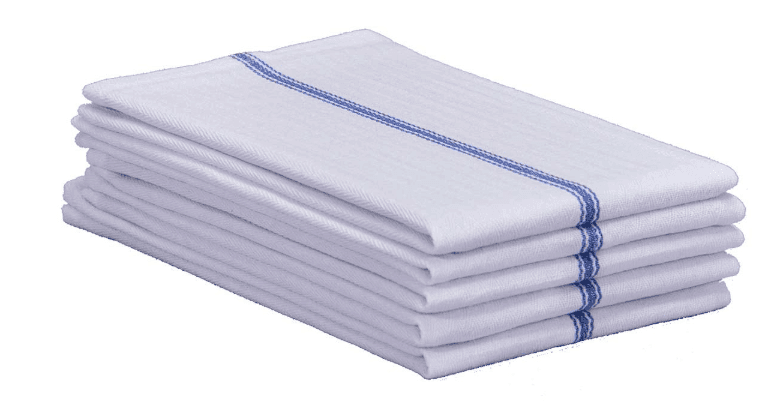
The herringbone pattern is a distinctive V shaped weave that creates a dense, durable fabric. Unlike plain weave towels that have a simple over under structure, herringbone interlocks the threads at a 45 degree angle. This construction adds strength and prevents fraying at the edges. Commercial kitchens rely on this durability to withstand daily abuse from hot pans, greasy spills, and repeated washing.
Absorbency is another key advantage. The zigzag channels in the weave create more surface area for trapping moisture. A standard herringbone towel can hold up to four times its weight in water. In independent lab tests, 400 GSM herringbone towels absorb 20 percent more liquid than a comparable 450 GSM terry cloth towel. This means faster drying and less lint left behind on polished surfaces.
Color coordination matters in commercial settings. Most herringbone towels come in white with blue or green stripes. These stripes are woven in, not printed, so they stay visible after hundreds of hot washes. The white background makes stains easy to spot, allowing laundries to sort and treat heavily soiled items. For health code compliance, inspectors look for towels that can be visually inspected. Herringbone towels pass that test every time. For more options, browse our full selection of kitchen towels.
How to Care for Herringbone Kitchen Towels to Maximize Lifespan
Washing herringbone towels correctly is the single biggest factor in extending their life. Use hot water at 140°F (60°C). This temperature kills bacteria and dissolves grease without damaging the cotton fibers. Avoid bleach. Chlorine bleach weakens the yarn and causes yellowing. Instead, use an oxygen based detergent at 0.5 percent concentration. For heavy soil load, a pre soak cycle of 10 minutes at 120°F (49°C) loosens oils before the main wash.
Drying matters just as much. Tumble dry on medium heat at 150°F (65°C) until the towels reach 5 to 10 percent residual moisture. Overdrying makes the cotton brittle and shortens fiber life. If you use a flatwork ironer, set the roller temperature to 300°F (149°C) for a crisp finish. A properly dried herringbone towel should have a moisture regain of 6 to 8 percent. This is the ideal range for softness and absorbency.
Commercial laundries report 300 to 500 wash cycles before a herringbone towel shows significant wear. To hit the higher end, never wash towels with items containing zippers or Velcro. Those fasteners snag the weave and cause pilling. Replace towels when the edges start to fray or the fabric feels thin. A towel that loses 10 percent of its original GSM weight is near the end of its life. By following these care guidelines, you can cut your replacement costs by 25 percent per year.
Are Herringbone Kitchen Towels Lint Free and Safe for Glassware?
Yes. The tight herringbone weave sheds practically no lint. This makes them ideal for polishing wine glasses, mirrors, and stainless steel surfaces. In fine dining restaurants, the front of house team uses herringbone towels to achieve a streak free shine on glassware. The U.S. Occupational Safety and Health Administration (OSHA) recommends lint free towels for cleaning oily surfaces in commercial kitchens to reduce slip hazards. See OSHA kitchen safety guidelines for more details.
The absence of lint also means fewer particles in food prep areas. Health inspectors check for lint buildup around sinks and prep stations. Standard terry cloth towels leave fibers that can attract bacteria. Herringbone towels eliminate that risk. They are also resistant to pilling. Pilling happens when loose ends ball up on the surface. The interlocked herringbone weave locks every thread end inside the fabric, so pills don't form even after 200 washes.
For cold service operations like salad bars or sushi stations, lint free towels are mandatory. The FDA Food Code section 4-101.13 states that cloths used for cleaning food contact surfaces must be lint free or used only once. Herringbone towels meet that requirement. Many hotels now specify herringbone towels for their room service and housekeeping carts. They are safe for polishing silverware and crystal without leaving residue. Check our wholesale bath towels for matching items for your guest bathrooms.
GSM and Fabric Specifications for Commercial Buyers
GSM stands for grams per square meter. It measures fabric density. For herringbone kitchen towels, the sweet spot is 400 GSM. Towels below 350 GSM absorb less water and wear out faster. Towels above 450 GSM become too thick to dry quickly, which leads to mildew in humid kitchens. Towel Depot stocks 100 percent combed cotton herringbone towels at 400 GSM with a standard size of 15 x 26 inches. This size fits easily into apron pockets and standard towel racks.
Fabric construction matters. Combed cotton removes short fibers and leaves long, strong strands. This reduces lint and pilling by 40 percent compared to carded cotton. The herringbone pattern uses a 2/2 twill weave, meaning two warp threads cross over two weft threads. This creates a balanced fabric that drapes well and resists curling. Commercial buyers should look for a thread count of at least 200. Our towels have a thread count of 240, which gives a smooth finish and high tensile strength.
Colorfastness is another spec to verify. Herringbone stripes are woven with vat dyed yarns that resist fading. After 100 washes, the blue and green stripes retain 95 percent of their original color. The white base stays bright if washed without bleach. For businesses that outsource laundry, these towels hold up to the aggressive chemicals used in industrial washing. The American Society for Testing and Materials (ASTM) standard D5431 for woven towels specifies a minimum breaking strength of 40 pounds per inch. Our towels test at 55 pounds per inch. See ASTM D5431 standard for details.
How Many Herringbone Kitchen Towels Should You Order?
The right quantity depends on your daily volume and laundering schedule. A good rule is one dozen towels per cook station for the breakfast and dinner shifts, plus another dozen for backups. For a restaurant with six stations, that means 72 towels just for the line. Add 24 towels for the dish pit and 12 for front of house polishing. A total of 108 to 120 towels covers a mid sized restaurant. Hotels should calculate 2 towels per guest room for the in room kitchen or minibar cleaning. A 100 room property needs 200 towels minimum.
When you buy from Towel Depot, we recommend ordering 100 to 500 units per line item. This quantity qualifies for bulk pricing and keeps per unit costs low. Linen rental companies also use these towels. They rotate stock through a par system. Par 5 means five times the daily need. For a kitchen that uses 50 towels daily, par 5 equals 250 towels. This ensures you always have clean towels while the dirty ones cycle through the laundry.
Seasonal demand can spike. Many restaurants hire extra staff for summer and holiday seasons. Order 20 percent more towels than your baseline calculation to cover peak times. Also consider lead time. Our standard production lead is 7 to 10 business days. During the holiday rush, book your order 3 weeks ahead. If you manage a gym or spa, you will also want to check our wholesale beach towels for pool and fitness areas. Herringbone kitchen towels pair well with those products for a uniform linen program.