
Everything you need to know about Wiping Rags and Shop Rags
In this guide:
- What is the difference between wiping rags and shop rags?
- What GSM and fabric types work best for different industries?
- How do you properly clean and launder wiping rags for reuse?
- What are the cost savings of buying rags in bulk versus disposable alternatives?
- How do you choose the right rag for cleaning solvents and chemicals?
- Frequently asked questions
Wiping rags and shop rags are the workhorses of every commercial cleaning operation. From hotel housekeeping to auto repair shops, these textiles handle spills, grease, and grime day after day. For B2B buyers ordering 100 to 500 units at a time, understanding the material, GSM, and proper care makes the difference between a smart investment and wasted money.
Choose the right rag based on your industry's soil type and wash cycle tolerance. Bulk buying from a wholesale supplier like Towel Depot cuts costs by up to 60% while giving you consistent quality and longer rag life.
What is the difference between wiping rags and shop rags?
Wiping rags are typically made from natural fibers like cotton and are used for light cleaning and dusting. They are softer and more absorbent than shop rags. Hotel housekeeping teams use wiping rags to polish bathroom fixtures and dust furniture. Salons and spas prefer them for drying hands or cleaning small spills because they leave no lint behind. A standard wiping rag weighs between 250 and 350 GSM, which gives it a plush feel while still being durable enough for repeated use.
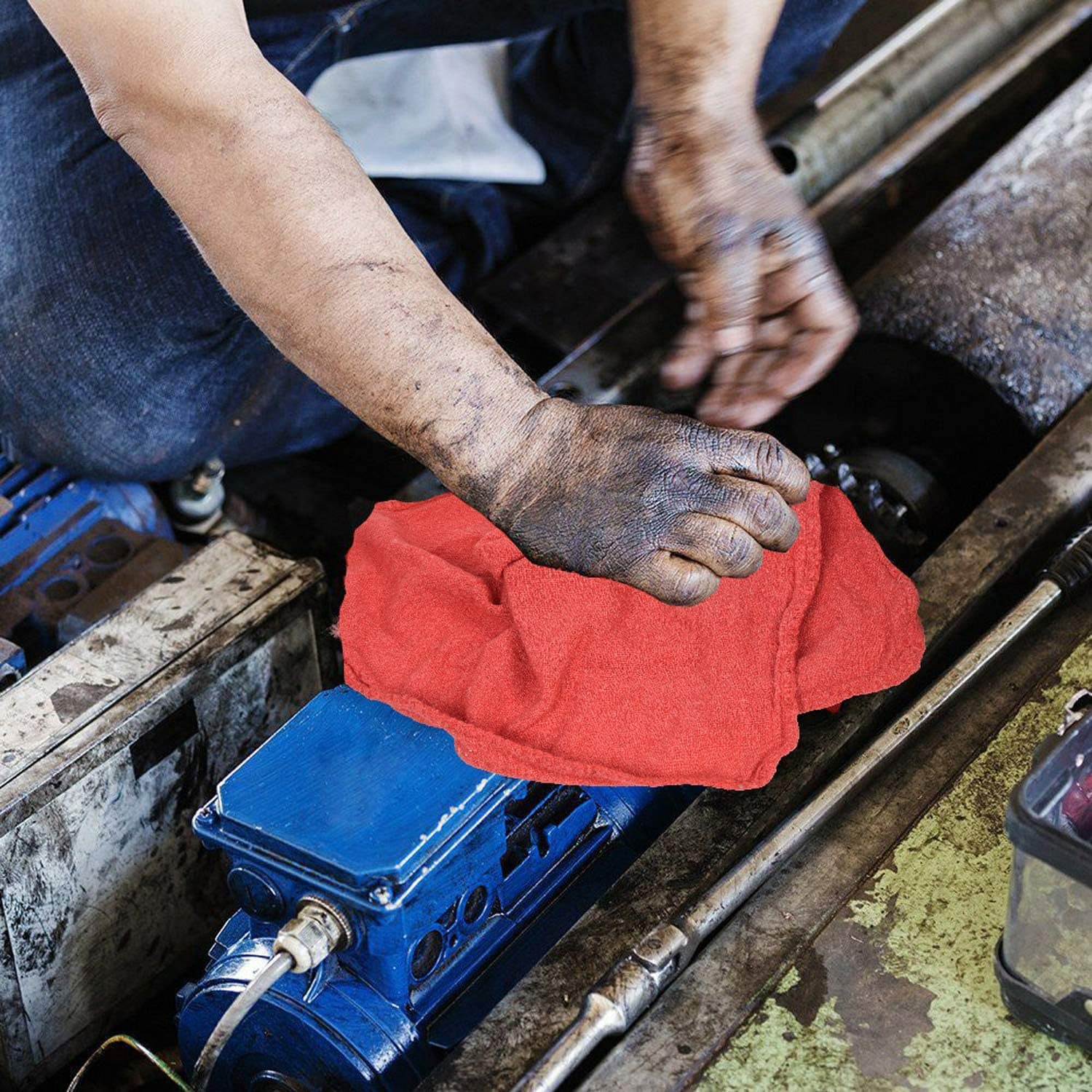
Shop rags are heavier duty and built to handle grease, oil, and harsh solvents. They are often made from cotton blends or recycled materials like jersey knit or woven fabric scraps. Auto mechanics and industrial factories rely on shop rags to wipe down engine parts, tools, and machinery. These rags typically have a GSM of 400 to 500, making them thicker and more resistant to tearing. They can withstand up to 50 wash cycles before losing effectiveness, while lighter wiping rags may only last 25 cycles.
The key difference comes down to fiber density and construction. Wiping rags use long staple cotton or microfiber for a smooth finish. Shop rags use shorter fibers or blends that give them a rough texture for scrubbing. When you buy from a supplier like Towel Depot, you can order either type in bulk. Our wholesale shop rags are tested to hold up to repeated industrial laundering. For lighter duties, our wiping rags match the performance of premium wholesale bath towels but at a fraction of the cost per unit.
What GSM and fabric types work best for different industries?
GSM stands for grams per square meter, and it measures fabric weight. For hotel housekeeping, you want a wiping rag in the 300 to 400 GSM range. Cotton rags at this weight absorb water and mild cleaners quickly without leaving streaks. They also hold up well to daily washing at 160°F (71°C). Housekeeping managers report that 350 GSM rags last about 30 wash cycles before the edges fray. Ordering in bulk of 200 to 500 units gives you consistent thickness across every batch.
Auto repair shops need a heavier rag in the 400 to 500 GSM range. Blended fabrics with 70% cotton and 30% polyester offer the best balance of absorbency and durability. These shop rags survive exposure to brake fluid, engine oil, and transmission fluid without breaking down. They can be washed at 180°F (82°C) to remove heavy grease. A typical shop will go through 100 rags per week, so buying 500 units at once ensures you always have clean stock. The cost per rag drops by 40% when you move from 100 to 500 units.
Salons and spas have different requirements. They need lint free rags to avoid leaving fibers on glass or mirrors. Microfiber rags at 250 to 300 GSM work well for polishing and drying. Cotton rags at 300 GSM are also suitable if they are processed to remove loose threads. For salons that use chemical treatments like hair dye or bleach, you want rags that can handle acidic or alkaline conditions. Blended rags with a high polyester content (over 50%) resist chemical damage better than pure cotton. Towel Depot's wholesale beach towels offer a similar GSM range but are not designed for solvent exposure, so choose wiping rags for chemical work.
How do you properly clean and launder wiping rags for reuse?
Proper laundering extends rag life and prevents cross contamination. Start by sorting rags by soil type. Separate rags that touched food, chemicals, or bodily fluids from those with only grease and dirt. For heavily soiled rags from auto shops, pre soak them in hot water at 140°F (60°C) with a degreasing detergent for 30 minutes. This loosens oil and dirt before the main wash cycle. Hotels can skip the pre soak for most wiping rags but should still wash them within 24 hours of use to prevent stains from setting.
The wash cycle itself should reach 160°F (71°C) for standard soiled rags and 180°F (82°C) for grease laden rags. Use industrial detergent at a concentration of 0.5% to 1% of the wash water volume. Rinse twice: once at 140°F (60°C) and a final cold rinse at 100°F (38°C) to remove all detergent residue. Drying should happen at 180°F (82°C) to kill bacteria. After drying, inspect rags for holes or thinning fabric. Replace any rag that shows more than 20% weight loss compared to its original GSM.
You can expect wiping rags to last 25 to 50 wash cycles depending on use. Shop rags with blended fibers often hit 50 cycles. Wiping rags made of 100% cotton average 30 cycles. After that, absorbency drops by about 15% per additional wash. Track your wash count with a simple marking system. Mark the rag count on the laundry bag. When you hit 50 cycles, pull those rags out and replace them with new bulk stock. The OSHA guidelines on workplace cleaning recommend replacing rags that show visible tearing or reduced absorbency to maintain safety standards.
What are the cost savings of buying rags in bulk versus disposable alternatives?
Bulk buying reusable rags cuts your per rag cost by 40% to 60% compared to disposable paper wipes. For a hotel that uses 500 rags per week, the math is clear. Disposable wipes cost around $0.15 each. Reusable rags in bulk cost $0.08 to $0.12 each. Over a year, that difference adds up to about $1,200 in savings for a 500 rag per week operation. And those savings grow as you increase your order size. Towel Depot offers tiered pricing for orders of 100, 250, and 500 units, with the best per unit price at the highest tier.
There are also hidden savings. Reusable rags reduce waste disposal costs. Paper wipes must be thrown away after one use, which fills dumpsters and increases pickup fees. A restaurant or auto shop can cut its solid waste by 30% to 50% by switching to reusable rags. The laundry costs are modest. Washing a load of 100 rags uses about 20 gallons of water and costs $0.30 in detergent. At 50 washes per rag, the total laundry cost per rag is under $0.15. Compare that to buying 50 disposable wipes at $7.50. The reusable rag saves you money from the first wash.
Bulk orders also give you consistent quality. When you buy 500 identical rags, every rag has the same GSM, absorbency, and durability. That matters for hotel housekeeping where you need uniform cleaning results. For auto shops, consistent rag thickness means you can trust them to handle the same level of solvent without soaking through. The EPA's guide on reducing waste highlights that reusable products lower overall environmental impact. And with bulk pricing from Towel Depot, you get the financial and operational benefits of switching from disposable to reusable rags.
How do you choose the right rag for cleaning solvents and chemicals?
Solvent and chemical cleaning requires rags with specific properties. The rag must be highly absorbent and resistant to the chemicals it will touch. For solvent based cleaners like mineral spirits or acetone, 100% cotton rags are the best choice. Cotton is naturally hydrophilic and can hold up to eight times its weight in solvent. However, cotton breaks down faster with some aggressive solvents. For repeated exposure to toluene or xylene, look for rags with a cotton polyester blend of at least 50% polyester. Polyester resists chemical degradation and maintains its structure through multiple washes.
Lint is another critical factor. When cleaning sensitive surfaces like electronics or optical lenses, a lint free rag is mandatory. Microfiber rags made from 80% polyester and 20% polyamide produce almost no lint. They also dry quickly and are washable up to 100 times. For heavy duty solvent cleaning in industrial settings, a knitted rag made from recycled cotton and polyester works better. These rags have a GSM of 400 to 500 and can handle repeated soaking without losing shape. Test a sample batch by soaking one rag in your most aggressive chemical for 30 minutes. If the rag shows no color bleed or strength loss, it is safe for regular use.
Safety matters when rags are used with flammable solvents. The CDC's NIOSH guidelines on solvent safety recommend proper disposal of rags that are soaked in flammable liquids. Never stack solvent soaked rags in a closed container. Use a self closing metal can with a lid. Wash solvent rags separately from other laundry. Run a hot water wash at 180°F (82°C) with a heavy duty detergent designed for grease cutting. If you buy from Towel Depot, ask about our solvent resistant rag line. These rags are pre treated to resist breakdown from common industrial solvents and can last up to 60 wash cycles. That is 20% longer than standard shop rags in the same environment.