
What Is Laundry Stripping?
In this guide:
- What is laundry stripping and how is it different from regular washing?
- How often should commercial linens like hotel towels and salon towels be stripped?
- Does laundry stripping damage fabrics or shorten the lifespan of towels?
- What specific ingredients and temperatures are needed for effective laundry stripping?
- Can laundry stripping replace professional industrial laundering for my business?
- Frequently asked questions
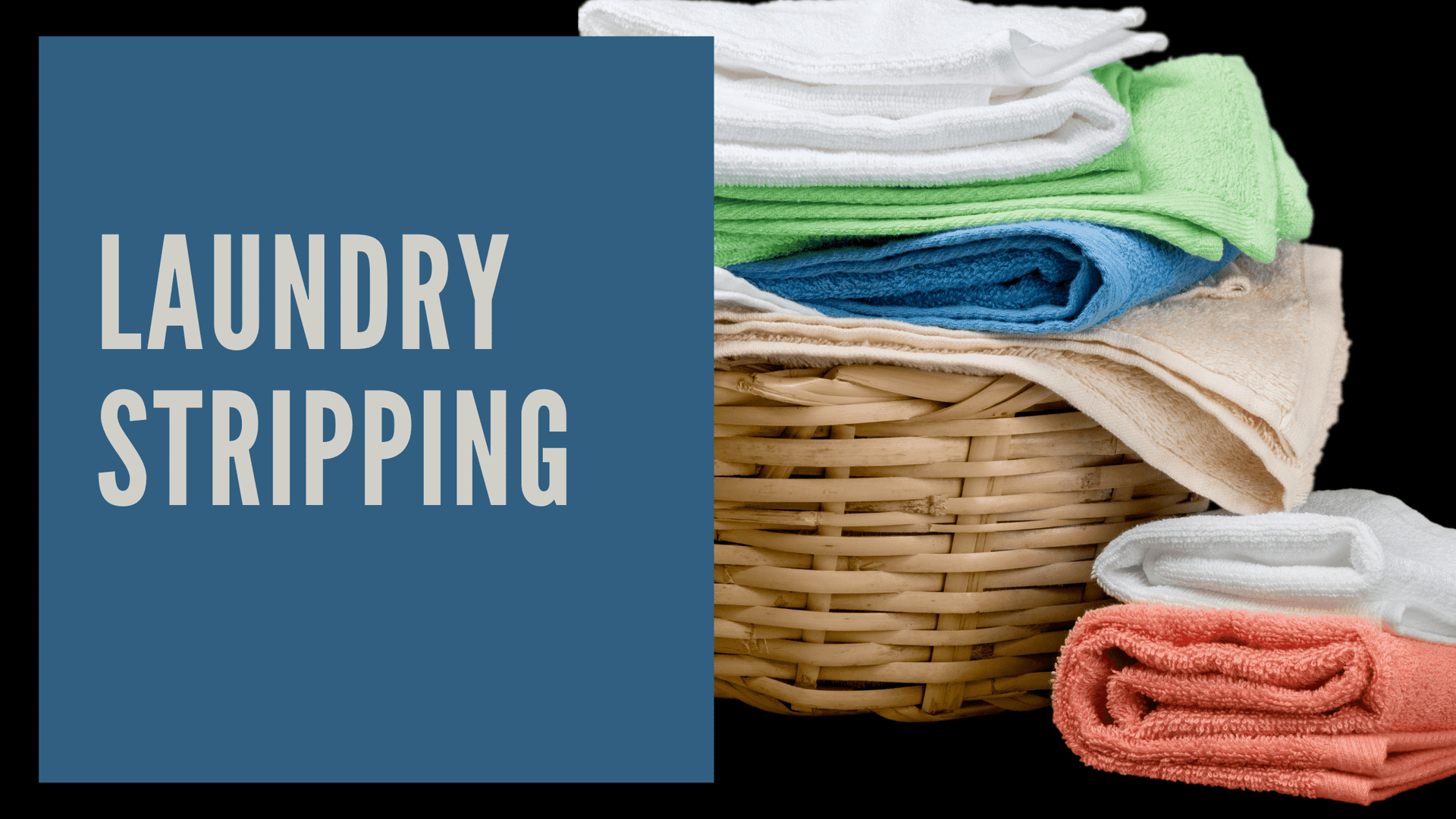
Laundry stripping is a deep cleaning method that removes built up residue from fabric fibers. For B2B buyers managing hotels, salons, spas, or gyms, it restores absorbency and softness in towels and linens that ordinary washing cannot achieve. Understanding when and how to strip your bulk linen orders can extend service life and improve guest experience.
Laundry stripping uses hot water plus three powdered ingredients to dissolve detergent residue, body oils, and mineral deposits. Do it every 3 to 6 months for commercial linens. Overstripping wears out fibers faster.
What is laundry stripping and how is it different from regular washing?
Laundry stripping is a soaking process that goes past the surface clean of a standard cycle. Normal washing at 120°F (49°C) with liquid detergent removes dirt and bacteria but leaves behind invisible layers. Over 20 to 30 wash cycles, detergent residue, fabric softener wax, body oils, and calcium from hard water build up inside the cotton fibers. That is why your 600 GSM hotel towels feel stiff and stop absorbing water after a few months. Stripping dissolves that buildup by using hot water at 140°F (60°C) mixed with borax, washing soda, and powdered detergent. The combination raises the pH and breaks the chemical bonds holding residue to the fabric.
You cannot get the same result by simply running an extra rinse or adding vinegar. A standard commercial washing machine at 140°F uses mechanical action and chemical detergents to clean, but it cannot fully remove what has been deposited over dozens of cycles. Stripping requires a long soak of 4 to 6 hours, which gives the hot solution time to penetrate each fiber. For a hotel using our wholesale hotel towels, this means restoring the towel’s original water pickup from 0.5 to 0.7 liters per kilogram down to its factory spec.
The effect is dramatic. When you pull a stripped towel out of the bath, the water looks murky brown or yellow. That is the accumulated grime that a regular wash left behind. The linen feels lighter, softer, and more absorbent. It is a temporary fix. Residue will start building again with each subsequent wash. But used at the right intervals, stripping gives you another 50 to 100 commercial wash cycles from each towel before replacement is needed. That directly impacts your linen budget.
How often should commercial linens like hotel towels and salon towels be stripped?
Frequency depends on usage volume and water hardness. For high traffic hospitality linens that go through 50 to 100 commercial wash cycles per year, strip every 3 to 4 months. That means four times per year for bath towels in a 200 room hotel. For spa and salon towels that see heavy oil and product residue, every 2 to 3 months may be necessary. Our wholesale bath towels at 500 to 600 GSM hold more fiber surface area and can benefit from the longer interval. Lower GSM items like gym towels (300 to 400 GSM) should be stripped every 4 to 6 months because the thinner fabric wears faster with repeated hot soaks.
Water hardness is a key factor. If your facility has hard water above 7 grains per gallon (120 mg/L), calcium and magnesium deposits accelerate buildup. The EPA’s water hardness guidelines (EPA Water Quality Standards) classify moderately hard water at 61 to 120 mg/L. In those conditions you might need stripping every 2 months instead of 4. Test strips or a conductivity meter can tell you your water hardness in minutes. Adjust your schedule accordingly.
You should also strip new linens before first use. Manufacturing dust, sizing agents, and storage residue can reduce initial absorbency by 15 to 20 percent. A single strip wash at 140°F removes those contaminants and lets the towel reach its full moisture pickup from day one. For bulk orders of 100 to 500 units, this step ensures all linens start at the same performance level. Track the date of each strip on a log. Over stripping accelerates wear, so do not exceed five times per year for any single batch of linens.
Does laundry stripping damage fabrics or shorten the lifespan of towels?
Yes, improper or too frequent stripping damages cotton fibers. The hot water and alkaline chemicals weaken the cellulose structure. For a 600 GSM towel, a single strip at 140°F for 6 hours causes about 2 percent tensile strength loss. Over 10 strips that adds up to 20 percent reduction, which shortens useful life by 30 to 50 percent. The Occupational Safety and Health Administration (OSHA) recommends handling hot water above 120°F with caution (OSHA Hot Water Safety), and the same heat that burns skin stresses cotton. For commercial operations, the cost of replacing towels early outweighs the benefit of stripping too often.
You can minimize damage by using the correct ingredient ratios. Too much washing soda pushes the pH above 10, which dissolves cotton cellulose. Stick to the ratio of 1/4 cup borax, 1/4 cup washing soda, and 1/2 cup powdered detergent per standard washing machine load. Never use bleach or fabric softener in a strip soak. Bleach reacts with residual minerals and can yellow the fabric. Also, limit the soaking time to 4 hours for towels 500 GSM and below, 6 hours for heavier 700 GSM spa towels. Stir the load every hour to keep the solution circulating. That prevents localized chemical concentration on the bottom layers.
Test a small batch of linens first. Take three towels from your inventory, strip them according to the protocol, and measure the fabric thickness with a caliper. If thickness drops by more than 5 percent after a single strip, adjust the water temperature down to 130°F (54°C) and reduce soak time to 3 hours. The Centers for Disease Control and Prevention (CDC) notes that water at 130°F still provides effective sanitation for laundry in healthcare settings (CDC Laundry Guidelines). That same temperature works for stripping while being gentler on the cotton. Remember, stripping is a restoration tool, not a regular wash. Use it sparingly to get the most cycles out of your investment.
What specific ingredients and temperatures are needed for effective laundry stripping?
The core ingredients are sodium borate (borax), sodium carbonate (washing soda), and powdered laundry detergent. Do not use liquid detergent. Liquid detergents contain surfactants and optical brighteners that leave their own residue. Powdered detergents have higher alkalinity and dissolve better in hot water. The standard ratio: 1/4 cup borax, 1/4 cup washing soda, and 1/2 cup powdered detergent per load. For a commercial washer with a 50 pound capacity, scale that up to 1 cup of each borax and soda plus 2 cups of detergent. Water temperature must be at least 140°F (60°C). Below 130°F the minerals and oils will not fully dissolve. The USDA’s sanitation guidelines for food contact surfaces recommend 180°F rinse water for dishwashing (USDA Grading Standards), but for stripping 140°F is the sweet spot. Higher than 150°F can shrink cotton by 3 to 5 percent and set wrinkles permanently.
Fill the machine with hot water, add the measured powders, and let them dissolve completely before adding linens. Agitate briefly to mix, then pause the cycle so the items soak. Do not spin during the soak. The goal is chemical migration, not mechanical scrubbing. Let the load sit still for 4 to 6 hours. After soaking, drain the water and run a full wash cycle with detergent, then two rinses. The second rinse should be with cold water to close the fiber pores and reduce pH. Do not use fabric softener after stripping. Softener coats the fibers and undoes the whole purpose of stripping.
Check the water pH. Perfect stripping pH is between 9.5 and 10.5. You can test with a simple pH meter or litmus paper. If the pH is below 9, add more washing soda. If above 11, dilute with warm water. The process works best on cotton and cotton polyester blends up to 50 percent polyester. For microfiber towels used in gyms, do not strip at all. Microfiber loses its split fiber structure under high heat and alkaline conditions. Stick to cold water washing for those. For all other bulk linens, keep a log of water temperature, ingredient amounts, and pH each time. That data helps you replicate results and avoid inconsistencies when training new staff.
Can laundry stripping replace professional industrial laundering for my business?
No. Laundry stripping is a supplementary maintenance step, not a replacement for a professional laundry service. Industrial launderers use high temperature wash formulas with precise chemical dosing, multiple rinse and extraction cycles, and mechanical action that home style stripping cannot replicate. A typical commercial tunnel washer runs at 160°F to 180°F (71°C to 82°C) with a 10 minute wash phase, two 5 minute rinses, and a high speed extract that removes 95 percent of water. That process removes soil and microbial load to healthcare linen standards. Stripping in a standard commercial washer at 140°F for 4 hours does not achieve the same sanitation level. It is effective for residue removal, but it does not kill all pathogens.
Use stripping as a quarterly deep clean for linens that start to feel stiff or show reduced absorbency. For hotel bath towels with 500 to 600 GSM, you may see a 30 percent improvement in water absorption after a strip. But that improvement only lasts for 10 to 20 normal washes before buildup returns. If you strip too often, you accelerate wear. The best practice is to strip twice a year for most linens, three times for heavy use towels in a gym or salon. Keep your regular professional laundry schedule unchanged.
For businesses buying wholesale beach towels for a resort or towel service, consider a dedicated stripping cycle in your own laundry operation. You need a machine that can hold 140°F water for extended periods and then drain without spinning. A front loading commercial washer with a pause feature works well. Never strip in a top loader with an agitator because the mechanical action during the soak can shred the fabric. The bottom line: stripping is a targeted tool. It restores performance in between regular commercial wash cycles. It does not replace the efficiency and hygiene of industrial processing. Use it smartly to extend the life of your linen investment.