
What Is a Tea Towel
In this guide:
- What Exactly Is a Tea Towel?
- Materials and Construction Standards
- Laundering and Care for Bulk Tea Towels
- Cost Considerations and Bulk Purchasing Tips
- Commercial Uses Beyond Drying Dishes
- Frequently Asked Questions
For commercial buyers in hospitality, food service, and institutional settings, a tea towel is not just a convenience. It is a workhorse that affects kitchen efficiency, hygiene, and presentation. This guide covers everything you need to know about tea towels from material specifications to laundering protocols. Use it to make informed purchasing decisions for your business.
Tea towels are lightweight, highly absorbent cloths made from linen or cotton. For bulk buyers, they offer durability through 300 to 500 wash cycles and can serve multiple roles in a commercial kitchen, from drying delicate glassware to handling hot bakeware.
What Exactly Is a Tea Towel?
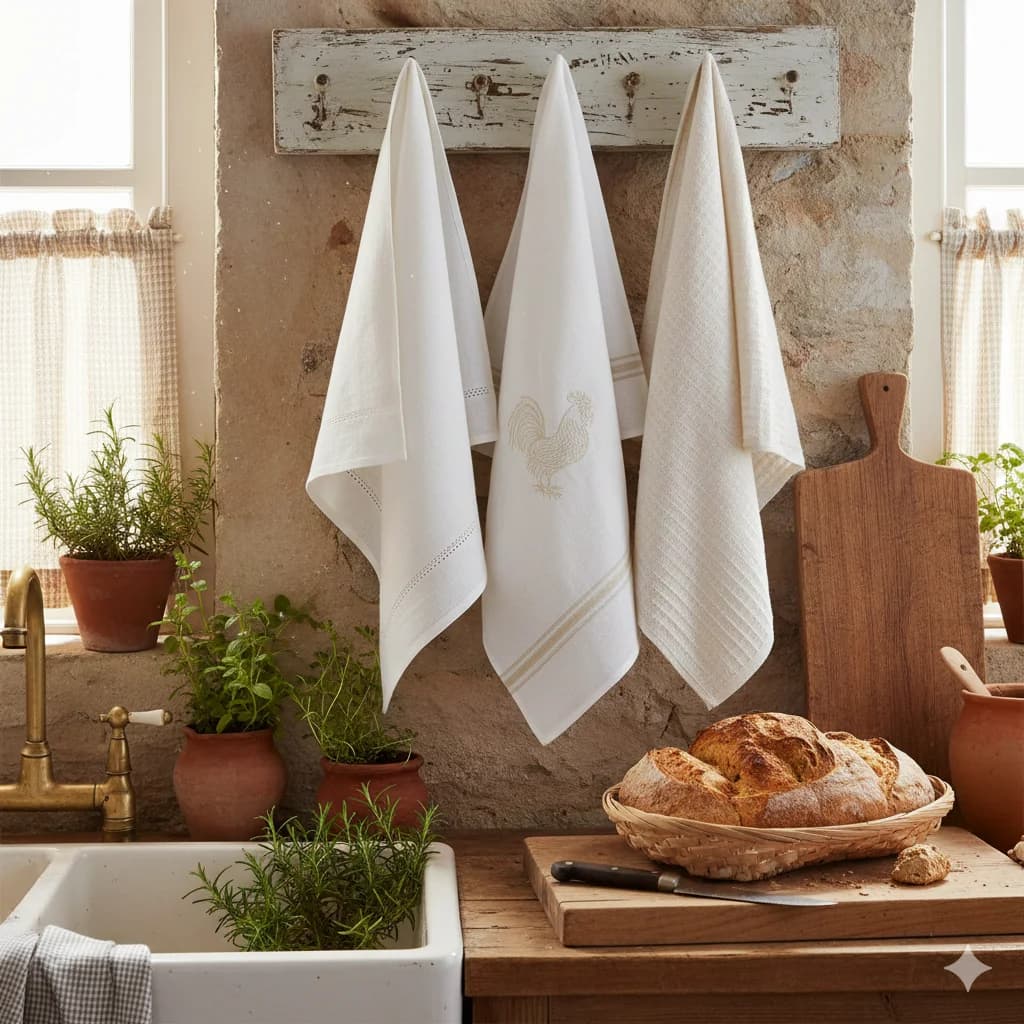
A tea towel is a rectangular piece of fabric, traditionally linen or cotton, woven in a plain or honeycomb pattern. Its defining characteristic is its ability to absorb moisture quickly without leaving lint. The name comes from 18th century England where it was used to dry delicate teacups without scratching the porcelain. Today, it remains the preferred towel for fine dishware and glassware in high end restaurants and hotels.
Tea towels differ from standard kitchen towels in three critical ways. First, they are thinner. Typical GSM for a tea towel is 110 to 150. A standard kitchen towel often runs 180 to 250 GSM. The lower weight means the towel dries fast, reducing bacterial growth between uses. Second, the weave is tighter, which picks up water without leaving streaks. Third, the fabric is often pre shrunk to minimize distortion after industrial washing at 160 degrees F (71 degrees C).
Most of our bulk buyers order tea towels for their fine dining operations. Restaurant managers appreciate that a well maintained tea towel will outlast a standard terry kitchen towel by a margin of 20 to 30 percent. That translates to real savings when you are ordering 100 to 500 units at a time. For comparison, our wholesale bath towels are built for heavier moisture absorption in bathroom settings. Tea towels are purpose built for fast drying and polishing.
Materials and Construction Standards
Linen remains the gold standard for commercial tea towels. Flax fibers are naturally hollow, so a linen tea towel can hold up to 20 percent of its own weight in moisture before feeling wet. A quality linen tea towel at 130 GSM will absorb 1.5 times more water than a cotton towel of the same weight. Linen also has natural antibacterial properties because the fibers are smooth and do not trap food particles. This is why the top hotels and spas specify linen for their kitchen and dining areas.
Cotton is a strong alternative when budget is the primary concern. A 100 percent cotton tea towel at 140 GSM will give you 10 to 12 percent moisture retention and a lifespan of 350 to 400 industrial washes. The key is to choose a long staple cotton like Egyptian or Supima. Short staple fibers shed lint. Lint is a problem in commercial kitchens because it gets into food and clogs drains. A quality cotton tea towel should lose less than 0.5 percent of its weight in lint over the first ten washes, according to ASTM D1230 standards for textile wear testing. You can read more about that method on the ASTM website.
Construction also matters. A plain weave gives the best drying performance for dishware. A honeycomb or waffle weave increases surface area and dries even faster, but it can catch on utensils and tableware. For most commercial kitchens, we recommend a plain weave with a hemmed edge and a 2 inch hanging loop. The loop should be bar tacked to withstand 50 pounds of pull force. That keeps the towel on the rail instead of on the floor. For lighter duties such as covering proofing dough, a 110 GSM cotton towel is sufficient. For heavy dish drying, step up to at least 140 GSM linen.
Laundering and Care for Bulk Tea Towels
Proper laundering is the single biggest factor in extending the lifespan of your tea towels. A commercial washing machine operating at 160 degrees F (71 degrees C) will kill all common kitchen pathogens including E. coli and Salmonella. The CDC recommends a minimum wash temperature of 160 degrees F for linens in food service environments. You can find that guidance on the CDC kitchen hygiene page. Run a full cycle with an alkaline detergent to break down oils. Follow with a neutral pH rinse to prevent fabric brittleness.
Drying temperature matters just as much. A commercial dryer at 180 degrees F (82 degrees C) for 35 to 45 minutes will fully dry a load of tea towels. Do not over dry. Over drying at temperatures above 200 degrees F (93 degrees C) breaks down the cellulose fibers. You will see tears and fraying after 150 washes instead of 400. We recommend that you remove the towels while they are still slightly damp, then fold or roll them. This preserves the weave and reduces ironing time.
Bleach is a common source of early failure. Chlorine bleach should never be used on linen. It weakens the fibers and turns them yellow. For cotton, limit bleach to one ounce per gallon of water and only use it every third wash. A better option is oxygen bleach. It works at lower temperatures and does not damage the fabric. For heavy grease stains, apply a pretreatment containing enzymes. Let it sit for 10 minutes before washing. If you follow these guidelines, a quality tea towel from a supplier like Towel Depot will last 400 to 500 cycles. Our wholesale hotel towels follow similar care instructions for maximum durability.
Cost Considerations and Bulk Purchasing Tips
Price per unit for tea towels varies widely based on material, weave, and GSM. For plain cotton at 120 GSM, expect to pay 1.50 to 2.50 per unit in quantities of 100 to 500. Linen at 130 GSM runs 3.50 to 6.00 per unit. That initial cost difference matters, but you need to factor in lifespan. If a cotton towel lasts 300 washes and a linen towel lasts 450 washes, the cost per wash for linen is actually lower. For a hotel or restaurant that does 20 to 30 wash cycles per towel per month, the breakeven point is about 18 months.
Buying tea towels in bulk saves 15 to 25 percent compared to small orders. Most wholesale suppliers offer tiered pricing at 100, 250, and 500 units. The break is usually at the 250 unit mark. Ask about dye lot consistency. A mismatched order can be a problem for a property with a brand color. We recommend ordering all the towels you need for a year at once. That way the color and weave are identical. If you need to restock later, request a sample first to check for drift.
Storage conditions affect shelf life. Keep tea towels in a cool dry area with relative humidity below 60 percent. Temperatures above 100 degrees F (38 degrees C) can weaken fibers over time. Use a first in first out inventory system. A busy commercial kitchen can rotate through 50 towels a week. That means a 500 towel order will last about 10 weeks. Plan your reorder point at 12 weeks out to account for lead time. Some suppliers require 3 to 4 weeks for custom orders. For comparison, if you also supply pool or beach areas, our wholesale beach towels have a different care cycle and are not interchangeable with kitchen towels.
Commercial Uses Beyond Drying Dishes
Tea towels serve many roles in a professional kitchen. They are excellent for handling hot pans and bakeware. The lightweight fabric provides enough thermal protection for brief contact, up to 20 seconds at 350 degrees F (177 degrees C). However, never use a damp tea towel as a pot holder. The moisture conducts heat and causes steam burns. The Occupational Safety and Health Administration (OSHA) recommends dry cloths for handling hot objects. See their heat stress guidance on the OSHA website. For long contact, use a proper silicone mitt.
Tea towels are also used to cover proofing dough in bakery operations. A 110 to 130 GSM linen towel allows the dough to breathe while preventing a skin from forming. The fabric traps just enough moisture to keep the dough surface elastic. Bakeries report that using a linen cover rather than plastic wrap reduces proofing time by 10 to 15 percent because the dough does not sweat. You simply wet the towel, wring it dry, and drape it over the bowl. Rinse the towel between batches to prevent cross contamination.
In spas and salons, tea towels have found a second life. Their softness and lint free nature make them ideal for facials, hair treatments, and waxing services. A white 140 GSM cotton tea towel absorbs excess product and does not irritate sensitive skin. Many spa managers tell us that ordering one product for both kitchen and treatment rooms simplifies inventory. Just wash each load separately to avoid cross contamination. Whatever the setting, the core value of a tea towel remains the same. It is a tool that works harder than its size suggests. For operators who need consistent performance, buying from a single source with a 50 year track record reduces variability and risk.