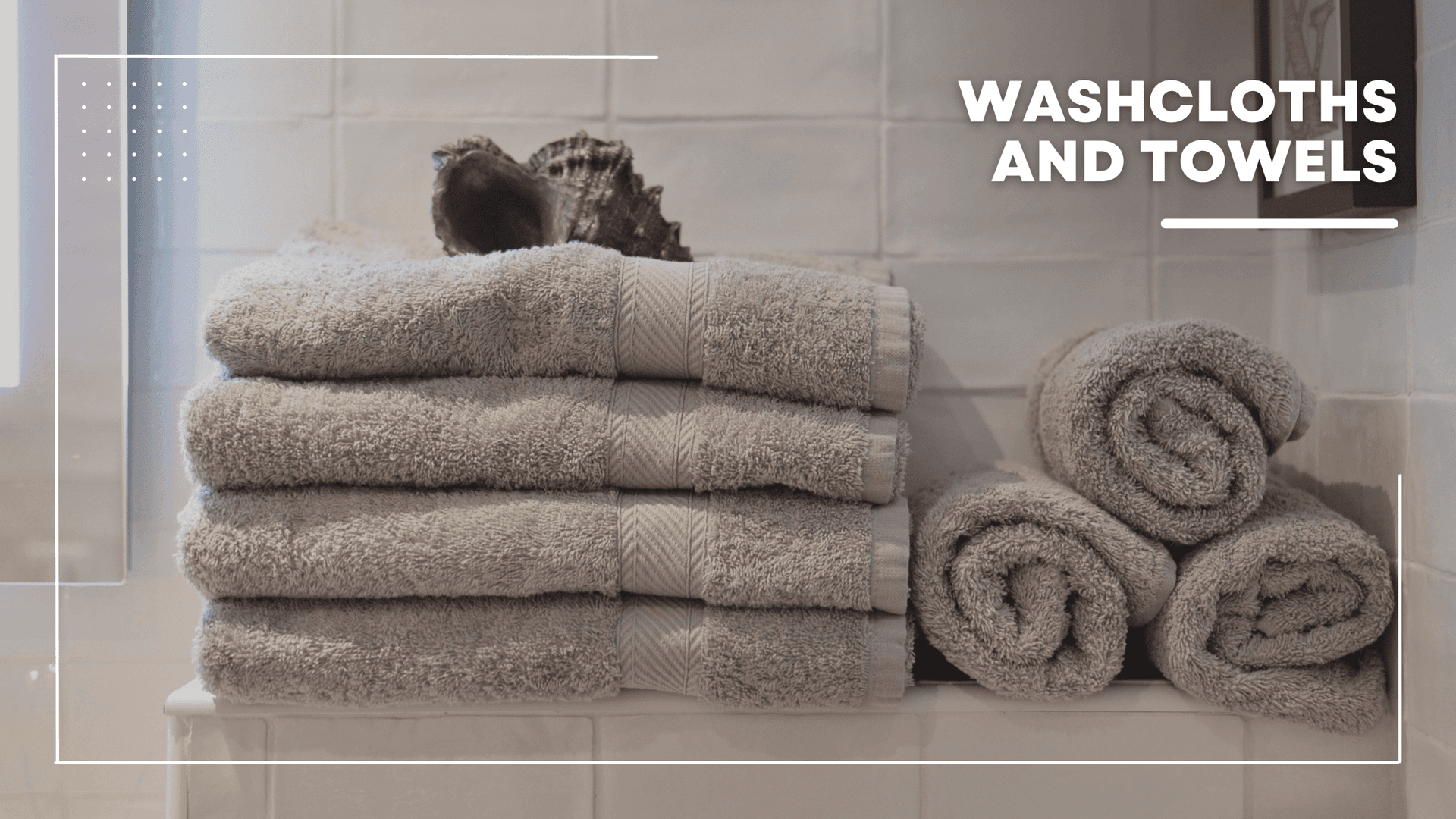

Everything You Need To Know About Washcloths And Towels
In this guide:
- What GSM weight should you choose for commercial washcloths and towels?
- How do washing and drying procedures affect linen lifespan in your facility?
- What is the best fabric blend for durability and absorbency in bulk orders?
- How many wash cycles can you expect from quality wholesale towels?
- How do you size towels correctly for hotels, salons, and gyms?
- Frequently asked questions
If you manage housekeeping for a hotel, run a salon, or operate a gym, you place bulk orders for washcloths and towels every season. The right linen saves you money and keeps your guests comfortable. This guide covers the specifications that matter for B2B buyers ordering 100 to 500 units at a time.
Choose 400 to 600 GSM 100% ring spun cotton for peak absorbency and durability. Wash at 140°F (60°C) and dry at 160°F (71°C) to maximize lifespan. Expect 75 to 150 industrial wash cycles depending on fabric blend and care practices.
What GSM weight should you choose for commercial washcloths and towels?
GSM stands for grams per square meter. It measures fabric density. For commercial applications, 400 to 600 GSM is the sweet spot. Towels under 400 GSM dry too fast but feel thin. Towels over 600 GSM take too long to dry in industrial dryers, increasing your energy costs per load.
A 500 GSM bath towel absorbs about 2.5 times its weight in water. That performance drops by roughly 10% after each 25 wash cycles. If you operate a spa, 500 to 550 GSM provides the plush feel guests expect. For a hotel chain where turnover is rapid, 400 GSM towels dry faster in the laundry and still meet guest standards. Washcloths work best at 400 to 450 GSM because smaller dimensions need less density to feel substantial.
The ASTM D3776 standard governs GSM testing for textiles. You should ask your supplier for a test report on every lot. Variability of more than 5% in GSM between towels in the same order signals inconsistent weaving. That leads to uneven wear and guest complaints. Stick with suppliers who guarantee GSM tolerances within 3%.
How do washing and drying procedures affect linen lifespan in your facility?
Commercial laundry uses hot water at 140°F (60°C) to meet hygiene guidelines from OSHA and the CDC. This temperature kills bacteria and removes body oils. However, every 10°F above that accelerates fiber degradation by about 8%. Do not exceed 160°F (71°C) unless you are stripping heavily soiled linens. In that case, limit high temperature cycles to one per month.
Drying temperature matters even more. Overdrying towels at 180°F (82°C) or higher breaks down cotton fibers faster. Dry at 160°F (71°C) and stop when the moisture content reaches 3%. Use a moisture sensor in your tumblers. A dryer running 20 minutes too long can shorten towel life by 25% over a year. You can also check OSHA guidelines for commercial laundry operations to align your procedures with safety standards.
Bleach use also cuts lifespan. Chlorine bleach at 50 ppm active chlorine is enough for whitening. Higher concentrations attack cellulose in cotton. For colored towels, use oxygen bleach at 30 ppm. Never mix bleach with high alkalinity detergents. That combination can cause tensile strength loss of 40% after only 20 washes. Train your laundry staff to follow these limits.
What is the best fabric blend for durability and absorbency in bulk orders?
For most B2B buyers, 100% ring spun cotton delivers the best absorbency per wash cycle. Ring spun yarn is twisted tighter, making each fiber more compact. That increases surface area and water pickup. A 100% cotton 500 GSM towel can absorb 1.2 gallons of water per pound of fabric. That matters for hotels where guests use towels multiple times.
For high turnover environments like gyms or restaurants, an 80% cotton 20% polyester blend adds durability. The polyester fibers resist abrasion from repeated washing. These blends can last 30% more wash cycles than all cotton. But they sacrifice some absorbency. Expect a blend to pick up about 15% less water per pound. If your staff dries dishes or wipedowns, that difference is acceptable. For body drying, stick with all cotton.
Microfiber is a cheaper alternative for housekeeping rags and floor cleaning. But it is not ideal for washcloths or bath towels. Microfiber traps oil but does not hold water well. It also sheds microplastics into wastewater. The Environmental Protection Agency has flagged microfiber shedding as a concern for water treatment plants. You can read the EPA's information on microfiber pollution if you want to make an environmentally sound choice for your facility.
How many wash cycles can you expect from quality wholesale towels?
A premium 100% cotton towel maintained under proper washing procedures will last between 75 and 100 industrial wash cycles. That is about 18 to 24 months for a hotel changing linens three times per week. After 75 cycles, you may notice fraying at the edges and a 20% drop in absorbency. At that point, retire the towel to rag duty.
Blended fabrics with polyester can reach 150 cycles. The synthetic fibers resist pilling and edge wear. But you pay for this longevity with reduced softness. Most spa and resort buyers prefer the natural feel of cotton and accept the shorter lifespan. For gyms and locker rooms where towels are used hard and washed daily, blends make economic sense.
Good washing habits extend cycle counts. Load the washer to no more than 80% of its capacity. Overloading reduces water penetration and leaves detergent residue. That residue attracts soil and stiffens fibers. Use a neutral pH detergent (pH 6.5 to 7.5). Alkaline detergents above pH 10 cause gradual degradation. You can check ASTM D6545 standard for commercial laundry testing to benchmark your own linens.
How do you size towels correctly for hotels, salons, and gyms?
Size affects guest perception and operational cost. For a standard hotel bath towel, industry convention is 27 by 52 inches. A hand towel should measure 16 by 28 inches. Washcloths for hotels and spas work best at 12 by 12 inches. That size fits most hands and folds easily into a face cloth. For a salon or barbershop, smaller washcloths at 11 by 11 inches reduce laundry volume and dry faster between customers.
Gym towels need a different approach. A typical gym towel is 16 by 27 inches. That size is large enough to wipe sweat but small enough to wash in bulk without using excessive water. Many gyms buy 100% cotton terry at 400 GSM. It dries quickly and can be reused after one gym session. For poolside use at a resort, wholesale beach towels should be 30 by 60 inches. That gives guests enough length to lie on a lounger. Beach towels in a 600 GSM terry hold sand better than lighter weaves.
Spas ordering wrap towels need dimensions of 42 by 70 inches for full body coverage. Those towels often double as robe replacement after treatments. For a spa, choose a 550 GSM 100% cotton. The weight provides a luxurious drape. For hotels ordering in volume, check your existing inventory before placing a new bulk order. Mismatched sizes cause stacking problems in linen closets and slow down your housekeeping teams. Standardizing on one size for each category simplifies your supply chain.