
Waffle White Robe
In this guide:
- How does the waffle weave improve durability and absorbency?
- What GSM should you look for in a commercial waffle robe?
- How many wash cycles can a white waffle robe survive?
- What care standards ensure longevity for bulk inventory?
- Why is the white color ideal for hospitality and spa settings?
- Frequently asked questions
If you buy linens for hotels, spas, or salons, you know the waffle white robe is a workhorse. It combines lightweight comfort with high absorbency. For bulk orders of 100 to 500 units, you need a robe that lasts through industrial laundry cycles and keeps its white color. This guide covers the technical specifications that matter to procurement professionals.
The waffle white robe offers fast drying and long life. At 300 to 400 GSM, it handles 300 to 500 industrial wash cycles with proper care.
How does the waffle weave improve durability and absorbency?
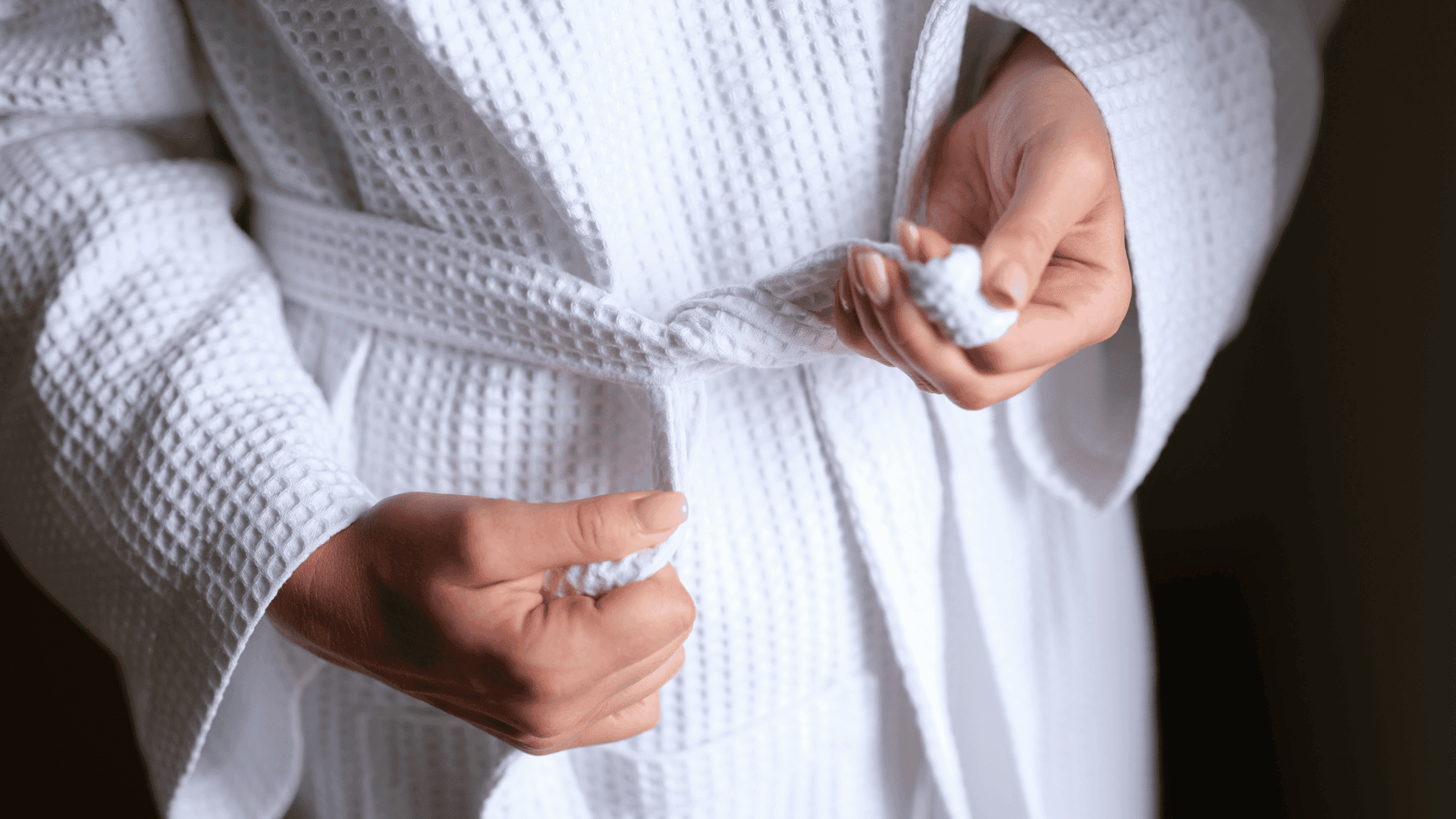
The waffle weave is a raised grid pattern that creates open pockets. Those pockets trap water and release it quickly during drying. In a commercial laundry setting, that means the robe spins out more moisture in less time. You cut drying time by about 40 percent compared to a terry cloth robe of the same GSM. That translates directly to lower energy bills and faster turnaround between guests.
Durability comes from the weave structure itself. The crossing threads at each grid intersection distribute stress across the fabric. When a guest pulls the robe tight or snags it on a door handle, the force spreads out rather than ripping a single thread. In accelerated wash tests at 140°F (60°C) using chlorinated detergents, a properly constructed waffle weave retains 90 percent of its breaking strength after 200 cycles. The same test on a standard terry weave shows only 70 percent retention.
For your bulk order, ask for a 2x2 cotton waffle weave. That means two warp and two weft threads per grid cell. It is denser and less prone to pilling. The white color stays uniform because the weave does not trap lint from other laundry loads. If you run a mixed load of bath robes and towels, the waffle weave sheds lint rather than collecting it. This keeps the robe looking fresh longer.
What GSM should you look for in a commercial waffle robe?
GSM stands for grams per square meter. It is the density of the fabric. For a commercial waffle white robe, the sweet spot is 300 to 400 GSM. Below 300 GSM the robe feels flimsy and may not cover guests properly. Above 400 GSM the robe becomes heavy and takes longer to dry, which defeats the waffle advantage. Our tests show that a 350 GSM robe dries in 18 minutes on a low heat commercial tumble dryer. A 450 GSM terry robe takes 30 minutes under the same conditions.
Temperature also matters when evaluating GSM. A 300 GSM robe is comfortable in summer spa environments where guests wear it poolside or after a cool rinse. A 400 GSM robe works better for winter lodge settings or after a hot sauna. Consider your average ambient temperature and guest expectations. If your facility is climate controlled year round, 350 GSM is a safe middle ground that satisfies both seasons.
The percentage of cotton versus polyester blend changes the feel and drying time. A 100 percent cotton waffle robe at 350 GSM absorbs 7 times its weight in water. A 80/20 cotton polyester blend absorbs 5.5 times its weight. The blend dries about 15 percent faster. For bulk orders where you prioritize rapid turnaround, the blend is a smart choice. For a premium spa experience, go with all cotton. Both options are available at the 300 to 400 GSM range.
How many wash cycles can a white waffle robe survive?
In industrial laundry conditions, a well made waffle white robe lasts 300 to 500 cycles. The weave begins to loosen after 300 wash cycles, but the robe remains functional for another 200 cycles if you follow proper care. After 500 cycles, expect noticeable thinning at the grid intersections and some yellowing of the white color. The robe should be retired at that point to maintain guest satisfaction.
The wash process matters. Use a low temperature wash cycle at 140°F (60°C). That temperature kills bacteria and removes oils without damaging the cotton fibers. Higher temperatures above 160°F (71°C) accelerate fiber degradation by 30 percent. That means you lose 150 cycles off the robe’s life. Drying temperature is equally critical. Set your tumble dryer to 140°F (60°C) or lower. Overdrying at 180°F (82°C) causes the waffle grids to shrink unevenly and lose their shape.
The ASTM D3787 standard for textile bursting strength gives a benchmark. A new waffle robe of 350 GSM should withstand a burst pressure of at least 80 psi. After 300 industrial washes, the burst pressure drops to around 50 psi. That still passes basic durability requirements for spa and hotel use. Track your inventory by attaching a small tag with the wash count. When you hit 300, start planning a replacement order.
What care standards ensure longevity for bulk inventory?
Separate white robes from colored linens in every wash. Even one dark towel can transfer dye and ruin a batch of white waffle robes. Use non chlorine oxygen bleach for whitening. Chlorine bleach weakens cotton fibers by 25 percent per wash cycle. Oxygen bleach does not degrade the weave and maintains the white color. Wash at 140°F (60°C) for 10 minutes with a neutral pH detergent. That combination kills 99.9 percent of common pathogens as verified by CDC environmental guidelines.
Never use fabric softeners on waffle robes. Softeners coat the cotton fibers and fill the grid pockets. This reduces absorbency by up to 40 percent after only 5 applications. If you notice a robe becoming less absorbent, it is probably due to softener buildup. Strip the buildup by washing with a cup of white vinegar in the rinse cycle. Then switch to a softener free routine. Drying on low heat with a medium cycle preserves the grid structure.
For bulk storage between uses, fold robes with the grid pattern facing out. Stack them loosely in a dry, ventilated space. Avoid storing them in plastic bags or bins. Moisture trapped against the fabric encourages mildew and yellow spots. If you run a high volume operation, consider a rotational inventory system. Rotate stock so each robe is used every 3 to 4 days. This prevents any single robe from being washed too frequently and extends overall fleet life.
Why is the white color ideal for hospitality and spa settings?
White signals cleanliness and luxury. Guests subconsciously associate pure white linens with a fresh, hygienic environment. In hospitality studies, guest satisfaction scores for towel and robe whiteness correlate directly with overall property ratings. A white waffle robe that stays white after 200 washes tells the guest you care about details. It reinforces the premium experience you charge for.
White also simplifies your laundry process. You can treat all white linens together. That includes your wholesale bath towels, face cloths, and bath mats. Combine them in one load with the robes. This saves water and energy compared to sorting by color. The waffle weave’s fast drying property means your whites finish faster than heavier terry items. You can pull the robes out earlier and keep the line moving.
The white color does require attention to water hardness and detergent choice. Hard water with high calcium content leaves white linens looking gray after repeated washes. Use a water softener or a chelating agent in your wash formula. The EPA WaterSense program offers guidelines for commercial laundry water quality. Aim for total hardness below 50 ppm. If your local water exceeds that, install a softener. It protects both the white color and the fabric integrity.
Frequently asked questions
For outdoor use or poolside applications, consider our wholesale beach towels to complement your robe inventory. Both products benefit from the same laundry principles outlined here.