
Luxury Hotel Towel Guide: Standards, Quality & Selection
In this guide:
- What GSM weight defines a luxury hotel towel?
- Which fabric offers the best balance of softness and durability for hotels?
- How many wash cycles can a luxury hotel towel last before replacement?
- How many towels per guestroom do luxury hotels stock?
- What certifications matter for commercial towel buying?
- Frequently asked questions
This luxury hotel towel guide covers the standards, quality checks, and selection criteria that matter when you order wholesale hotel towels in bulk. Whether you manage a 200 room property, operate a high volume spa, or run a gym with daily towel use, getting the right spec saves money and keeps guests satisfied. We have supplied linens since 1967 and have seen what works under real commercial conditions.
Luxury hotel towels need a GSM between 600 and 900, be made from long staple Turkish or Egyptian cotton, and be replaced every 180 to 240 commercial washes. Budget for 3 bath towels per guestroom to maintain a proper rotation.
1. What GSM weight defines a luxury hotel towel?
GSM stands for grams per square meter. It is the single most objective measure of towel quality. A luxury hotel towel should weigh between 600 and 900 GSM. Towels under 500 GSM feel thin and dry too quickly. They do not provide the plushness that guests expect. A 700 GSM towel is the sweet spot for most properties. It absorbs 2.5 times its weight in water and dries fully within 2 hours at 75°F (24°C) ambient air.
Heavier towels above 800 GSM feel decadent but require longer drying cycles. That adds energy cost. If your laundry operates at 140°F (60°C) wash temperature, an 850 GSM bath sheet takes about 55 minutes to dry in a 50 pound commercial tumble dryer. A 600 GSM towel dries in 40 minutes. Over 100 towels per day that difference means dozens of extra kilowatt hours. Balance guest comfort with operational efficiency.
When you order wholesale bath towels, ask for a sample swatch and measure the GSM yourself. Use a 10x10 cm cutter and a precision scale. Divide the weight in grams by 0.01 to get GSM. Many suppliers advertise a GSM that is measured pre wash. After the first five commercial washes at 140°F (60°C) with a standard detergent, cotton towels lose 5 to 8 percent of their original GSM due to fiber settling. Accept only towels that stay above 550 GSM after finishing.
2. Which fabric offers the best balance of softness and durability for hotels?
Turkish cotton is the industry standard for luxury hospitality. Its long staple fibers, 35 to 40 mm in length, produce a tight twist that gives both absorbency and strength. Egyptian cotton has slightly longer fibers, up to 45 mm, but it is more expensive and softer. That softness means it wears faster under daily commercial washing. For a hotel that launders towels six days a week, Egyptian cotton may lose its surface feel after 150 cycles. Turkish cotton typically lasts 200 cycles before showing wear.
Bamboo viscose towels are a growing option for eco conscious buyers. They require less water to grow and no pesticides. But bamboo fibers are short. Under the high heat and mechanical action of a commercial wash at 160°F (71°C), bamboo towels pill after 50 cycles. They also lose 15 percent of their absorbency after 100 washes. If you run a spa with lighter use, bamboo can work. For a full service hotel, stick with 100 percent Turkish cotton.
Cotton quality is not just about origin. Staple length matters more. Long staple cotton, regardless of where it is grown, will outperform short staple cotton. Short staple fibers shed lint in the laundry and create pilling. The OSHA guidelines for commercial laundry recommend testing fabric lint production because it affects dryer vent safety. Request fiber length data from your supplier. Anything under 30 mm staple length is not suitable for a luxury hotel.
3. How many wash cycles can a luxury hotel towel last before replacement?
A well constructed Turkish cotton towel lasts between 180 and 240 wash cycles in a commercial setting. That assumes a wash temperature of 140°F (60°C) and a proper detergent with a pH between 9 and 10. Acidic or alkaline overload shortens fiber life. After 180 cycles, start inspecting for frayed edges, loss of terry loops, and reduced absorbency. Use a simple water droplet test: pour a teaspoon of water on the towel. If the water beads and does not absorb within 10 seconds, the towel is done.
Time based replacement schedules are better than cycle counting for most properties. A hotel with 80 percent occupancy and daily towel changes will hit 180 cycles in about 7 months. Spas with lower turnover may get 12 to 14 months. Mark the purchase date on each batch with a permanent laundry marker. Rotate stock so that all towels in a house count are within 30 days of each other in age. This prevents guests from getting a worn towel next to a new one.
The EPA Safer Choice program provides detergent formulations that are effective at 140°F (60°C) yet gentler on cotton fibers. Using a detergent that is too aggressive can cut towel lifespan by 40 percent. Do not use bleach on every cycle. Chlorine bleach attacks cotton. Use oxygen bleach every fifth wash. This keeps towels bright without breaking down the cellulose. Replace towels at the first sign of thinning loops to maintain that luxury feel.
4. How many towels per guestroom do luxury hotels stock?
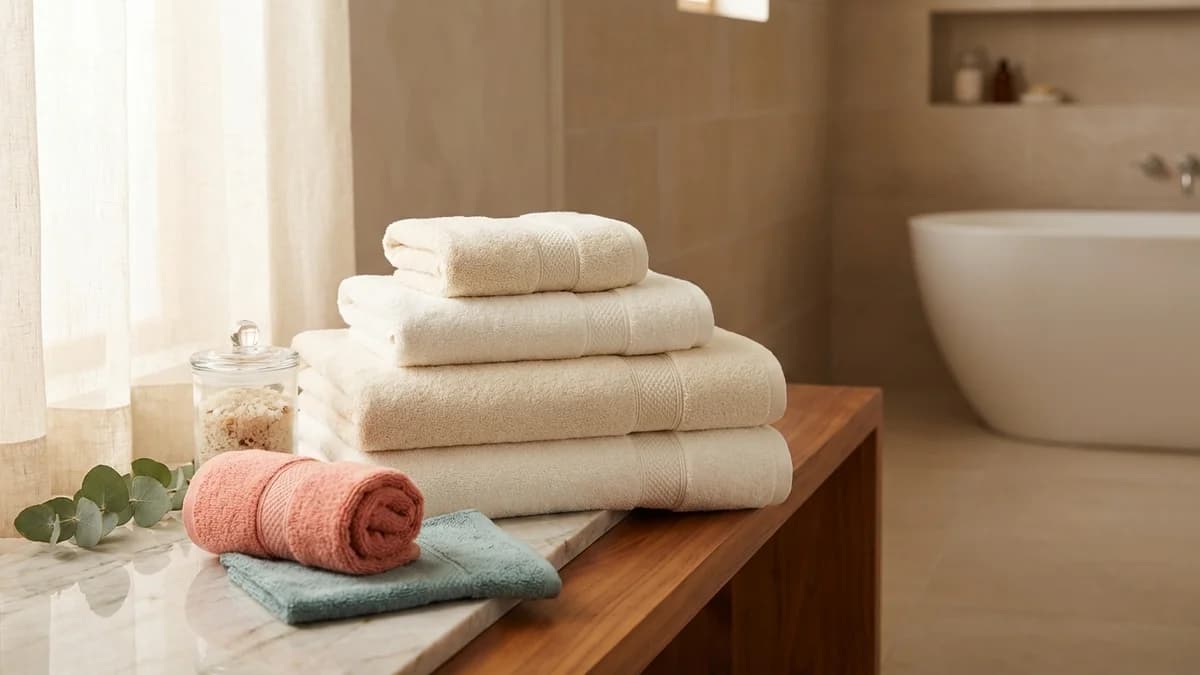
Luxury hotels typically stock three bath towels per guestroom: one in use, one in the laundry, one in the linen closet. That is the minimum ratio for a smooth turnaround. Add two hand towels and two washcloths per room. For suites with two bathrooms, double those numbers. Gyms and spas need a separate rotation. Poolside operations require heavier stock because guests use more. If your wholesale beach towels are part of the pool service, plan for at least 5 towels per guest during peak season.
A 300 room hotel running at 75 percent occupancy uses about 675 bath towels per day. If the laundry operates one shift, you need a par level of 3:1 for bath towels, meaning 2,025 towels total. Plus hand towels and washcloths. That number can go up during holiday periods. Many managers underestimate the buffer needed when laundry equipment breaks. A backup stock of 20 percent above your par level prevents a crisis. Store these in a dry area at 65°F (18°C) to avoid mildew.
Weight matters in your par calculation too. A 700 GSM bath towel weighs about 1.1 pounds each. For 2,025 towels that is roughly 2,228 pounds of laundry per cycle. Your commercial washer should have a load capacity that matches. Overloading a 125 pound washer by even 10 percent reduces wash quality and wears out towels faster. Calculate your linen weight per load and stick to it. This extends towel life and keeps water extraction efficient.
5. What certifications matter for commercial towel buying?
The most important certification for hotel towels is Oeko Tex Standard 100. It tests for harmful chemicals, including formaldehyde, pesticides, and heavy metals. Luxury properties increasingly require this. Next is GOTS for organic cotton. If you market your hotel as eco conscious, GOTS certified towels let you back that claim. Third is ISO 9001 for the manufacturer. That certification shows consistent production quality and traceability. Request a certificate of conformance with every bulk order.
For US hospitality, towels should meet ASTM D4236 for colorfastness and shrinkage. This standard tests how much a towel shrinks after 3 washes at 140°F (60°C). Acceptable shrinkage is under 5 percent in length and 3 percent in width. If a towel shrinks more, it will not fit standard bath racks. It also causes uneven wear. The CDC guidelines for laundering in healthcare facilities recommend a minimum wash temperature of 160°F (71°C) for infection control. Most hotels use 140°F (60°C). Know which standard your property follows.
Do not ignore colorfastness. A towel that bleeds dye onto white sheets destroys the guest experience and costs you replacement sheets. Ask for a dye migration test. The supplier should provide a wash test at 140°F (60°C) using a white swatch. If any color transfers, reject the towel. Responsible suppliers test each dye lot. We keep records of every production run. When you buy from us, you get those records with your order.