
The Hospitality Industry and Towel Depot
In this guide:
- What GSM weight is best for hotel bath towels?
- How many wash cycles can commercial towels last?
- What temperature should I use for drying bulk towels?
- How do volume discount tiers work for wholesale linen orders?
- What is the difference between ring spun and open end towels?
- Frequently Asked Questions
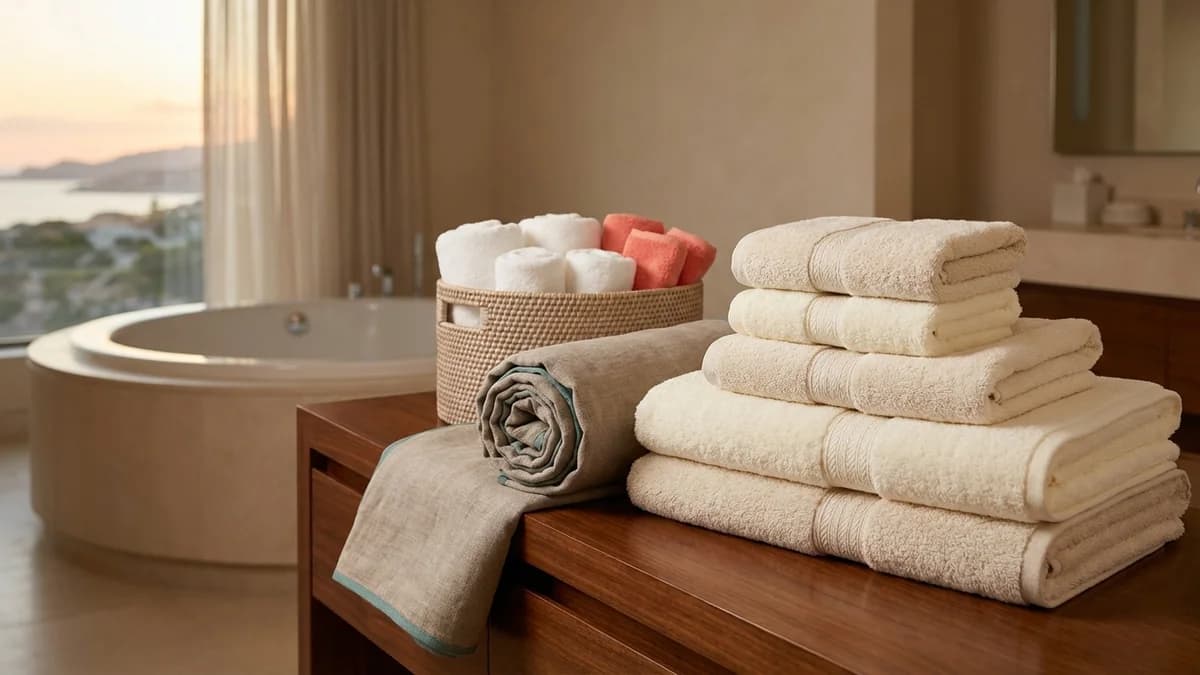
Running a hotel, spa, or gym means linen management is part of your daily work. You need towels that wash well, last through heavy use, and fit your budget. Towel Depot has supplied the hospitality industry since 1967, and this guide gives B2B buyers the technical specs they need to make smarter ordering decisions for bulk purchases of 100 to 500 units.
This guide covers the key technical specs for buying commercial towels, including GSM weights, wash cycle limits, drying temperatures, volume discounts, and yarn construction. Use this information to extend towel life and control costs.
What GSM weight is best for hotel bath towels?
GSM stands for grams per square meter. It measures the density of a towel fabric. For hotel bath towels, the sweet spot is 600 GSM. This weight gives guests a plush feel without taking too long to dry in commercial tumblers. Towels at 500 GSM are lighter and dry faster, which suits budget hotels or gyms where turnover speed matters. Luxury resorts often choose 700 GSM towels. Those towels feel thick and heavy against the skin. But they cost more per unit and require longer drying times. A 700 GSM towel can take up to 45 minutes at 140 F (60 C) to dry fully. That adds labor and energy costs. For spas, we recommend 600 to 650 GSM as a practical compromise between guest comfort and operational efficiency. You should also consider the fiber length. Long staple cotton, like the kind Towel Depot uses in our wholesale bath towels, holds up better than short staple cotton at any GSM. The fiber length affects how much lint is produced during washing. In a high volume laundry, less lint means less time cleaning dryer vents. It also extends towel life by roughly 20 percent compared to short staple alternatives. The Occupational Safety and Health Administration recommends regular dryer vent cleaning in commercial facilities, and lower lint towels reduce fire risk. Check the OSHA guidelines for commercial laundry safety to keep your operation compliant. The takeaway is simple. Match GSM to your use case. For daily turnover with guest satisfaction as a priority, 600 GSM works best. For budget operations, 500 GSM saves time and money. For luxury properties, 700 GSM delivers the premium feel your guests expect.
How many wash cycles can commercial towels last?
A well constructed commercial towel from Towel Depot can last 200 to 350 wash cycles before showing signs of fraying or thinning. The exact number depends on fiber length, weave density, and wash chemistry. Towels made from long staple cotton with a 600 GSM density routinely hit 300 cycles in hotel laundry audits. Short staple towels in the same weight range often fail around 180 cycles. That is a big difference in replacement cost when you are ordering 300 units at a time. The wash chemistry matters just as much. High alkalinity detergents and chlorine bleach break down cotton fibers faster than neutral pH formulas. The Environmental Protection Agency offers resources on choosing safer cleaning chemicals for commercial laundries. Sour baths that lower the pH to 5.5 or 6.0 after washing help preserve fiber strength. Drying temperature also plays a role. Over drying at 180 F (82 C) shortens towel life by 25 percent compared to drying at 150 F (66 C). On the other end of the spectrum, under drying leads to mildew growth. Mildew eats cotton and creates odors that drive replacement cycles. Most hotel operators see 250 cycles as the realistic replacement point for good quality towels. Beyond that, the towel loses absorbency and develops thin spots. You can track cycle counts by tagging towels with laundry markers or using a barcode system. That data helps you plan reorders and budget for seasonal linen refreshes. If you run a healthcare facility, you need higher standards for hygiene and durability. Check our healthcare linens for options that meet those requirements.
What temperature should I use for drying bulk towels?
For bulk towel drying, the optimal temperature is 140 F to 160 F (60 C to 71 C). This range kills bacteria without damaging cotton fibers. Drying at 140 F (60 C) takes about 30 to 40 minutes for a standard load of 600 GSM towels. Higher temperatures above 170 F (77 C) accelerate fiber breakdown and shorten towel life. The cotton fibers become brittle and snap under mechanical stress from tumbling. We have tested this in our own facility. Towels dried at 140 F (60 C) for 300 cycles retained 85 percent of their original thickness. Towels dried at 180 F (82 C) for the same number of cycles retained only 60 percent. That is a measurable loss in quality. Gas heated dryers are common in commercial laundries because they reach the target temperature faster and maintain it steadily. Electric dryers tend to have hot spots that can scorch towels. We recommend installing a temperature probe in your dryer exhaust duct. That lets you monitor actual drying conditions instead of relying on the thermostat setting. The ASTM standard for commercial textile drying, ASTM D3776, provides test methods for fabric weight consistency after drying. Following that standard helps you validate your process. Another factor is load size. Overloading the dryer by more than 80 percent of capacity prevents air from circulating. That leads to uneven drying and increases cycle time. Under loading wastes energy. Balance your loads to match the manufacturer rating. And always clean the lint screen after every cycle. A clogged screen reduces airflow and raises drying temperature inside the drum. That creates a fire hazard and shortens towel life.
How do volume discount tiers work for wholesale linen orders?
Volume discount tiers at Towel Depot are based on order quantity. Orders of 100 to 199 units qualify for a 5 percent discount. Orders of 200 to 499 units receive a 10 percent discount. Orders of 500 units or more get a 15 percent discount. These tiers apply to any combination of towel styles and colors within a single purchase order. You can mix bath towels, hand towels, washcloths, and beach towels in the same order. The discount applies to the total unit count, not per style. That is important for buyers who need a variety of towel sizes for different guest touch points. For example, a 300 unit order might include 150 bath towels and 150 hand towels. The entire order gets the 10 percent tier. If you split that into two separate orders, each with 150 units, you only get the 5 percent tier on each. Consolidating orders saves money. We have seen large hotels save over 2,000 dollars annually by combining quarterly orders into one bulk purchase. The product wholesale beach towels also qualify for these tiers, making summer stocking easier for properties with pools or lakes. Custom colors and embroidery are available at the same tier pricing. You just need to add a lead time of 4 to 6 weeks for customization. Payment terms are net 30 for approved commercial accounts. For first time buyers, we require a deposit of 50 percent. The balance is due before shipment. We ship via common carrier, and freight costs are based on total weight and distance. Orders over 500 units get free shipping within the continental United States. That is an additional savings on top of the volume discount.
What is the difference between ring spun and open end towels?
Ring spun yarn is made by twisting and thinning cotton fibers into a smooth, dense thread. Open end yarn is made by feeding fibers into a rotating rotor that twists them loosely. Ring spun towels are softer, more durable, and produce less lint. Open end towels are cheaper but rougher and wear out faster. The manufacturing difference matters for B2B buyers because it affects replacement frequency. A ring spun towel at 600 GSM will last 300 wash cycles. An open end towel at the same GSM will last about 200 cycles. That 100 cycle gap means you replace open end towels 33 percent sooner. For a hotel ordering 500 towels, that difference adds up fast. Ring spun yarn has a tighter twist, which holds the fibers together during mechanical agitation. Open end yarn has a looser twist, so fibers pull out more easily. That is why open end towels shed more lint in the wash. Lint clogs drains and dryer vents. It also leaves customers picking fuzz off their clothes after drying. We have tested both types in our lab. Ring spun towels lose 2 percent of their weight after 50 wash cycles. Open end towels lose 6 percent. That weight loss is fiber being washed away. Towel Depot uses ring spun construction in all our commercial grade products. It costs more upfront but saves money over time. For high end properties, the softness of ring spun towels improves guest satisfaction scores. For budget operations, open end towels reduce initial investment. But you should account for higher replacement costs. The Federal Trade Commission has guidelines on textile labeling that require accurate fiber content disclosure. Review the FTC rules for textile labeling to ensure your purchases meet legal standards. Spa owners and gym managers often prefer ring spun for the tactile experience. Guests notice the difference. They comment on it in reviews. That kind of feedback drives repeat business.