
T-130 Bed Sheets for Hospital and Nursing Home Operations
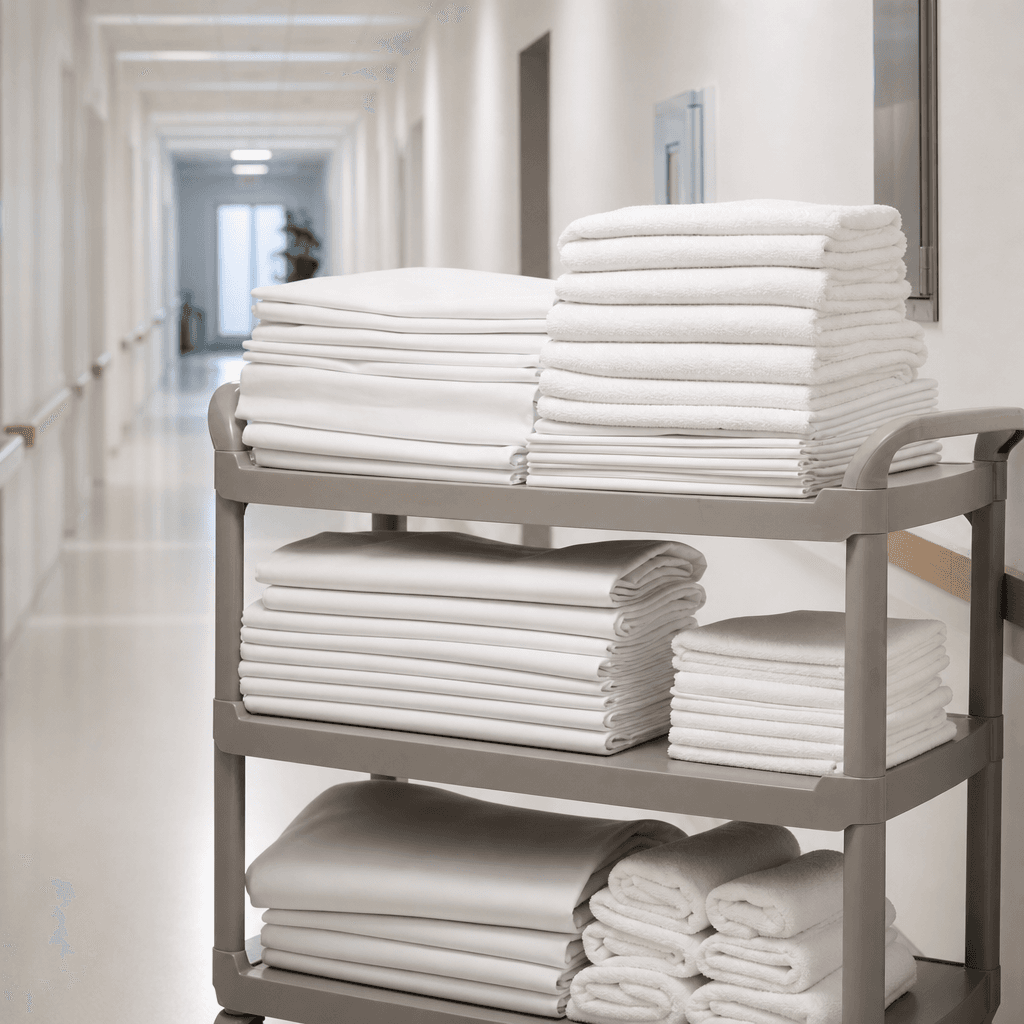
T-130 bed sheets represent the most practical choice for healthcare facilities managing hundreds of beds with strict budgets and intensive laundering schedules. Unlike consumer-grade linens that fail after 50-100 wash cycles, commercial T-130 grade sheets withstand the demanding 160°F washing temperatures and harsh detergents required in medical environments. For purchasing managers evaluating healthcare linens, understanding T-130 specifications means the difference between replacing bedding every six months versus every two years.
T-130 bed sheets with 60% cotton, 40% polyester blend deliver 200+ wash cycles at hospital temperatures, making them the most cost-effective choice for healthcare facilities processing 50+ beds daily.
Should Your Hotel Choose T-130 Bed Sheets Over Higher Thread Count Options for Guest Rooms?
T-130 bed sheets outperform higher thread count options in commercial hotel environments where durability matters more than perceived luxury. Hotels washing 200+ room sets weekly discover that T-200 or T-250 grade sheets, while softer initially, lose structural integrity faster under commercial laundering stress. The 60% cotton, 40% polyester blend in T-130 grade maintains shape and color through repeated 140°F wash cycles that would destroy pure cotton alternatives.
In our 59 years serving the hospitality industry, we see hotels make the same costly mistake: purchasing T-300 grade sheets expecting better guest satisfaction, only to replace them after 150 wash cycles instead of the 200+ cycles T-130 delivers. The polyester content in T-130 prevents the shrinkage and pilling that guests actually notice and complain about. A 300-room hotel using queen 60x80x12 fitted sheets in T-130 grade saves approximately $15,000 annually compared to replacing T-250 sheets every 18 months instead of every 24 months.
Guest surveys consistently show that thread count perception ranks below cleanliness, proper fit, and absence of stains or pills. T-130 sheets excel in all these practical measures while maintaining the crisp, professional appearance that builds guest confidence in room cleanliness. Hotels managing linen inventories often coordinate their wholesale bath towels replacement cycles with sheet schedules to optimize bulk purchasing discounts and delivery logistics.
How to Evaluate T-130 Hospital-Grade Bed Sheets for Commercial Laundry Durability?
Hospital-grade T-130 bed sheets must survive the thermal disinfection protocols required by healthcare regulations, typically involving 160°F water temperatures for minimum 25-minute cycles. The question of how do hospitals wash their sheets involves strict adherence to CDC guidelines that mandate high-temperature washing with specific chemical protocols. The key durability indicator lies in the fabric construction: properly manufactured T-130 uses combed cotton fibers twisted with high-tenacity polyester, creating a blend that maintains tensile strength through repeated exposure to chlorine bleach and high-pH detergents.
When evaluating suppliers, request wash test certification showing retention of tear strength after 200 commercial wash cycles. Inferior T-130 sheets use ring-spun cotton with low-grade polyester that begins degrading after 100 cycles, requiring premature replacement that doubles your annual bed linens budget. Look for sheets with reinforced hems using double-fold construction rather than serged edges, which unravel under the mechanical stress of commercial extractors.
The polyester content serves a critical function beyond durability. In healthcare environments where federal guidelines mandate hot water washing, pure cotton sheets shrink up to 8% and require constant size adjustments. T-130 grade sheets maintain dimensional stability, ensuring proper mattress fit throughout their service life. Our facility clients report 95% size consistency after 200 wash cycles with quality T-130 sheets versus 78% with cotton alternatives.
What's the Real Cost Per Use When Buying T-130 Bed Sheets in Bulk for Your Business?
Calculating true cost per use for T-130 bed sheets requires accounting for purchase price, replacement frequency, and labor costs associated with inventory management. A 100-bed nursing home purchasing T-130 fitted sheets in queen 60x80x12 size pays approximately $12 per set in quantities of 300+ units. With our standard volume discount structure offering 15% off orders of 15+ units, the effective cost drops to $10.20 per set.
Over a typical 200 wash cycle lifespan, each T-130 sheet set costs $0.051 per use before factoring in washing expenses. Compare this to consumer-grade sheets purchased at $8 per set but lasting only 75 cycles, resulting in $0.107 cost per use, more than double the T-130 expense. For facilities processing 50+ beds daily, this difference represents $4,000+ in annual savings on sheet costs alone.
The bulk purchasing advantage becomes critical for maintaining consistent inventory without overstocking. Healthcare facilities operating with lean inventory typically maintain a three-set rotation: one set on beds, one in laundry, one in reserve. Purchasing T-130 sheets in 100-500 unit orders ensures consistent quality lot-to-lot and eliminates the premium pricing penalties that smaller orders incur. Our B2B clients placing orders in this range benefit from transparent tier pricing that reduces per-unit costs by 15% compared to smaller quantity purchases, similar to the economies of scale achieved with hotel towels bulk orders.
Which Washing Temperature and Detergent Extends T-130 Bed Sheet Lifespan in High-Volume Operations?
T-130 bed sheets achieve optimal lifespan when washed at 140°F using commercial-grade alkaline detergents with controlled chlorine bleach levels. The question what temperature to wash towels applies equally to sheets, though the 140°F setting for T-130 bed linens strikes the optimal balance between pathogen elimination and fabric preservation. This temperature effectively eliminates pathogens while staying below the 160°F threshold that accelerates fabric degradation. Many facilities make the error of washing all linens at maximum temperature, which reduces T-130 sheet life from 200+ cycles to approximately 150 cycles.
The detergent formula significantly impacts sheet longevity. Commercial laundries report best results using low-phosphate alkaline detergents with pH levels between 10.5-11.5, combined with chlorine bleach concentrations not exceeding 150 ppm available chlorine. Higher concentrations attack the cotton fibers in the T-130 blend, causing premature yellowing and weakening. When facilities ask should you wash towels in hot water, the same temperature considerations apply to sheets: hot water provides sanitization, but excessive heat damages fibers and shortens replacement cycles.
Water quality plays an equally important role in extending sheet life. Hard water with calcium levels above 150 ppm requires pre-treatment to prevent mineral buildup that makes fabric stiff and prone to tearing. The commercial laundering protocols that determine how do hotels keep towels soft also apply to maintaining sheet texture: proper water conditioning, controlled detergent chemistry, and appropriate drying temperatures. Facilities implementing these temperature and chemical protocols report 25% longer service life compared to those using maximum heat for all cycles.
How Many Wash Cycles Should You Expect from Quality T-130 Bed Sheets Before Replacement?
Quality T-130 bed sheets manufactured to commercial specifications reliably deliver 200-250 wash cycles before showing visible wear that requires replacement in professional environments. This cycle count assumes proper washing protocols with water temperatures at 140°F and appropriate detergent chemistry. Facilities that achieve this benchmark typically save 30-40% annually on linen replacement costs compared to those replacing sheets every 125-150 cycles due to improper care.
The replacement timeline varies significantly based on usage intensity and washing frequency. A 200-bed hospital washing sheets daily reaches the 200-cycle threshold in approximately 10-12 months, while a smaller nursing home with 50 beds washing every other day extends sheet life to 18-20 months. The key performance indicators for replacement include visible thinning around high-stress areas like foot sections, permanent staining that resists standard bleaching protocols, and dimensional changes that affect proper mattress fit.
Our experience serving 10,000+ commercial clients shows that facilities tracking wash cycles and implementing scheduled replacement achieve better cost control than those replacing sheets reactively. The most successful operations maintain replacement logs showing cycle counts per batch, allowing them to predict replacement needs 60-90 days in advance. This proactive approach prevents the operational disruptions and emergency purchasing premiums that occur when sheet inventories unexpectedly fall below minimum rotation requirements. Quality T-130 sheets reaching 225+ cycles typically maintain adequate appearance for less visible applications like employee housing or storage, extending their useful life beyond primary service areas.