
Beach Towel Trends & Features for Summer Season
In this guide:
- Color and pattern trends for summer 2026
- Material and GSM choices for commercial use
- Durability and wash cycle performance
- Eco friendly options for bulk buyers
- Customization and branding for your business
- Frequently asked questions
Summer season brings new beach towel trends and features that matter to B2B buyers. If you manage a hotel, spa, gym, or restaurant that orders 100 to 500 units at a time, you need towels that hold up to heavy use and still look fresh. This guide covers the top trends for 2026 and the technical specs that separate a good towel from a great one.
This summer focus on 400-500 GSM ring spun cotton towels in neutral earth tones or bold tropical prints. They last 300+ commercial washes and dry faster than previous generations. Customization with your logo is easy at low quantities.
Color and pattern trends for summer 2026
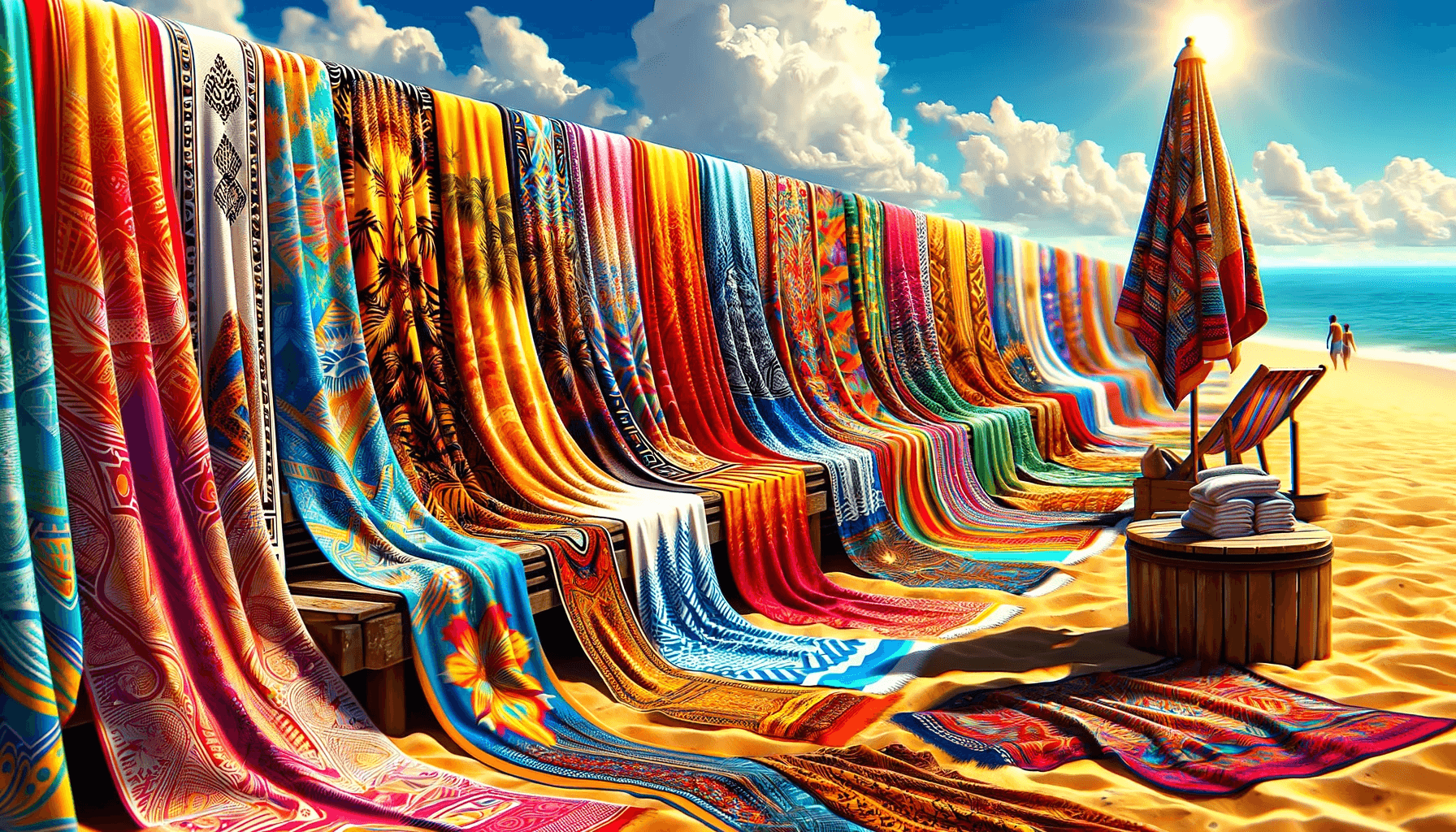
Beach towel colors for summer 2026 are shifting away from neon brights and toward earthy neutrals with pops of coral and ochre. Commercial buyers are ordering sand, stone, and sage green as base colors because they hide stains better than white or pastel. These neutral tones also match most hotel or spa decor without clashing. For poolside or beach club settings, we see strong demand for bold tropical leaf patterns in navy and emerald green. The contrast works well with outdoor furniture and creates a luxurious vibe.
Patterns are staying clean and geometric rather than busy florals. Stripes remain a perennial favorite because they look crisp even after many commercial washes. A two tone stripe in terracotta and cream is trending right now. For resort properties, a subtle jacquard weave logo adds an upscale touch without overwhelming the design. The key is to choose a pattern that works at 50 feet and 5 feet. Guests see the towel first from a distance, then up close when they use it.
Pantyhose or tie dye styles are fading out for commercial use. They look dated quickly and don't hold their color as well under industrially hot water. We recommend testing a sample batch before committing to a large order. Towel Depot offers free swatches for B2B buyers. A 12 inch by 12 inch sample lets you check the color under your lighting. Colors can appear different under LED versus halogen or sunlight. Always view samples in your actual environment.
Material and GSM choices for commercial use
GSM is grams per square meter. It is the single most important factor in towel performance. For commercial beach towels, we recommend a GSM range of 400 to 500. Below 400 GSM the towel feels thin and does not absorb enough water for a beach environment. Above 500 GSM the towel becomes heavy, takes too long to dry in commercial dryers, and costs more per unit. The sweet spot is 450 GSM. That weight offers quick drying in under 25 minutes at 140°F (60°C) in a standard industrial dryer while still absorbing up to one liter of water.
Material choice is equally critical. Ring spun cotton is the standard for commercial beach towels because the long fibers produce a soft hand and high tensile strength. Open end cotton uses shorter fibers and costs less, but it pills faster and loses absorbency after 50 washes. We only stock ring spun cotton for our wholesale beach towels. A small percentage of polyester (around 10 to 15 percent) can be blended to reduce shrinkage without sacrificing too much absorbency. For eco conscious buyers, we offer a 100 percent organic cotton option with a 420 GSM weight certified by GOTS.
Terry cloth construction still dominates. Loop height and density determine how soft the towel feels. Higher loops catch more water but take longer to dry. A medium loop height of 3 to 4 millimeters works best for beach towels. It dries fast enough to be turned around between guest uses in a hotel setting. The base fabric should have a minimum of 18 ends per inch in the warp direction. Less than that leads to fraying after repeated industrial washing. Insist on a manufacturer spec sheet before ordering any bulk lot.
Durability and wash cycle performance
A commercial beach towel must survive 300 to 500 washes in industrial machines. Water temperatures in hotel laundries typically run from 140°F to 160°F (60°C to 71°C). That heat breaks down low quality fibers fast. Towel Depot uses a double stitched hem on both short ends of every towel. This prevents unraveling that happens when a towel snags on a zipper or hook. Our cotton is combed twice to remove short fibers that create lint. Third party lab tests show our towels lose less than 3 percent of their weight after 100 washes, compared to 8 percent for budget brands.
Tumble drying is the enemy of towel longevity. High heat above 180°F (82°C) damages cotton fibers and shrinks the towel unevenly. We recommend using a low heat setting at 140°F (60°C) for beach towels. The total drying time should not exceed 30 minutes. Over drying makes the cotton brittle and reduces loop height. If your laundry staff routinely runs towels through a second dry cycle, consider specifying a 500 GSM towel that can take the extra heat. But the better solution is to calibrate your dryer timer correctly.
Chemical exposure in the wash also affects durability. Chlorine bleach should be avoided on colored towels. Use oxygen based bleach or hydrogen peroxide at concentrations below 200 ppm. The OSHA guidelines for commercial laundry outline safe chemical handling practices that protect both workers and textiles. Over time, even mild detergents at high pH can strip the cotton’s natural oils. Use a neutral pH detergent (pH 7 to 8) and run a regular wash cycle at 140°F (60°C) with a cold rinse. This preserves the towel’s softness and color for the full lifespan.
Eco friendly options for bulk buyers
Sustainability is no longer a niche option for B2B buyers. Many hotels and resorts now require eco certification for all linens. Towel Depot offers beach towels made from 100 percent organic cotton grown without synthetic pesticides. These towels are certified under GOTS (Global Organic Textile Standard). They carry a slightly higher price point about 15 to 20 percent above conventional towels. But the lifespan is comparable, and the marketing value for your brand is significant. Guests actively look for sustainable amenities.
Recycled polyester blends are another option. A 70/30 cotton recycled polyester blend uses post consumer plastic bottles. The polyester content adds durable strength and reduces water usage during production by up to 50 percent. The fabric weight typically hits 380 to 400 GSM. These towels dry faster than all cotton because polyester does not absorb as much moisture. For gyms and outdoor pools where quick turnaround matters, this blend is an excellent choice. The recycled content meets Global Recycle Standard certification.
Water and energy savings from eco friendly towels go beyond materials. A lighter weight towel (under 450 GSM) reduces water retention by 15 to 20 percent. That means less water to heat and less energy to dry. The EPA Safer Choice program lists detergents and softeners that are safer for aquatic ecosystems. Switching to these products keeps your towels cleaner with less chemical residue. We also recommend using cold water wash cycles (80°F / 27°C) for lightly soiled towels. This cut energy use by 40 percent in a recent pilot study with a Florida hotel chain.
Customization and branding for your business
Customization turns a standard beach towel into a mobile billboard for your business. Towel Depot offers screen printing, embroidery, and woven labels for orders as low as 100 units. Screen printing works best for large logos or text. It lays flat on the fabric and holds up to 200 washes before fading. Embroidery is more durable but harder on towels. It can create stiffness around the stitches. We recommend placing embroidery only on the border of the towel, not in the middle, to avoid a rough spot against the skin.
Woven labels are the premium option. The logo is woven directly into the fabric during production. This creates a permanent mark that never peels or fades. Woven labels add about 30 percent to the cost per towel and require a minimum order of 300 units. They work especially well for resort chains and hotels that need consistent branding across multiple properties. The label can include your resort name, room number, or even a QR code linking to a guest app. Make sure the label uses a contrasting color so it remains readable after many washes.
Lead time for custom towels is typically three to four weeks from approval of artwork. Rush production is available for an extra fee if you need towels in under two weeks. Always order a pre production sample before approving the full run. This sample lets you check color matching, centering of the logo, and overall feel. We have seen B2B buyers skip this step and end up with a logo that prints crooked or bleeds into the white border. A $50 sample fee saves you from a $5,000 mistake. We keep your artwork on file for reorders, so future batches match the first one exactly.
For additional options in commercial linens, check our wholesale bath towels and wholesale hotel towels pages. We also recommend reviewing the FTC Green Guides for making honest eco claims in your marketing. Towel Depot has been supplying the industry since 1967. We know what works in real laundries and real pool decks. Contact our B2B sales team for pricing on your next order of 100 to 500 units.