
Sanitary Towels: Hygiene Guide for Home & Hospitality
In this guide:
- What makes a towel truly sanitary for commercial use?
- How often should towels be replaced in a hotel or salon?
- What is the best way to store towels to keep them sanitary?
- Can different types of towels be washed together safely?
- What is the proper drying temperature for commercial towels?
- Frequently Asked Questions
For hotel housekeeping managers, salon owners, spa operators, gym managers, and restaurant buyers who place bulk orders of 100 to 500 units, maintaining sanitary towels is not optional. It is a direct driver of guest satisfaction, regulatory compliance, and operational cost. This guide covers the science of towel hygiene and gives you actionable steps to keep your textiles clean, safe, and long lasting.
Sanitary towels require wash temperatures above 140°F, proper drying to a core temperature of at least 140°F, segregated processing by soil level, and storage in low humidity environments. Replace towels every 75 to 150 cycles for hotels and every 6 to 12 months for salons.
What makes a towel truly sanitary for commercial use?
A genuinely sanitary towel starts with the wash cycle. Commercial washing machines used in hospitality and healthcare must reach a minimum temperature of 140°F (60°C) for at least 10 minutes during the main wash. This temperature kills most bacteria, including E. coli and Staphylococcus aureus, which are common on used towels. For higher risk environments like nursing homes or hospitals, the standard rises to 160°F (71°C) according to guidelines from the CDC. At Towel Depot we recommend every buyer confirm their laundry supplier or in house equipment can maintain these temperatures consistently.
Detergent chemistry is equally important. Commercial detergents with a pH between 10 and 12 break down body oils and soils that trap bacteria. A disinfectant step using chlorine bleach at 50 to 150 ppm for white towels or oxygen bleach at 200 ppm for colors ensures sanitation. Without these chemicals, even high temperature washing leaves a biofilm on fibers that harbors microbes. After the wash, the towel must be dried to a core moisture content below 5 percent. Drying at 140°F to 180°F (60°C to 82°C) for 20 to 30 minutes achieves this. If your towels come out of the dryer still feeling slightly damp, run another cycle. Damp storage ruins all the work of the wash.
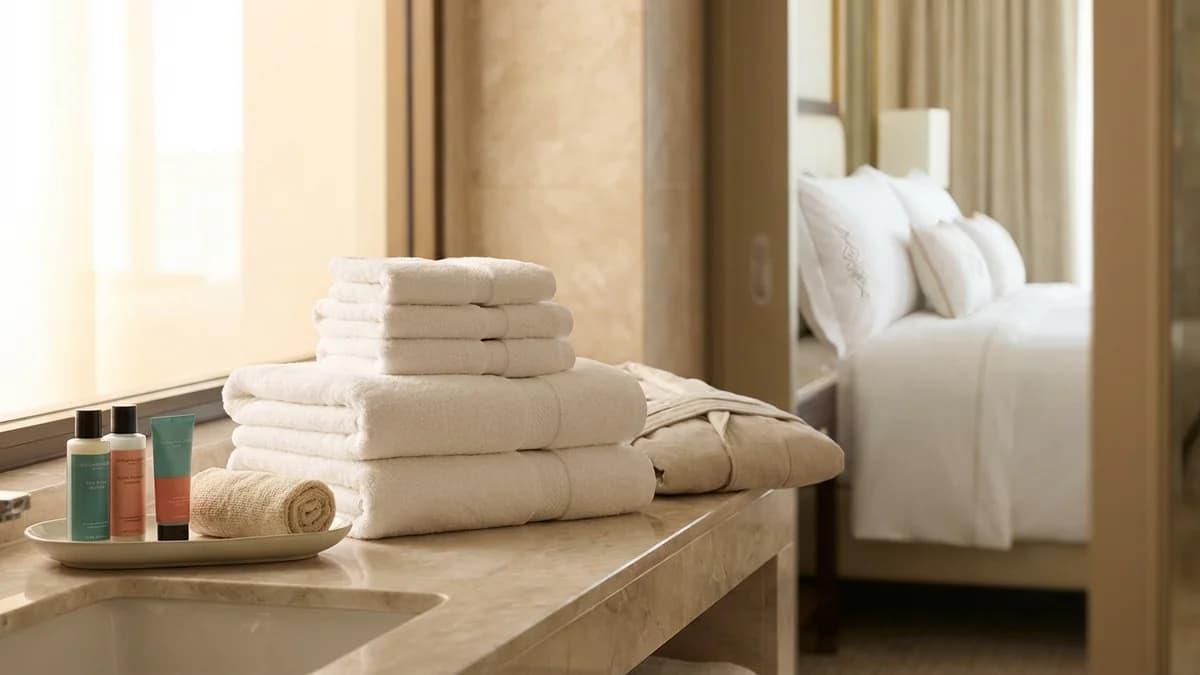
Finally, storage conditions matter. A clean towel that sits in a humid linen closet can recontaminate within hours. The OSHA sanitation standard requires that linens be stored in clean, dry areas. Keep your linen storage rooms at 40 to 50 percent relative humidity and use air circulation. Never store towels on open shelves near bathroom exhaust vents or cleaning supply areas. Segregate clean towels from soiled ones by at least 3 feet of physical space. These steps guarantee that the towel your guest or client touches is as clean as the day it left the factory.
How often should towels be replaced in a hotel or salon?
Towel lifespan depends on wash cycle count, fabric quality, and use environment. A standard 600 GSM ring spun cotton towel used in a hotel loses about 10 percent of its absorbency every 50 washes. Most commercial towels remain serviceable for 75 to 150 wash cycles. At an average of one wash per day per towel in a busy hotel, that translates to 2.5 to 5 months. However, luxury properties that launder towels after every guest use may push that to 6 to 8 months. The first sign of replacement is a rough texture or faded color that makes the towel look old. Guests notice. A frayed hem or thinning pile is the second sign.
Salons and spas are harder on towels. Hair chemicals, bleach, and high heat from styling tools accelerate fiber degradation. In a busy salon, a hand towel can go through 3 to 4 cycles per day. At that rate, 100 wash cycles happen in about 25 to 35 days. We advise salon owners to inspect towels every 4 weeks for thinning or fraying. Budget for replacement every 6 to 12 months. Gym towels face a different challenge. Heavy sweat and frequent washing at high temperatures break down elastane blends faster. If you use cotton polyester blends, expect 100 to 120 washes before pilling becomes unacceptable. Replace gym towels at least once a year.
For restaurant buyers who use kitchen towels for drying dishes or wiping counters, replacement cycles are shorter. Kitchen towels get food soils, grease, and frequent bleach exposure. Plan on 50 to 80 wash cycles or 2 to 4 months. The cost of replacing towels early is lower than the cost of a health code violation or a guest complaint. Keep a log of wash cycles per towel batch. Many of our wholesale customers at wholesale bath towels use a simple color coding system. Different colors for each month of purchase. When the color batch gets too thin, you know it is time to order. This method saves money and protects your reputation.
What is the best way to store towels to keep them sanitary?
Storage is the most overlooked part of towel sanitation. Even perfectly washed towels can become a breeding ground for mold and bacteria if stored incorrectly. The rule is simple: keep towels dry and ventilated. Relative humidity in the storage area should stay below 50 percent. Use a hygrometer to check. If your storage room feels damp, install a dehumidifier or increase air exchange. Never stack towels on the floor. Use metal or plastic shelving at least 6 inches off the ground. This prevents moisture wicking from concrete floors and allows air to circulate underneath.
Fold towels loosely rather than rolling them tightly. Tight rolls trap moisture at the core. In hotel housekeeping, we recommend storing towels in open linen carts or shallow bins. Do not close the cart lid fully until the towels have cooled completely from the dryer. A common mistake is to fold towels while still warm and stack them immediately. The trapped steam creates condensation inside the pile. Within 24 hours you can have a musty smell. Let towels cool for at least 30 minutes after drying before folding or stacking. Then store them in a room that is temperature controlled between 65°F and 75°F (18°C to 24°C).
For large operations with multiple floors, consider a dedicated linen storage room on each level. Separate clean and soiled towel storage by at least one floor or a solid wall. The CDC healthcare hygiene guidelines recommend that clean linens be stored in a closed cabinet or wrapped in plastic until use. In hotels, this prevents contamination from housekeeping carts that carry used towels. For salons and spas, keep a small stack of clean towels at each station in a covered basket. Replace the basket daily. Always rotate stock. Use the oldest towels first. This FIFO system prevents any towel from sitting in storage for weeks.
Can different types of towels be washed together safely?
No. Mixing towel types by use area is a hygiene risk and a fabric care mistake. Bath towels from guest rooms carry skin cells, body oils, and personal care product residues. Kitchen towels from restaurants carry food soils, grease, and potential pathogens like salmonella. Cleaning rags used on floors or toilets carry high bacterial loads. Washing them together cross contaminates everything. In commercial laundry, you must sort towels by soil level and fabric type. Light soil loads like bath towels should be washed separately from heavy soil loads like kitchen or gym towels.
Fabric type also matters. Towels with different GSM weights dry at different rates. A high GSM 700 weight towel takes longer to dry than a 400 GSM spa towel. If you mix them in the same load, the lighter towels may over dry and the heavier ones remain damp. This damages the fibers and reduces lifespan. Wash all white towels together at 160°F (71°C) with chlorine bleach. Wash colored towels together at 140°F (60°C) with oxygen bleach. Never use chlorine bleach on colors. It fades them quickly. Keep separate loads for towels that have been used in healthcare linens environments. These require a thermal disinfection cycle at 167°F (75°C) for 10 minutes per ANSI/ALL guidelines.
In a hotel, you should have at least three laundry streams: white bath towels, colored bath towels, and kitchen or pool towels. Salons need a stream for towels used with hair dye and bleach separately from general purpose hand towels. Restaurants must separate kitchen towels from bar towels used for glassware. Each stream has its own chemical formula and cycle time. Invest in a washer extractor with programmable cycles. Label your hampers clearly. Train your staff on the sorting rules. It adds a few minutes per load but saves thousands of dollars in premature towel replacement and prevents hygiene failures.
What is the proper drying temperature for commercial towels?
Drying temperature directly affects both sanitation and towel longevity. The ideal commercial dryer temperature is 140°F to 180°F (60°C to 82°C) measured at the fabric surface. At 140°F, you need at least 15 to 20 minutes of drying time for a standard load. At 180°F, reduce time to 10 to 12 minutes. Never exceed 200°F (93°C). High heat above 200°F damages cotton fibers, reduces GSM weight, and causes shrinkage of up to 5 percent per cycle. Over time, this makes towels feel thin and scratchy. Your guests will notice within 10 to 15 cycles.
The dryer must have a cool down cycle at the end. A three minute cool down at 100°F (38°C) allows the fibers to relax and reduces wrinkles. Skip this step and you get stiff towels that shed lint excessively. For hotels and spas that prefer a fluffy feel, add a fabric softener sheet in the dryer or use liquid softener in the wash. But be careful. Too much softener builds up on cotton fibers and reduces absorbency. Use softener only every third load. For gym towels, skip softener entirely. It clogs the fibers and traps sweat odors. Instead, add white vinegar to the rinse cycle at 1 cup per load to remove residue and control odors.
Monitor your dryer exhaust temperature with an infrared thermometer. If the air exiting the dryer is below 120°F (49°C) after 10 minutes, your dryer is under performing. Clean the lint filter after every load. A clogged filter increases drying time by 20 to 30 percent and wastes energy. For bulk operations drying 500 unit orders weekly, this adds hours of extra runtime. Use moisture sensors if your dryer has them. They stop the cycle automatically when towels reach the target moisture level. This prevents over drying and saves fabric life. For beach towels used in pool and resort settings, a slightly cooler dry at 140°F preserves the bright colors. Check out our selection of wholesale beach towels that are colorfast and resist fading even with repeated washing.