
Rally Towels: Team Spirit & Promotional Uses
In this guide:
- What makes rally towels different from standard promotional towels
- How are rally towels manufactured and what materials work best
- What customization options are available for bulk orders
- How should rally towels be cared for and maintained
- What are the most effective uses for rally towels in promotions
- Frequently asked questions
Rally towels are a proven tool for fan engagement and brand visibility at sporting events. For B2B buyers in hospitality, fitness, and promotional industries, these towels offer a low cost way to generate excitement while serving a practical purpose. This guide covers the manufacturing, customization, care, and strategic use of rally towels so you can make informed bulk purchasing decisions.
Rally towels are lightweight, customizable towels designed for fan engagement and promotional campaigns. They offer a low cost per unit with high visibility for sponsors and teams when ordered in bulk quantities of 100 to 500 units.
What makes rally towels different from standard promotional towels
Standard wholesale bath towels are built for absorbency and durability in repeated daily use. Rally towels serve a different purpose. They are made to be waved, held up, and displayed during events. The weight is lighter, the size is smaller, and the fabric is chosen for print quality rather than maximum liquid absorption. Most rally towels fall between 250 and 350 GSM. A 250 GSM towel is easy for children and adults to wave for an entire game. A 350 GSM towel feels more substantial and can double as a utility towel on hot days.
The size difference matters too. Standard bath towels measure 27 by 52 inches and weigh 450 to 600 GSM. Rally towels typically measure 12 by 18 inches or 15 by 20 inches. This smaller footprint keeps the per unit cost low, usually 30 to 50 percent less than a comparable wholesale beach towels of similar quality. For a bulk order of 500 units, the savings can exceed several hundred dollars. That makes rally towels a smart choice for organizations that need to stretch a promotional budget across multiple events or seasons.
Another key difference is the fabric composition. Rally towels are often made from a cotton polyester blend, with 80 percent cotton and 20 percent polyester being the most common ratio. Polyester gives the towel a slight stiffness that helps it hold its shape when waved. It also provides better color retention for printed logos. Pure cotton towels are softer but can droop and are harder to print on with sharp detail. Microfiber rally towels exist but are less common because the tight weave makes screen printing difficult. The Federal Trade Commission offers guidance on textile labeling and advertising claims for promotional products like rally towels at their business guidance page. You can review those standards at ftc.gov to ensure your custom towels meet legal requirements.
How are rally towels manufactured and what materials work best
Rally towels start as rolls of greige goods, which are unbleached and undyed fabric. The fabric is cut, hemmed, and then dyed in batch lots. Dye lots are important because color can vary by up to 5 percent between batches. For a single bulk order, we recommend requesting all towels from one dye lot to avoid visible color differences. The most common materials are ring spun cotton, combed cotton, and polyester microfiber. Ring spun cotton offers the best hand feel for a premium rally towel. Combed cotton costs about 10 percent less and still prints well. Polyester microfiber dries fast but can be harder to print on with screen inks.
Weave structure also affects how a rally towel performs. Terry cloth rally towels use a loop pile construction that provides some absorbency for wiping sweat. That is useful for outdoor summer games where temperatures can reach 100 F (38 C). Waffle weave towels are thinner, dry faster, and have a modern look that appeals to corporate promotional clients. Jacquard weave allows logos to be woven directly into the fabric rather than printed on the surface. That method costs about 20 percent more but produces a towel that never fades or peels. For most bulk orders, terry cloth with screen printing strikes the right balance of cost and quality.
GSM weight directly affects manufacturing cost and end use. A 250 GSM towel costs roughly 15 to 20 percent less than a 350 GSM towel of the same size. For a giveaway where the towel will be used once and kept as a souvenir, 250 GSM is sufficient. For a towel that will be washed and reused across a season, 320 to 350 GSM provides better durability. The Consumer Product Safety Commission sets flammability standards for textile products sold in the United States. You can find those requirements at cpsc.gov. It is important to confirm your rally towels meet these standards before distribution, especially if they will be used in large venues with thousands of fans.
What customization options are available for bulk orders
Screen printing is the most common customization method for rally towels. It works well for solid logos and text in up to four colors. The screen printing process applies a plastisol ink that bonds with the fabric fibers. The ink cures at 320 F (160 C) for 60 to 90 seconds to ensure it withstands washing. For orders of 100 to 250 units, screen printing setup costs are around 75 dollars per color. For orders of 500 units or more, setup costs drop to about 50 dollars per color. That makes screen printing more economical for larger runs. The print covers about 80 percent of color opacity on cotton towels and 70 percent on polyester blends.
Dye sublimation is a different process that works only on 100 percent polyester towels. The design is printed on transfer paper using special dyes. Heat and pressure at 400 F (204 C) turn the dye into a gas that bonds with the polyester fibers. The result is a permanent image that does not crack, peel, or fade. Dye sublimation allows for full color designs, gradients, and photo quality images. The process costs about 25 percent more per unit than screen printing. For a 15 by 20 inch rally towel, dye sublimation adds roughly 1.50 to 2.00 dollars per towel. If your design includes a sponsor logo, team mascot, and event date, dye sublimation is the better choice.
Embroidery is a third option for rally towels but is less common due to cost and time. Embroidered logos use thread stitched directly into the fabric. Each logo takes 8,000 to 15,000 stitches depending on complexity. At 10 to 15 dollars per thousand stitches, embroidery can add 8 to 22 dollars per towel. That cost is prohibitive for large giveaways but works for premium towels given to VIP guests or corporate partners. For most bulk promotional orders, screen printing or dye sublimation offer the best value. We recommend ordering one sample towel at each customization option before placing a full production order. This allows you to check color accuracy, print placement, and fabric feel. The 10 to 30 dollar investment in samples can prevent a 5,000 dollar mistake.
How should rally towels be cared for and maintained
Rally towels that will be washed and reused need proper care to maintain their appearance and print quality. Wash them in water at 104 F (40 C) or lower. Hot water above 120 F (49 C) can cause shrinkage of up to 8 percent on cotton towels and 4 percent on polyester blends. Use a mild detergent without bleach or fabric softener. Bleach breaks down cotton fibers over time and can fade printed logos by 30 to 40 percent after 20 washes. Fabric softener leaves a residue that reduces absorbency and can cause screen printed ink to peel. For wholesale hotel towels used in hospitality settings, a neutral pH detergent is standard. The same approach works for rally towels that need to stay vibrant across multiple uses.
Drying method matters as much as washing. Tumble dry on low heat at 130 F (55 C) or lower. High heat can cause the towel to shrink or the printed design to crack. Air drying is the safest option and extends towel life by 20 to 30 percent. A rally towel that goes through 100 wash and dry cycles at low heat will typically retain 85 percent of its original color density. A towel dried on high heat will show noticeable fading after 40 to 50 cycles. If you are distributing towels for a single event or game, care instructions are less critical. But for venue operators who wash towels after every game, proper drying is essential to maintaining a consistent look across the season.
Stain treatment requires a different approach for printed towels. Do not rub a stain aggressively on the printed area. This can abrade the ink and cause it to flake. Instead, blot the stain with a clean cloth and apply a small amount of liquid detergent directly to the spot. Let it sit for five minutes before washing. For oil based stains like sunscreen or concession food, apply a drop of dish soap before washing. The Environmental Protection Agency offers a Safer Choice program that lists cleaning products with safer chemical ingredients. You can search for approved detergents at epa.gov that are gentle on fabric and print. Towels that show significant fading after 50 to 75 washes should be retired from active use. At that point, they can be repurposed as cleaning rags or recycled through textile recycling programs.
What are the most effective uses for rally towels in promotions
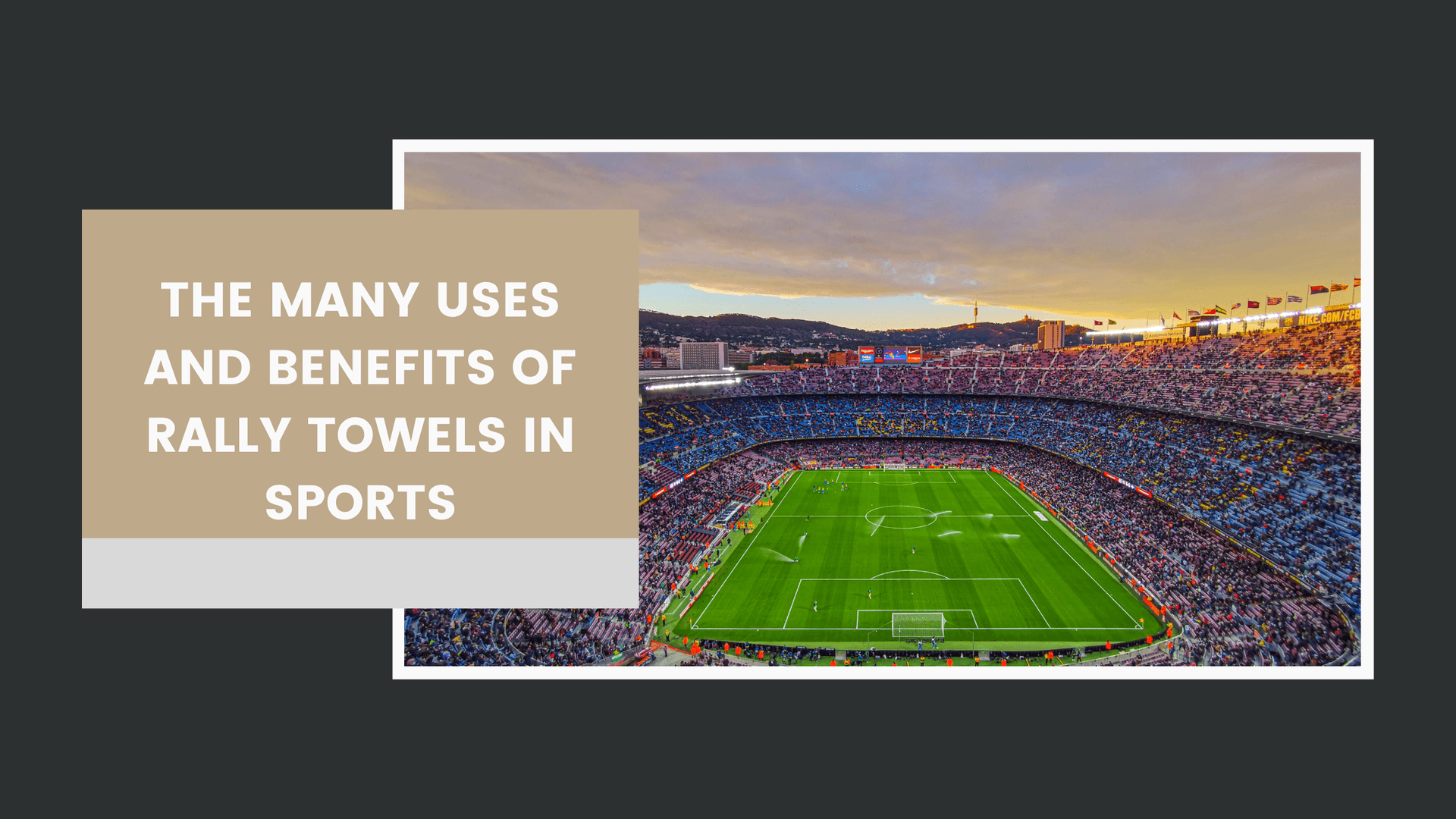
Sports teams use rally towels to create a visual spectacle in the stands. A coordinated towel wave in team colors makes a powerful impression on television broadcasts. Sponsors pay a premium for logo placement on towels that appear in camera shots throughout a game. The return on investment for a sponsor can be 5 to 10 times the cost of the towels based on estimated media exposure. For a bulk order of 500 towels at 250 GSM with a four color screen printed sponsor logo, the total cost is roughly 1,200 to 1,500 dollars. Compare that to the cost of a single 30 second television commercial during a game, which can run 5,000 to 50,000 dollars. Rally towels offer a fraction of the cost with higher repetition of brand exposure.
Corporate promotional events are another strong use case. Trade show giveaways, product launches, and company picnics all benefit from a useful item that attendees keep. A rally towel with a company logo and website URL is more likely to be kept than a brochure or flyer. The towel serves as a constant reminder of the brand every time the user sees it. For corporate orders, we recommend a slightly higher GSM, around 320 to 350, so the towel feels premium and lasts longer. Adding a tag with care instructions and the company logo adds about 10 cents per unit. That small investment increases the perceived value of the towel and keeps the brand front of mind.
Nonprofit organizations and schools also use rally towels for fundraising and awareness campaigns. A school can sell custom towels for 10 to 15 dollars each as a fundraiser. At a cost of 3 to 5 dollars per towel in bulk, the profit margin is 50 to 70 percent. For a school that sells 200 towels, that is 1,400 to 2,000 dollars in net profit. Nonprofits use rally towels at charity runs and walkathons as participant giveaways. The towels serve as both a functional item for wiping sweat and a visible show of support for the cause. Colors can be tied to the nonprofit's brand. A breast cancer awareness event might use pink towels. A environmental organization might use green. The versatility of rally towels across sports, corporate, and nonprofit settings is what makes them a reliable promotional product for any B2B buyer.