
Restaurant Napkins: Guide to Choosing the Best
In this guide:
- Fabric Types and What Works Best
- What Napkin Size Is Right for Your Tables
- How Many Napkins You Need Per Seat
- Laundering and Maintenance That Extends Life
- Cost Considerations and Buying in Bulk
- Frequently Asked Questions
Choosing the right napkins for your restaurant affects both your daily operations and your guests' dining experience. This guide covers fabric, size, quantity, laundry care, and cost so you can make a confident purchase. Whether you run a casual bistro or an upscale steakhouse, the right napkins reduce waste, improve table presentation, and keep your linen budget under control.
Aim for 100% cotton or poly cotton blend napkins with a GSM of 140 to 180. Buy at least three napkins per seat for one turn, more for high volume. Wash at 140 F (60 C) and replace after 75 to 100 washes.
Fabric Types and What Works Best
The fabric you choose determines how napkins feel, how they hold up in the wash, and how they present on the table. 100 percent cotton napkins in a plain weave or damask weave are the industry standard for sit down restaurants. Cotton absorbs moisture well and softens with each wash. A damask weave adds a subtle pattern that looks formal. Look for a GSM of 140 to 180. GSM means grams per square meter. A 160 GSM napkin feels substantial without being stiff. Lighter napkins at 120 GSM are acceptable for budget operations but will wrinkle more and wear out faster.
Polyester blend napkins, such as 50 percent cotton and 50 percent polyester, offer better stain resistance and less wrinkling. They hold up to more wash cycles, often 100 to 150 washes before showing frayed edges. The trade off is a slightly synthetic feel. Some operators prefer the crispness of a poly cotton blend for high volume breakfast and lunch spots where turnover is fast, and napkins go straight from table to laundry. A 180 GSM poly cotton napkin will last longer than a pure cotton napkin of the same weight. For fine dining, stick with 100 percent cotton or even linen. Linen napkins with a GSM of 150 to 170 provide a luxurious hand and resist lint, but they cost three to four times more and require professional pressing.
Another option is spun polyester napkins. These feel closer to cotton but are fully synthetic. They resist fading and hold color well. Many hotel chains use spun polyester for banquet rooms because they can bleach them without worry, and they dry quickly. But spun polyester does not absorb moisture as well as cotton. For a busy restaurant where spills happen, cotton or a cotton rich blend remains the best choice. When ordering in bulk, always request a swatch. Feel the napkin, test a wash, and check for shrinkage. Most quality napkins will shrink no more than 3 to 5 percent after the first wash. Consider this when ordering to your desired finished size. Towel Depot offers a range of restaurant linens including cotton and poly cotton napkins in various weights.
What Napkin Size Is Right for Your Tables
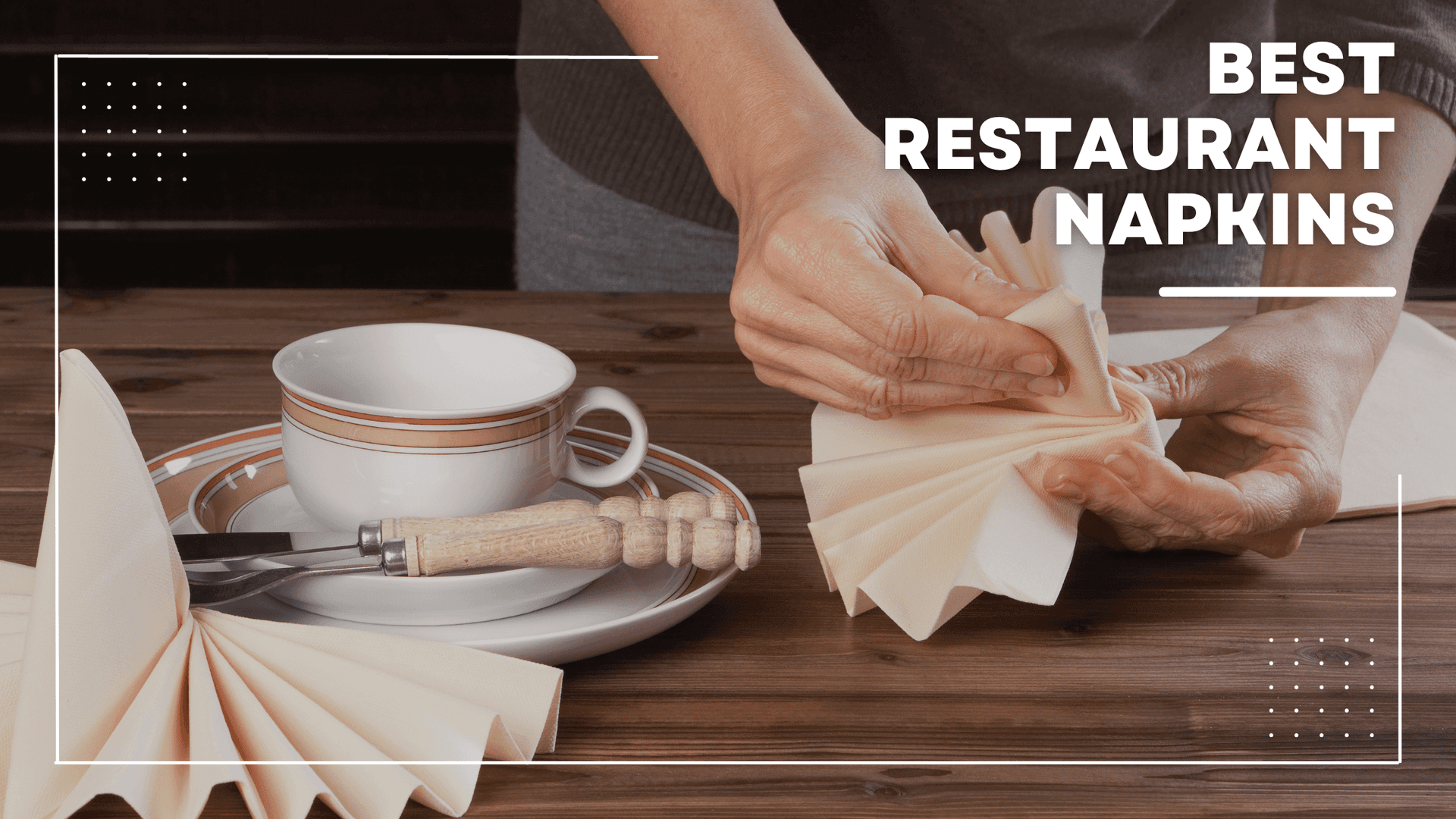
Napkin size affects table layout, folding options, and practical use. The most common size for dinner napkins is 18 by 18 inches. This fits standard place settings and allows for a simple fold or a rolled presentation. For a more formal look or larger plates, 20 by 20 inches works better. It gives you room for creative folds like the bishop's hat or the triple pocket. That larger size also covers the lap more fully. Cocktail napkins are smaller at 10 by 10 or 12 by 12 inches. Use them for bar service, appetizers, or beverage coasters.
If your restaurant does breakfast or lunch only, 16 by 16 inch napkins may suffice. They sit neatly under a plate and handle the occasional drip. But for dinner service with multiple courses, anything smaller than 18 inches feels skimpy. Diners often unfold a napkin fully onto their lap. A 20 inch napkin provides about 400 square inches of fabric. An 18 inch napkin provides 324 square inches. That difference matters when a guest needs to cover their entire lap. Upscale restaurants often use 22 by 22 inch napkins for extra drama, but these require more table space and larger laundry loads. Stick with 18 or 20 inches unless you have a specific design reason.
Size also correlates with weight and cost. A 20 inch napkin in 160 GSM uses about 23 percent more fabric than an 18 inch napkin of the same GSM. That drives up the unit price and the laundry weight. Plan your napkin size based on your menu and service style. For a burger joint with paper napkins, you might switch to cloth 16 inch napkins for sustainability. But for a white tablecloth restaurant, 20 inches is the baseline. When ordering bulk, confirm the finished size after first wash. Some napkins come pre washed. Others need a hot water wash before you measure. Always order a sample and measure after one laundry cycle. For related products, check our wholesale bath towels for your restrooms, which should match the same standard of quality.
How Many Napkins You Need Per Seat
Calculating your napkin inventory requires thinking about your number of seats, daily turns, and laundry schedule. A general rule is to have at least three napkins per seat if you launder daily and have a single dinner turn. That means one napkin on the table, one in the laundry, and one clean in storage. If your restaurant does two or three turns per meal period, increase that number. For high volume operations, six napkins per seat is common. This allows you to change napkins between turns without waiting for laundry.
Consider your laundry capacity. If you send linens out to a service, you need enough napkins to cover the days between pickups. Many restaurants run a three day cycle. For 50 seats with two turns per night, that is 100 napkins used per night. Over three days that is 300 napkins used. With six napkins per seat, you have 300 napkins total. That works. But if you do in house laundry, you can get by with fewer because you can wash daily. Even then, keep at least four per seat to handle spills and last minute changes. Napkins also disappear. They get thrown away with trash or walk out the door in pockets. Budget for a 5 percent shrinkage rate per year.
For banquet or event spaces, the math changes. A single event may use 200 napkins. You need enough to cover the event plus a backup set. Many banquet halls order napkins in batches of 500 to 1000. The cost per unit drops with volume. For a restaurant with 100 seats, buying 400 to 600 napkins is typical. But always round up. It is better to have extra napkins than to run out mid service. When you buy bulk white linen napkins or bulk red cloth napkins, you save 10 to 20 percent versus buying smaller packs. Towel Depot wholesales to restaurants, hotels, and spas. Our wholesale beach towels are a separate category, but the same volume pricing logic applies.
Laundering and Maintenance That Extends Life
Proper laundry care doubles the life of your napkins. Wash cotton and poly cotton napkins in warm water around 140 F (60 C). This temperature removes food oils and kills most bacteria. For heavy stains like red wine or grease, pre treat with a stain remover before washing. Do not use bleach on colored napkins. It strips color and weakens fibers. Use oxygen bleach or a color safe detergent instead. White napkins can take a light chlorine bleach cycle once per week, but keep the concentration low. One cup of bleach per 10 gallons of water is enough.
Dry napkins on medium heat. Over drying causes wrinkles and weakens the fabric. Remove them while still slightly damp and press with a hot iron or a steam finisher. For napkins that go through an industrial laundry, the process uses higher temperatures up to 180 F (82 C) for sanitation. That is safe for poly cotton blends but can yellow 100 percent cotton over time. If you use a commercial service, ask about their wash chemistry. Alkaline detergents can damage cotton if not properly neutralized. Follow CDC guidelines for laundering linens to ensure hygiene without harsh wear.
Napkins should last 75 to 100 washes in a typical restaurant setting. After that, edges fray and fabric thins. Poly cotton blends often last 125 to 150 washes. To extend life, inspect napkins during folding. Remove stained or torn napkins from rotation. Rotate stock so all napkins wear evenly. Use a mild detergent with a neutral pH between 6 and 8. Avoid fabric softener. It coats fibers and reduces absorbency. For stains that persist, try a presoak in warm water and enzyme detergent for 30 minutes. The OSHA eTool for hospital laundry offers good practices that apply to restaurant linen care. Keep your laundry area clean and well ventilated to prevent mold on damp napkins.
Cost Considerations and Buying in Bulk
The price of restaurant napkins varies by fabric, size, GSM, and quantity. A basic 18 inch 100 percent cotton napkin at 140 GSM costs about $1.20 to $1.80 each when purchased in lots of 100. A 20 inch damask napkin at 180 GSM costs $2.50 to $4.00 each. Poly cotton blends are generally 20 to 30 percent cheaper than pure cotton. Linen napkins start at $6.00 each and go up. Your budget should account for frequent replacement. Napkins are a consumable, not a one time investment. Plan to replace 25 percent of your inventory every year. That translates to an annual cost of roughly $0.30 to $1.00 per seat per day, depending on your volume.
Bulk purchasing reduces per unit cost. Orders of 500 pieces often get a 10 percent discount. Orders of 1000 pieces can get 15 to 20 percent off. Many wholesale linen suppliers, including Towel Depot, offer tiered pricing. Ask about case packs. A case of red cloth napkins might hold 144 pieces. That is a dozen dozen. Know your needs before calling. If you run a 50 seat restaurant, you need 150 to 300 napkins. Ordering 500 gives you extra for backup and reduces reorder frequency. Storage space matters. Napkins take up about 0.5 cubic feet per 100 pieces. A case of 144 napkins is roughly the size of a small suitcase. Plan your storage accordingly.
Also factor in laundry costs. Each napkin weighs about 2 to 3 ounces dry. Laundering 500 napkins adds 60 to 90 pounds of laundry per day. Water, detergent, electricity, and labor cost about $0.10 to $0.20 per pound. That adds $6 to $18 per day. Over a year that is $2,000 to $6,500. Choosing a lighter GSM napkin reduces weight and laundry cost. But lighter napkins wear out faster. Balance upfront cost and ongoing laundry cost. A mid weight napkin at 160 GSM provides the best value. If you operate in an area with strict environmental regulations, check EPA standards for commercial laundry wastewater to ensure compliance.