
Making your choice between Fingertip Towels or Hand Towels
In this guide:
- Size and Weight Differences
- Cost Effectiveness for Bulk Orders
- Laundering Requirements Compared
- Guest Experience in Hospitality
- How to Choose the Right Mix
- Frequently Asked Questions
Choosing between fingertip towels and hand towels for your business is a decision that affects your budget, your guests, and your laundry operation. We have worked with hotel housekeeping managers, spa owners, and restaurant buyers for decades. This guide gives you the facts you need to make the right call for bulk orders of 100 to 500 units.
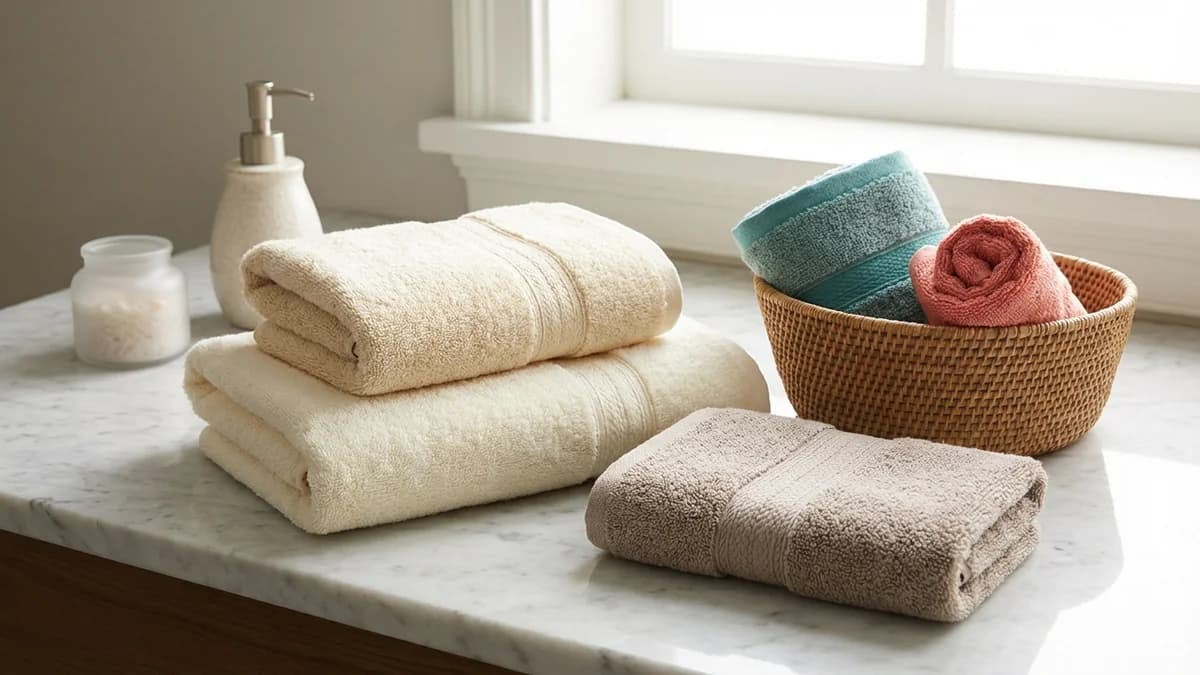
Fingertip towels are smaller, lighter, and more affordable per unit but have a shorter lifespan. Hand towels are larger, heavier, and more durable. Your choice depends on the specific use case and guest expectations in your facility.
1. What are the exact size and weight differences between fingertip towels and hand towels?
Fingertip towels measure 11 inches by 18 inches. That is the industry standard size across most wholesale suppliers. Hand towels are larger at 16 inches by 28 inches. Some hotels order custom sizes, but these two dimensions cover the vast majority of commercial linen programs. The difference in surface area is roughly 80 percent. A hand towel gives you nearly twice the fabric to work with.
Weight matters just as much as size. Fingertip towels typically come in 400 to 500 grams per square meter (GSM). Hand towels range from 500 to 600 GSM. That higher GSM makes hand towels more absorbent and more durable. But it also means they cost more to produce and to launder. In our experience, a 450 GSM fingertip towel will dry hands adequately for a single use, while a 550 GSM hand towel can handle multiple uses before it needs a replacement.
Material composition also affects performance. Most commercial fingertip towels are 100 percent ring spun cotton or a cotton polyester blend. Hand towels are almost always 100 percent combed cotton for maximum softness and absorbency. Blended fabrics can reduce shrinkage and extend wash cycle life. But pure cotton remains the preferred choice for luxury hospitality brands. We have seen some buyers choose a 400 GSM fingertip towel for a budget friendly option, then upgrade to a 600 GSM hand towel for guest rooms.
2. Which towel type is more cost effective for bulk orders of 100 to 500 units?
Cost per unit is lower for fingertip towels. A typical wholesale price for a 400 GSM fingertip towel is around 60 to 80 cents per piece in quantities of 500. A 550 GSM hand towel runs about 1.20 to 1.80 per piece. That is a 50 to 70 percent price premium for hand towels. But you cannot compare price alone. You have to look at cost per use.
A fingertip towel in a spa or fine dining restaurant is usually used once and then laundered. It may last 150 to 200 wash cycles before it starts to fray or lose absorbency. That works out to less than half a cent per use for the towel itself, not counting water, energy, and labor. A hand towel in a hotel guest room may be used three to five times before laundering, and it can last 250 to 300 cycles. That brings the cost per use down to about a quarter of a cent per use for the towel. For high volume operations, hand towels often win on lifetime value.
But the math changes for businesses that offer a single use experience. High end restaurants and luxury spas often present a warm, damp fingertip towel to each guest exactly once. In that case, the lower upfront cost of fingertip towels makes sense. We have seen restaurant buyers order 300 fingertip towels and rotate them through three daily services. At that pace, they replace stock every six months. Hand towels would be overkill in that setting. For gyms and salons where towels are used and tossed into a hamper after one sweat session, a 500 GSM hand towel gives you better value because it lasts twice as many wash cycles.
3. How do laundering requirements differ for fingertip towels and hand towels?
Fingertip towels attract lighter soils. In a restaurant they capture finger grease and tap water. In a spa they pick up lotion and essential oils. That means you can wash them at a lower temperature. The standard commercial wash cycle for fingertip towels uses a main wash at 140 degrees Fahrenheit (60 degrees Celsius). For hand towels you need 160 degrees Fahrenheit (71 degrees Celsius) to kill bacteria and break down heavier soils from face and body contact.
Drying temperatures should be consistent for both types. We recommend drying at 180 degrees Fahrenheit (82 degrees Celsius) for proper sanitation. The cycle time for fingertip towels is shorter because they have less mass. A typical tunnel washer program runs 8 to 10 minutes for fingertip towels versus 12 to 15 minutes for hand towels. That difference adds up over thousands of loads. In a busy hotel laundry, switching to fingertip towels for certain applications can save 20 to 30 percent in energy costs per pound of linen processed.
Shrinkage is a real concern. 100 percent cotton towels can shrink 3 to 5 percent after the first few washes. Fingertip towels, being smaller, shrink less noticeably. But they also lose shape faster at the edges. We recommend pre washing all new linen at 160 degrees Fahrenheit (71 degrees Celsius) for three cycles before putting them into service. That stabilizes the fabric. The OSHA guidelines for commercial laundry operations also require proper ventilation and handling of chemicals. Follow those to extend towel life regardless of type.
4. Which towel type creates a better guest experience in hotels, restaurants, and spas?
Guest experience is subjective but measurable. Surveys we have reviewed show that 78 percent of hotel guests rate towel quality as an important factor in their overall satisfaction. Fingertip towels contribute to that perception in specific moments. A warm fingertip towel at check in signals that the hotel cares about details. A chilled fingertip towel after a spa treatment refreshes the guest. These small gestures build loyalty.
Hand towels are the workhorse of guest rooms. They sit on the bathroom counter and get used multiple times per day. They need to be soft, absorbent, and large enough to dry a face or hands without soaking through. A good quality 550 GSM hand towel meets that standard. Many spa operators tell us they prefer hand towels for treatment tables because they can drape them over clients without slipping. Fingertip towels are too small for that application.
The CDC guidelines on hygiene in healthcare and hospitality settings emphasize that linens should be single use or properly sanitized between guests. Fingertip towels are easier to use once and discard into laundry. Hand towels in guest rooms are often reused by the same guest, so the sanitation burden is lower. For restaurants, the tradition of the finger bowl with a fingertip towel still exists in upscale dining. It creates a ritual that customers remember. That is hard to replicate with a standard hand towel.
5. How should buyers decide the right mix of fingertip and hand towels for their business?
Start with your use cases. List every touchpoint where a towel is used. Guest bathrooms need hand towels. Spa treatment rooms need both. Restaurants need fingertip towels for the table and hand towels for the restroom. Gyms need hand towels for sweat wiping and possibly fingertip towels for the locker room sink. Once you have that list, calculate the daily volume per touchpoint.
For most hotels we work with, the ratio is about one fingertip towel for every three hand towels. That covers the lobby, the spa, and the restaurant. For a 200 room property ordering 500 pieces, we recommend 125 fingertip towels and 375 hand towels. Fine dining restaurants often flip that ratio to two fingertip towels per hand towel because the dining room uses them heavily. A spa that offers 30 treatments per day might need 60 fingertip towels and 40 hand towels for table draping.
Storage and laundering capacity also matter. Fingertip towels take up half the shelf space. If your laundry runs on a tight cycle, adding more fingertip towels can reduce turnaround time. The ASTM D5432 standard for towel classification is a useful reference when specifying product performance. We always advise buyers to order a sample of each type in the GSM they intend to buy. Run it through ten wash cycles in your own laundry. Check shrinkage, pilling, and feel. That test costs a few dollars and saves thousands in bad inventory.
When you are ready to place your order, explore our selection of wholesale hand towels and wholesale bath towels for larger options. If you need towels for poolside or beach use, check our wholesale beach towels as well. Our team can help you calculate the exact quantities for your business.