
10 Quality Indicators for Premium Towels
In this guide:
- What type of cotton fiber matters most?
- How does GSM affect towel performance?
- What should I look for in construction and stitching?
- How can I test durability and longevity?
- How do I evaluate absorbency and drying time?
- Frequently Asked Questions
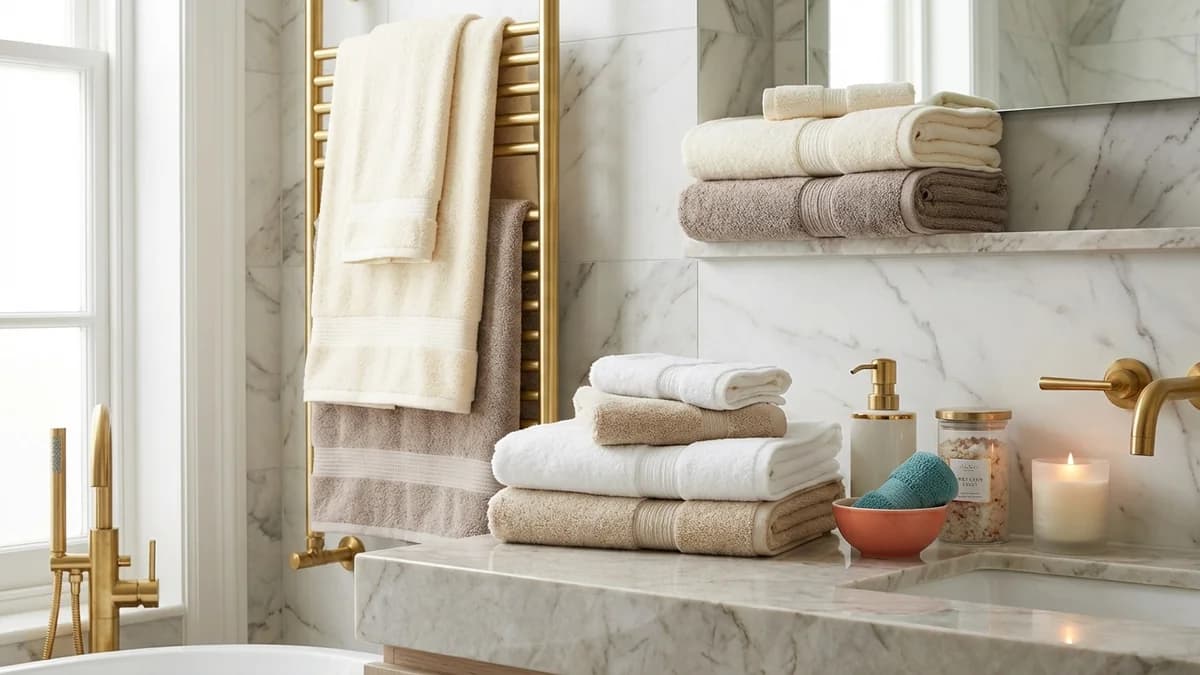
Choosing the right wholesale towels for your business means knowing what to look for before you place a bulk order of 100 to 500 units. These 10 quality indicators help you select premium towels that perform well, last longer, and keep your guests or clients satisfied. Whether you manage a hotel, spa, salon, or gym, understanding these factors saves you money and time in the long run.
Premium towels are defined by fiber type, GSM weight, construction quality, and proper care. Focus on long staple cotton, 500 to 700 GSM for bath towels, double stitched hems, and test a sample before buying bulk.
What type of cotton fiber matters most?
Cotton fiber length is the first quality indicator. Long staple cottons like Egyptian and Pima have fibers that measure 1.5 inches or longer. Standard Upland cotton averages only 1 inch. Longer fibers twist together more tightly, creating stronger yarns. That strength reduces linting and pilling. Hotels that buy wholesale hotel towels often choose Pima cotton because it stands up to 300 industrial wash cycles without breaking down.
Fiber composition also affects absorbency. Cotton fiber is hollow, which traps water molecules. Longer fibers retain that hollow structure better than short fibers. A 100 percent cotton towel with long staples absorbs 20 percent more water than a short fiber towel of the same GSM. Blended fabrics like cotton polyester cut absorbency by 30 percent. For spas where quick absorption matters, avoid blends.
Check the label for terms like combed cotton or ring spun cotton. Combed cotton removes short fibers and impurities before spinning. This process creates smoother yarns that produce less lint. Ring spinning twists fibers tighter than open end spinning. Both techniques increase cost but improve durability. Expect to pay 15 to 25 percent more for combed ring spun towels. That premium pays off in longer service life.
How does GSM affect towel performance?
GSM stands for grams per square meter. It measures fabric weight. Higher GSM means more cotton per square foot, which directly boosts absorbency. For wholesale bath towels in hotels, 500 to 600 GSM is the standard. Luxury properties order 600 to 700 GSM. Spa towels used for body wraps often reach 700 to 800 GSM. Gym towels need lower weight for quick drying, so 400 to 450 GSM works best.
Weight also affects drying time. A 700 GSM towel takes 50 percent longer to dry than a 400 GSM towel in a commercial dryer running at 150°F (65°C). That extra drying time increases energy costs. For a gym with 500 towels dried daily, the difference adds up to 30 percent more electricity per year. Match GSM to your facility's wash and dry cycle capacity. If machines are slow, choose lighter weights.
The price gap between weights is real. A 400 GSM towel costs roughly 60 cents per unit less than a 600 GSM towel. Over 200 units, that is 120 dollars saved upfront. But the 600 GSM towel will last through 300 washes versus 200 washes for the lighter version. Calculate total cost per use, not per unit. The heavier towel often becomes the cheaper option over three years.
What should I look for in construction and stitching?
Double stitched hems are non negotiable. A single stitch thread can break after 50 wash cycles. Double stitching uses two parallel seams that reinforce each other. Look for hems that are folded over twice, not once. That extra fold adds strength. Corner seams are the first place towels fail. Reinforced corners with bar tacks prevent unraveling. Some premium towels use French seams, which encase raw edges inside the seam. French seams add 10 percent to manufacturing cost but eliminate fraying.
Terry loop density matters too. The loops on the towel surface create absorbency and texture. Count the loops per square inch. A good quality towel has 20 to 30 loops per square inch. Luxury towels reach 35 loops. More loops mean more surface area to trap water. But too many loops can make the towel stiff. The ideal density balances softness with absorbency. Ask your supplier for a loop count specification.
Check for low twist yarns in the loops. Low twist yarns have fewer rotations per inch, which leaves more fiber exposed. That exposure increases absorbency by 15 percent compared to high twist yarns. High twist yarns feel rougher and resist water. They also create more lint. For wholesale beach towels used outdoors, high twist may be acceptable because drying speed matters less. For indoor bath or spa use, always choose low twist.
How can I test durability and longevity?
Colorfastness testing is simple. Wash a sample towel at 140°F (60°C) with bleach free detergent. Dry it on high heat. Compare the color to an unwashed piece. If the color fades more than 2 percent, the towel uses low quality dye. That dye will fade completely after 50 washes. Look for towels labeled with AATCC Test Method 61, which simulates five home washes in one lab wash. The United States Environmental Protection Agency (EPA) recommends checking dye type for commercial laundry compliance. EPA Safer Choice guidelines help you select towels that do not release hazardous chemicals into wastewater.
Shrinkage is another critical test. Measure a new towel's length and width. Wash and dry it three times. Measure again. A quality cotton towel should shrink less than 5 percent in length and 3 percent in width. If shrinkage exceeds 7 percent, the towel will become unusable after a dozen washes. Many cheap towels shrink 10 to 12 percent. That turns a 30 inch bath towel into a 26 inch rag. Always request a shrinkage test report from your supplier.
Wash cycle counts separate premium from budget. A cheap towel may last 80 to 100 cycles before the edges fray or loops pull. A premium towel with long staple cotton and double stitching should survive 250 to 300 cycles in a commercial laundry. The Occupational Safety and Health Administration (OSHA) does not directly regulate towel quality, but commercial laundry workers handle dozens of towels per shift. OSHA laundry guidelines cover safe handling practices. Durable towels tear less often, reducing injury risk from sharp metal hooks or torn fabric.
How do I evaluate absorbency and drying time?
Absorbency tests are straightforward. Drop a measured amount of water on the towel. Time how long it takes for the water to disappear. A good towel absorbs water in 2 seconds or less. Premium towels absorb in under 1 second. If water sits on the surface for 5 seconds, the towel is poorly constructed. This test correlates with GSM and fiber length. A 600 GSM Egyptian cotton towel absorbs 150 percent of its weight in water. A 400 GSM standard cotton towel absorbs only 90 percent.
Drying time matters for your laundry costs. Commercial dryers run at 150°F to 180°F (65°C to 82°C). A heavy towel takes 40 to 50 minutes to dry. A medium weight towel dries in 25 to 30 minutes. The Federal Trade Commission (FTC) requires accurate fiber content labeling on textiles. FTC textile labeling guidelines help you verify that the tag matches the fabric. If a labeled 600 GSM towel dries too fast, the GSM may be wrong.
Terry loop height also influences drying. Longer loops increase water absorption but also hold water longer. Short loops dry faster but absorb less. Find the balance for your use. Hotels with quick turn times between guests often prefer shorter loops on medium weight towels. Spas that offer steam treatments need maximum absorbency and accept longer drying. Test both extremes before ordering bulk. Your laundry staff will thank you.