
What Makes a Bathrobe Feel Luxurious?
In this guide:
- Fabric Weight and GSM
- Fabric Construction and Absorbency
- Stitching and Hem Durability
- Care Procedures for Long Life
- Sizing and Length for Commercial Use
- Frequently Asked Questions
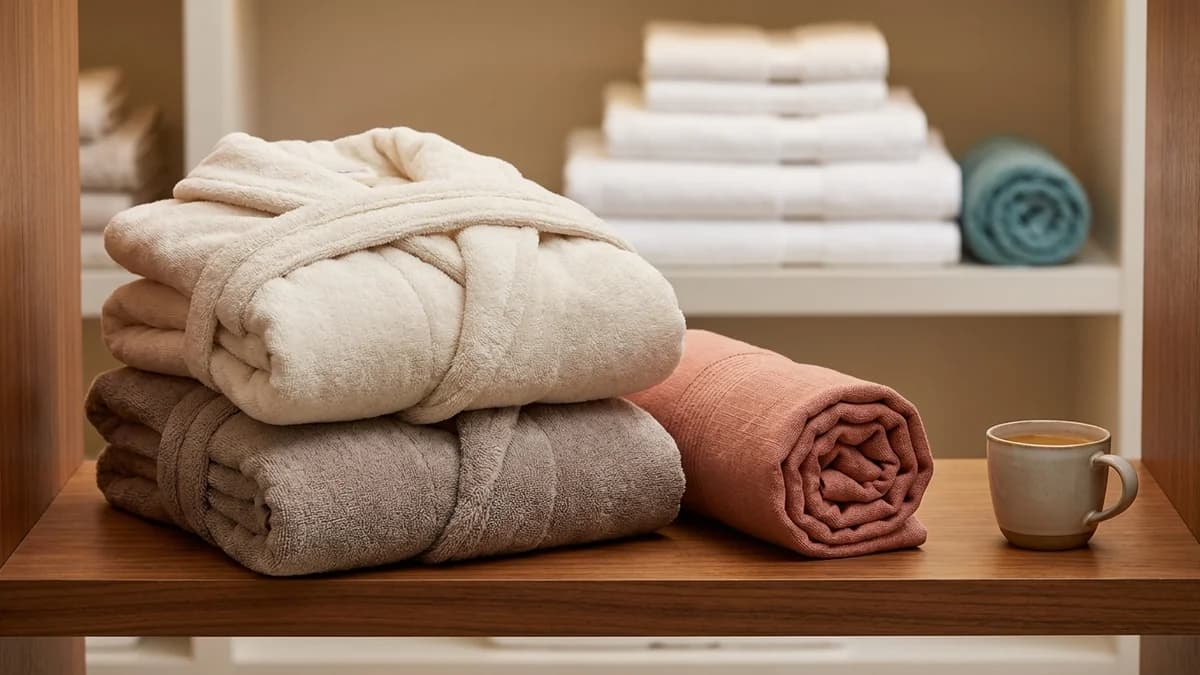
When a guest wraps themselves in a robe at your hotel or spa, the first thing they notice is the feel against their skin. That impression shapes their entire experience. For B2B buyers placing bulk orders of 100 to 500 units, understanding what makes a bathrobe feel luxurious is essential to making a smart purchasing decision. You need a robe that stays soft after hundreds of commercial washes and delivers consistent comfort to every guest.
A truly luxurious bathrobe for commercial use combines a GSM between 400 and 600, ring spun cotton construction, double stitched hems, and proper care at 140 degrees Fahrenheit (60 degrees Celsius). These elements ensure softness, absorbency, and durability over 200 plus washes.
1. Fabric Weight and GSM
GSM stands for grams per square meter. This number tells you exactly how dense and heavy a fabric is. For a bathrobe to feel luxurious, you want a GSM between 400 and 600. Below 400, the robe feels thin and flimsy. Above 600, it becomes heavy, takes longer to dry, and can feel cumbersome to wear.
At Towel Depot we see many buyers ask for 450 GSM robes for year round use. That weight balances warmth and breathability. A 500 GSM robe works well for colder climates and luxury spas. For warm weather properties, a 400 GSM robe still feels substantial without overheating the guest.
GSM alone is not enough. You need to pair it with a high quality fiber. Long staple cotton fibers, such as Egyptian or Turkish cotton, create a smoother surface and more loops per inch. That gives the plush feel at the same GSM. A 500 GSM robe made from short fiber cotton will pill and lose softness quickly, while a 500 GSM robe from long staple cotton stays soft for years.
2. Fabric Construction and Absorbency
The weave or knit of the fabric directly affects how the robe feels and how well it absorbs moisture. Terry cloth is the classic choice for bathrobes. It uses uncut loops that trap water against the fibers. A good quality terry robe should have loop heights that are uniform and dense. Look for a minimum of 7 loops per centimeter for a dense, absorbent surface.
Waffle weave robes are lighter and dry faster while still providing a textured feel. The raised squares create air pockets that wick moisture away from the skin. Waffle weave is popular in gym and spa settings because guests find it less bulky. However, waffle robes at GSM below 350 can feel scratchy. Choose a 400 GSM waffle weave for a balance of texture and softness.
Ring spun cotton is critical for both constructions. In ring spinning, the fibers are twisted tightly before being woven or knit. This creates a smooth yarn that prevents pilling and makes the fabric feel like a hundred wash cloth right after the first wash. The ring spinning process costs more but pays off in longevity. You can verify ring spun cotton by checking the manufacturer's spec sheet or asking your supplier for a fiber certification. Industry standards from organizations like ASTM International provide guidelines for fabric testing. ASTM standard D5390 covers absorbency testing for terry fabrics, which is worth reviewing before you commit to a bulk order.
3. Stitching and Hem Durability
Luxurious fabric means nothing if the seams unravel after 20 washes. B2B buyers should inspect the stitching details of every robe sample. The hem around the sleeves, bottom, and collar should use a double needle stitch. That means two parallel rows of thread lock the fabric edge and prevent fraying.
At Towel Depot we recommend a minimum of 4 stitches per inch on all stress points. Stress points include the shoulder seams, the belt loops, and the pocket corners. Single needle stitching at these spots will fail within 100 washes in a commercial laundry. Double needle stitching combined with a lock stitch (also called a straight lock stitch) can handle 200 to 300 wash cycles without opening up.
Check the belt loops and pocket attachments. They should be bar tacked. Bar tacks are short, dense rows of zigzag stitches that reinforce small areas. They prevent the belt loop from tearing off when a guest pulls the belt tight. Pockets should be double stitched along the entire opening, not just at the corners. These small details separate a robe that lasts one season from one that lasts five years. For safety considerations, review OSHA standard 1910.262 which covers textile industry safety and can guide your factory inspection protocols.
4. Care Procedures for Long Life
You control how long your bathrobes last through your laundry process. The wrong care routine can ruin a 600 GSM robe within six months. The right care keeps even a 400 GSM robe feeling like new for years. Start with the water temperature. Commercial laundry should use water at 60 degrees Celsius (140 degrees Fahrenheit) for cotton robes. This temperature kills bacteria and removes body oils without breaking down the cotton fibers.
Drying is where most commercial operators go wrong. High heat above 80 degrees Celsius (176 degrees Fahrenheit) shrinks cotton and ruins the loop pile. Use a low heat cycle, around 50 to 55 degrees Celsius (122 to 131 degrees Fahrenheit). Remove robes while they are still slightly damp. Then finish drying on a low heat setting. This prevents the fibers from becoming brittle and snapping.
Avoid bleach and fabric softeners on cotton robes. Bleach breaks down the cellulose in cotton, causing yellowing and thinning. Fabric softeners coat the fibers with wax, reducing absorbency and making the robe feel greasy. Instead, use an oxygen based whitener and a mild detergent with pH between 7 and 8. For heavy soils, a pre soak in warm water with an enzyme cleaner works better than hot harsh chemicals. Following these guidelines can extend the usable life of a luxury robe to over 200 commercial wash cycles, which is the benchmark for a reasonable return on investment. The EPA's Safer Choice program lists approved cleaners that are effective yet gentle on fabrics. Check the EPA Safer Choice database for recommended detergents.
5. Sizing and Length for Commercial Use
Size and fit affect how luxurious a robe feels more than many buyers realize. A robe that is too short feels cheap. A robe that is too long trips guests and pools water on the floor. For hotel and spa robes, the ideal length is from mid calf to just above the ankle. That works for guests from 5 feet 4 inches tall to 6 feet 2 inches tall.
Order a size mix that reflects your guest demographic. For a typical hotel, 40 percent medium, 40 percent large, and 20 percent extra large covers most adults. Avoid ordering all one size. A single sized robe order leaves 30 to 40 percent of your guests with an ill fitting garment. That directly hurts your guest satisfaction scores.
Request a pre production sample before placing a bulk order. Have your housekeeping staff test the sample on a few different body types. Check the armhole depth, the shoulder width, and the belt length. The belt should be long enough to wrap around the waist twice with at least 6 inches of overlap. For plus size guests, consider adding a few XXL options to your order if your property serves a diverse clientele. Getting the size right the first time saves you the cost of returns and the hassle of sorting through 500 robes that do not fit.
At Towel Depot we have been supplying bath robes to hotels and spas since 1967. Our customers also rely on our wholesale bath towels and wholesale beach towels to complete their linen inventory. If you have questions about specifying the right robe for your property, contact our team. We can walk you through GSM options, fiber types, and care programs that keep your linens feeling luxurious wash after wash.