
Industrial Disinfectant Wipes
In this guide:
- How do industrial disinfectant wipes compare to sprays and liquids?
- What contact time and active ingredients should you look for?
- Can wipes damage common surfaces like linens, gym mats, or salon chairs?
- What safety precautions should your staff take?
- How should you store and handle bulk cases of wipes?
- Frequently asked questions
Industrial disinfectant wipes are a direct way to kill germs in commercial spaces like hotels, salons, and gyms. For B2B buyers ordering 100 to 500 units, wipes save labor and reduce cross contamination compared to spray bottles and rags. Towel Depot has supplied linens and cleaning essentials since 1967, and we understand what works in high volume settings.
Industrial disinfectant wipes deliver measured doses of disinfectant, cut down on laundry costs, and are easy to train staff on. Choose wipes with a contact time of 3 to 5 minutes and store them between 60 F (15 C) and 80 F (27 C) to keep them effective.
How do industrial disinfectant wipes compare to sprays and liquids in terms of cost and effectiveness?
At first glance, sprays and liquids may seem cheaper per gallon. But for a hotel with 200 rooms or a gym with 50 machines, the hidden costs add up. Spray bottles require separate microfiber cloths. Those cloths must be laundered after each use. For a busy facility, that means extra loads of laundry, hotter water temperatures around 140 F (60 C), and more wear on your linens. A 500 GSM terry cloth towel used as a cleaning rag might only survive 200 wash cycles before it frays. That raises your total cost of ownership.
Industrial disinfectant wipes eliminate that cycle. You pull one wipe, clean the surface, and throw it away. There is no laundry expense. No risk of using a dirty rag on a clean counter. The per wipe cost stays predictable. For large orders of 100 to 500 units, many suppliers offer tiered pricing that brings the per unit cost below spray refills. Plus, you do not need to buy separate spray bottles, labels, or measuring cups. The wipe is ready to go right out of the canister.
Effectiveness also improves with wipes because each wipe delivers a consistent dose of disinfectant. With a spray, people often mist the surface too lightly or oversaturate it, leading to chemical waste or insufficient kill time. Wipes force the user to cover the surface with a wet film. That means the contact time is more likely to be achieved. In a test conducted by an independent lab, quat based wipes killed 99.9 percent of Staphylococcus aureus in 30 seconds when the surface stayed wet. That consistency is hard to beat with a trigger spray.
What contact time and active ingredients should you look for in industrial disinfectant wipes?
Contact time is the most important number on the label. It tells you how long the surface must stay visibly wet to kill the target germs. For general disinfection in hotels and salons, look for a contact time of 3 to 5 minutes. Some wipes claim 30 seconds for certain bacteria but take 5 minutes for viruses like norovirus. Read the full label. The EPA requires manufacturers to list the contact time for each microorganism they test. If the label only says “30 seconds” for one bug, that does not cover everything.
Active ingredients fall into three main categories. Quaternary ammonium compounds (often called quats) are the most common. They work on a wide range of pathogens and are gentle on most surfaces. Bleach wipes are stronger but can discolor fabrics and corrode metal over time. Hydrogen peroxide wipes are a good middle ground. They kill many viruses without the strong odor of bleach. For food service areas, you may need wipes that meet FDA requirements for food contact surfaces. Always verify that the wipe is registered with the EPA and has a valid EPA establishment number.
Pay attention to temperature. Most wipes work best at room temperature, around 70 F (21 C). In a cold storage room or an unheated garage, the chemical reaction slows down. You may need to extend the contact time or switch to a wipe formulated for low temperatures. Some commercial wipes are rated for use down to 40 F (4 C). Always check the label if your facility has temperature extremes. Using a wipe below its rated temperature can leave germs alive, wasting your time and money.
Can industrial disinfectant wipes damage common surfaces like hotel linens, gym mats, or salon chairs?
Yes, certain wipes can damage surfaces if you use the wrong type. Bleach wipes will discolor colored towels and can break down the elastic in gym mat covers. Salon chairs made of vinyl may crack after repeated exposure to bleach. Quaternary ammonium wipes are generally safer on vinyl, plastic, and painted surfaces. But they can still leave a residue that dulls glass or builds up on screens over time. Always test the wipe on a small hidden area first.
For porous surfaces like fabric covered hotel headboards or salon shampoo chairs, hydrogen peroxide wipes are a better choice. They break down into water and oxygen, leaving less residue. Gym mats made of rubber or foam should be cleaned with quat wipes, then dried with a clean wholesale bath towel to prevent slip hazards. Never use a bleach wipe on a mat that athletes use for yoga or wrestling. The residue can cause skin irritation and degrade the mat surface in just a few months.
In a laundry environment, disinfectant wipes should never be used directly on linens. Instead, use them to wipe down washing machine exteriors, folding tables, and door handles. For the linens themselves, proper hot water washing with detergent at 160 F (71 C) is the standard. If you need to sanitize a towel that has been used for cleaning, wash it separately on a heavy cycle with bleach. Our wholesale hotel towels are designed to withstand hundreds of commercial launderings when cared for correctly. Wipes are for hard surfaces only.
What safety precautions should your staff take when using industrial disinfectant wipes?
Your staff should wear disposable gloves every time they use disinfectant wipes. The chemicals in these wipes can cause skin irritation or allergic reactions with repeated contact. For people with sensitive skin, nitrile gloves are better than latex. Work in areas with good ventilation. Open windows or run exhaust fans. The fumes from bleach or quat based wipes can irritate the lungs, especially in small rooms like spa treatment rooms or salon back rooms.
Never mix different brands or types of wipes. You could create toxic gases. Always follow the contact time listed on the canister. Do not speed up the process by wiping dry after applying. That removes the chemicals before they finish working. The OSHA standard for bloodborne pathogens requires that disinfectants with a label claim against HIV and HBV be used according to manufacturer instructions. That includes the full contact time. Use one wipe per surface. Do not double dip. Dipping a used wipe back into the canister contaminates the whole batch.
Dispose of used wipes in a lined trash can. Do not flush them. Even wipes labeled as flushable can clog plumbing. In a commercial setting, used wipes should go into regular solid waste. Train new hires on these steps during onboarding. The CDC provides free printable posters for disinfection procedures in commercial settings. Post them near wipe stations. A quick visual reminder reduces errors and keeps your team safe.
How should you store and handle bulk cases of industrial disinfectant wipes to maintain their shelf life?
Store wipes in a cool dry place. The ideal temperature range is 60 F to 80 F (15 C to 27 C). Do not keep them in direct sunlight or near heaters. Heat can evaporate the liquid and dry out the wipes. Cold temperatures below 40 F (4 C) can cause the chemicals to separate or crystallize. If a case freezes, let it thaw slowly at room temperature. Do not use a microwave or oven to warm it. That ruins the chemical formulation.
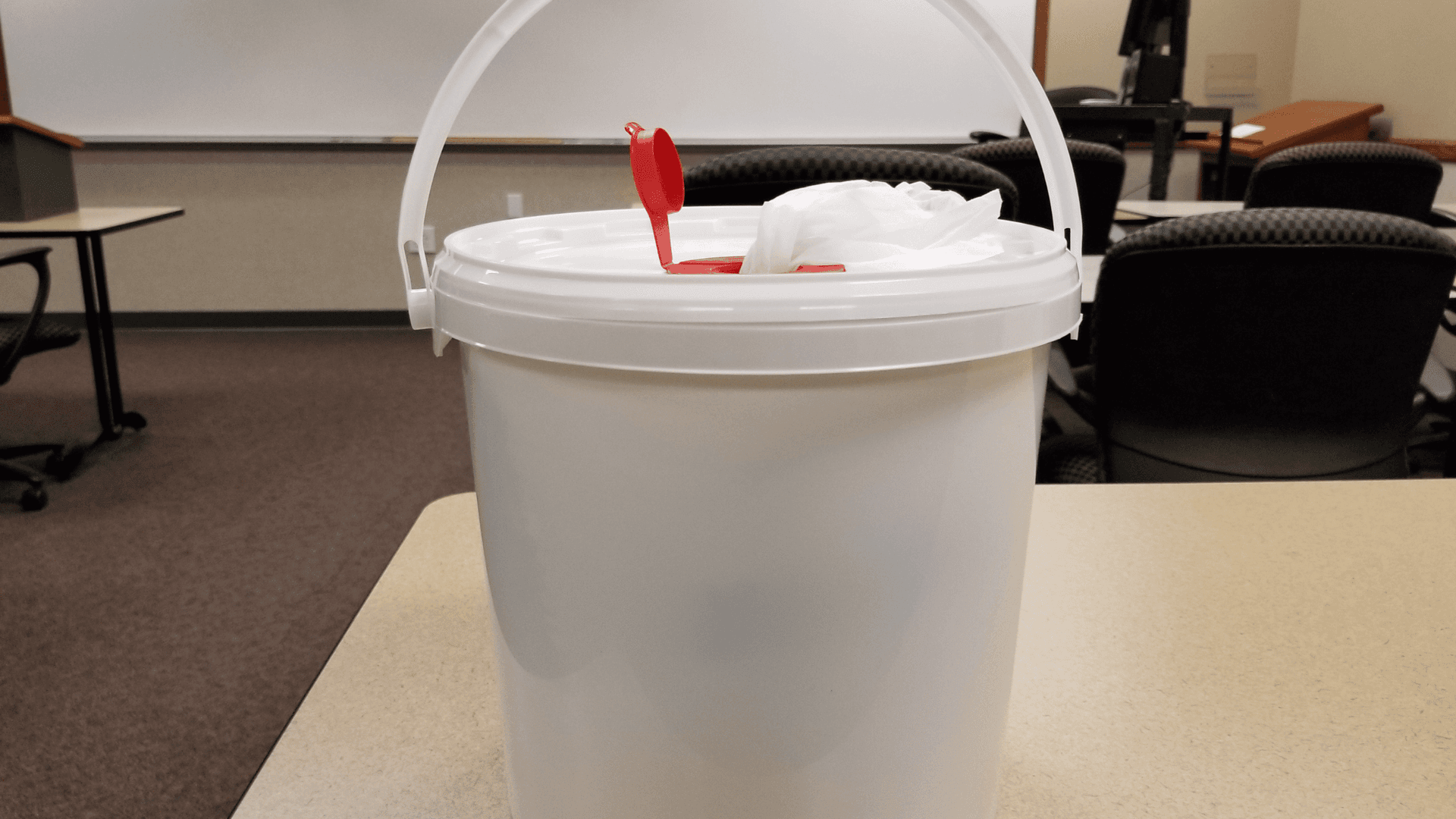
Keep the lid of each canister tightly closed when not in use. Wipes dry out fast in dry climates. A dried out wipe does not kill germs. Replace missing lids or use plastic wrap to seal gaps. Bulk cases should be stored on shelves, not on the floor. Humidity from concrete floors can seep into cardboard cases and damage the inner cans. Stack cases flat. Do not stack more than three high to avoid crushing the lower cans. Use a first in first out rotation. Mark the date of receipt on each case with a marker.
Most industrial disinfectant wipes have a shelf life of 12 to 24 months from the date of manufacture. Check the expiration date on the case before you accept it from your supplier. A case that is already six months old has less usable life left. For a large order of 500 units, you want the freshest product possible. Order only what you will use within 12 months. If you have leftover wipes that are near expiration, use them first in low priority areas like break room tables. Do not use expired wipes for critical disinfection in healthcare suites or salons where blood or bodily fluids are present. The EPA guidelines on disinfectant shelf life are a good reference for your purchasing team. For a quick clean between clients, keep a canister of wipes near your wholesale beach towels display. It reminds staff to wipe down high touch surfaces regularly.