
Gym Towel Types: Which Works for Your Facility?
In this guide:
- Cotton Terry Towels for Commercial Gyms
- Microfiber Towels for High Intensity Workouts
- Blended Gym Towels for Cost and Durability
- Choosing the Right GSM for Your Gym Environment
- Proper Laundry Procedures for Commercial Gym Towels
- Frequently Asked Questions
Choosing the right wholesale gym towels for your facility is a direct investment in member experience and operational efficiency. The material, weight, and size of your towels affect satisfaction, laundry costs, and how long the towels last. Whether you run a hotel gym, a CrossFit box, a yoga studio, or a corporate fitness center, understanding towel types helps you buy smarter and reduce total cost of ownership.
The best gym towel depends on your workout intensity and laundry setup. Cotton terry offers top absorbency for moderate use. Microfiber dries fast and resists odor in high sweat environments. Blended cotton polyester towels deliver the best balance of cost and durability for most commercial gyms.
Cotton Terry Towels for Commercial Gyms
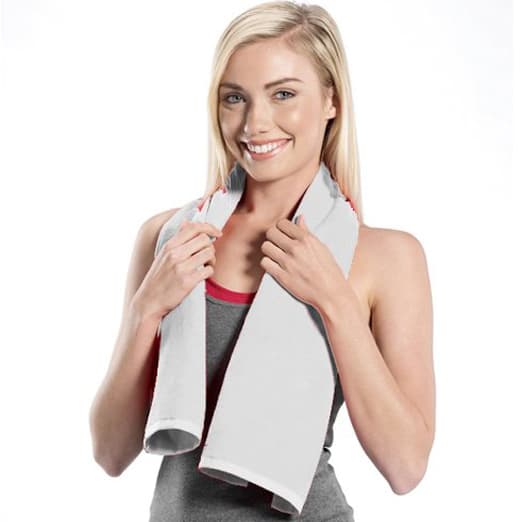
Cotton terry towels have been the standard in the linen industry for decades. They are made from 100% ring spun cotton with uncut loops that trap moisture. A typical cotton terry gym towel weighs between 400 and 550 GSM. This weight provides enough absorbency to dry a full body after a moderate workout like yoga, weightlifting, or a hotel fitness center visit. For facilities where members expect a soft, familiar feel, cotton terry is the clear choice. The loops create a plush surface that feels good against the skin.
Commercial grade cotton terry towels should be washed at 140 degrees Fahrenheit or 60 degrees Celsius. This temperature kills bacteria and removes sweat salts from the fibers. Expect these towels to last 250 to 350 wash cycles before showing significant wear such as frayed edges or thinning loops. To maximize lifespan, never use fabric softener. Softener coats the cotton fibers and reduces absorbency by up to 30%. Instead, use a mild detergent and add a small amount of white vinegar in the rinse cycle. This maintains softness without clogging the pores between loops.
One reality of 100% cotton terry is shrinkage. These towels shrink about 5 to 8% in the first wash. Order 5% larger to account for this. For example, if you need a finished size of 16 by 27 inches, order towels that start at 17 by 29 inches. Pre washed towels from reputable suppliers shrink less, but you still need to plan for it. Also, cotton terry towels take longer to dry in commercial dryers. Factor in additional drying time of 10 to 15 minutes per load. This can add up in labor and energy costs if you run high volume laundry. For facilities with heavy turnover, consider using cotton terry only for lower traffic areas and switch to blends or microfiber for busier zones.
Microfiber Towels for High Intensity Workouts
Microfiber towels are made from a blend of polyester and polyamide. The fibers are split into micro threads that create a large surface area. This allows them to absorb water fast and dry quickly. A typical microfiber gym towel weighs around 200 to 300 GSM. It is much lighter than cotton terry but can hold several times its weight in moisture. For high intensity workouts like CrossFit, spinning, or HIIT classes, microfiber is the top performer. These towels dry in a fraction of the time, which means you can launder more loads in the same shift.
Microfiber resists odor better than cotton because the synthetic fibers do not hold organic matter as easily. However, they require special care. Wash microfiber towels at 105 degrees Fahrenheit or 40 degrees Celsius. Higher temperatures can melt the fibers and ruin the towel. Use a detergent without enzymes or brighteners. Never use fabric softener. Softener coats the microfibers and destroys their absorbency permanently. A good microfiber towel can withstand 300 to 500 wash cycles with proper care. That is longer than cotton, but the savings only appear if you follow the washing guidelines.
One downside of microfiber is the feel. Some members prefer the soft, natural touch of cotton. Microfiber can feel slick or synthetic against the skin. It also does not drape as nicely over a shoulder or bench. For gyms that offer both showers and workout stations, you might stock cotton terry for shower drying and microfiber for wiping down equipment. The Occupational Safety and Health Administration recommends providing towels to workers in hot environments to prevent heat stress. Microfiber towels are ideal for quick cooling because they dry the skin effectively without leaving lint.
Blended Gym Towels for Cost and Durability
Blended towels combine cotton and polyester fibers. A common blend is 60% cotton and 40% polyester. This mix gives you the softness of cotton with the strength and quick drying of polyester. Blended towels typically weigh between 300 and 450 GSM. They cost about 20 to 30% less than 100% cotton terry of similar quality. For large commercial facilities like hotel gyms, chain fitness centers, and corporate wellness rooms, blends offer the best value. They hold up well under heavy use and repeated washing.
The polyester in the blend reduces shrinkage to around 2 to 3%. This makes ordering easier no need to oversize as much as with cotton. Blended towels also dry faster than cotton because polyester does not absorb as much water. You can reduce dryer time by 15 to 20 minutes per load compared to cotton terry. That is a significant savings in energy and labor over the life of the towel. Blended towels last 300 to 400 wash cycles on average. They resist pilling and fraying better than pure cotton, especially in high abrasion environments like weight rooms.
One tradeoff is absorbency. Blends do not absorb as much moisture as 100% cotton. For heavy sweating, a blended towel may feel wet sooner. But for most gym activities, the difference is minor. Some members do not notice at all. If you need high absorbency for sauna or steam room use, stick with cotton. For general gym floor use, blends work fine. A tip from 20 years in the linen industry: use blended towels for loaner programs where members grab a towel on the way in. They are less expensive to replace when towels get lost or stolen. The EPA Safer Choice program provides guidelines for selecting cleaning products that work well with blended fabrics without damaging the fibers.
Choosing the Right GSM for Your Gym Environment
GSM stands for grams per square meter. It measures the density of the towel. A higher GSM means a thicker, more absorbent towel. A lower GSM means a lighter, faster drying towel. For commercial gyms, the sweet spot is between 400 and 550 GSM. This range gives you enough absorbency to dry a body after a workout while still drying in a reasonable time in the commercial dryer. Lighter towels around 300 GSM are often used in spin classes or as sweat towels. They dry in 20 minutes and take up less space in the bin. But they do not have the plushness that members expect.
Heavier towels above 600 GSM feel luxurious and are common in spas and high end hotel gyms. But they come with higher upfront costs and longer dry times. A 600 GSM towel can take 45 minutes to dry in a standard commercial dryer, compared to 25 minutes for a 400 GSM towel. If you run a high volume facility with fast turnover, heavy towels slow down your linen cycle. You need more towels to compensate for the longer drying time. That means higher inventory costs. For most gyms, stick with 400 to 500 GSM. It is the most practical range.
Consider the specific areas of your facility. For the weight room, a 550 GSM cotton terry towel holds up to heavy scrubbing against barbells and benches. For a yoga studio, a 400 GSM blended towel provides enough absorbency without being too bulky to fold easily. For a pool or steam room, a 500 GSM cotton towel is standard. Always test a sample before ordering in bulk. Ask your supplier for a swatch and wash it at your facility to see how it behaves. The ASTM textile standards provide official methods to measure GSM and ensure you get what you pay for.
Proper Laundry Procedures for Commercial Gym Towels
Proper laundry procedure directly affects towel lifespan and hygiene. For cotton terry and blended towels, wash at 140 degrees Fahrenheit or 60 degrees Celsius. This temperature kills bacteria and dissolves sweat salts and body oils. Use a commercial detergent with a neutral pH. Avoid chlorine bleach unless you are sanitizing between laundry loads. Chlorine weakens cotton fibers over time. Instead, use oxygen bleach or a sanitizer approved for commercial linens. For microfiber, wash at 105 degrees Fahrenheit or 40 degrees Celsius. Higher heat damages the microfibers.
Never use fabric softener on any gym towel. It coats the fibers and reduces absorbency by 20 to 30% on cotton and permanently ruins microfiber. Use white vinegar in the rinse cycle at a rate of half a cup per commercial load. Vinegar neutralizes alkaline detergent residue and keeps towels soft without affecting absorbency. Do not over dry towels. Over drying causes shrinkage and brittleness. Remove towels from the dryer while they are still slightly damp. Fold them immediately. This reduces wrinkles and keeps the loops fluffy. For microfiber, tumble dry on low heat or air dry. High heat will melt the fibers.
Sort towels by type and color before washing. White towels can be washed with bleach. White towels are easier to maintain because they can be bleached back to white. Many commercial gyms choose white towels for this reason. Colored towels should be washed separately with color safe detergent. Inspect towels after each wash. Remove any with stains that did not come out. Pre treat stains with a stain remover before the next wash. Keep a log of wash cycles per towel. When a towel reaches 300 washes for cotton or 400 for blends, it is time to rotate it out of prime use. Use older towels for cleaning equipment or as rags. This extends your investment and keeps your primary stock looking professional. If you manage a large facility, consider working with a linen rental service to handle the laundry. But if you wash in house, follow these steps to maximize towel life.
For more towel options, explore our wholesale gym towels collection. We also carry wholesale bath towels for spa and locker room use and wholesale beach towels for poolside amenities. Towel Depot has been in the linen business since 1967. We know what works in real facilities. Contact our team for free samples and bulk pricing advice. We can help you match the right towel to your operation. Buy smarter. Save money. Keep your members happy.