
How to Wash Towels with Vinegar and Baking Soda: Complete Guide
In this guide:
- Why Vinegar and Baking Soda Work for Commercial Towels
- How to Wash Towels with Vinegar and Baking Soda Step by Step
- What Towel Types and GSM Levels Work Best
- How Often to Use This Stripping Method
- Are There Any Risks or Precautions?
- Frequently Asked Questions
For hotel housekeeping managers, spa operators, and gym owners, keeping towels soft and absorbent is a daily battle. Built up soap residue, hard water minerals, and body oils turn once fluffy towels into stiff, musty smelling linens. The vinegar and baking soda washing method is a proven way to strip that buildup and restore performance without buying expensive commercial descalers. This guide gives you the exact process, the science behind it, and the practical limits for bulk towel operations.
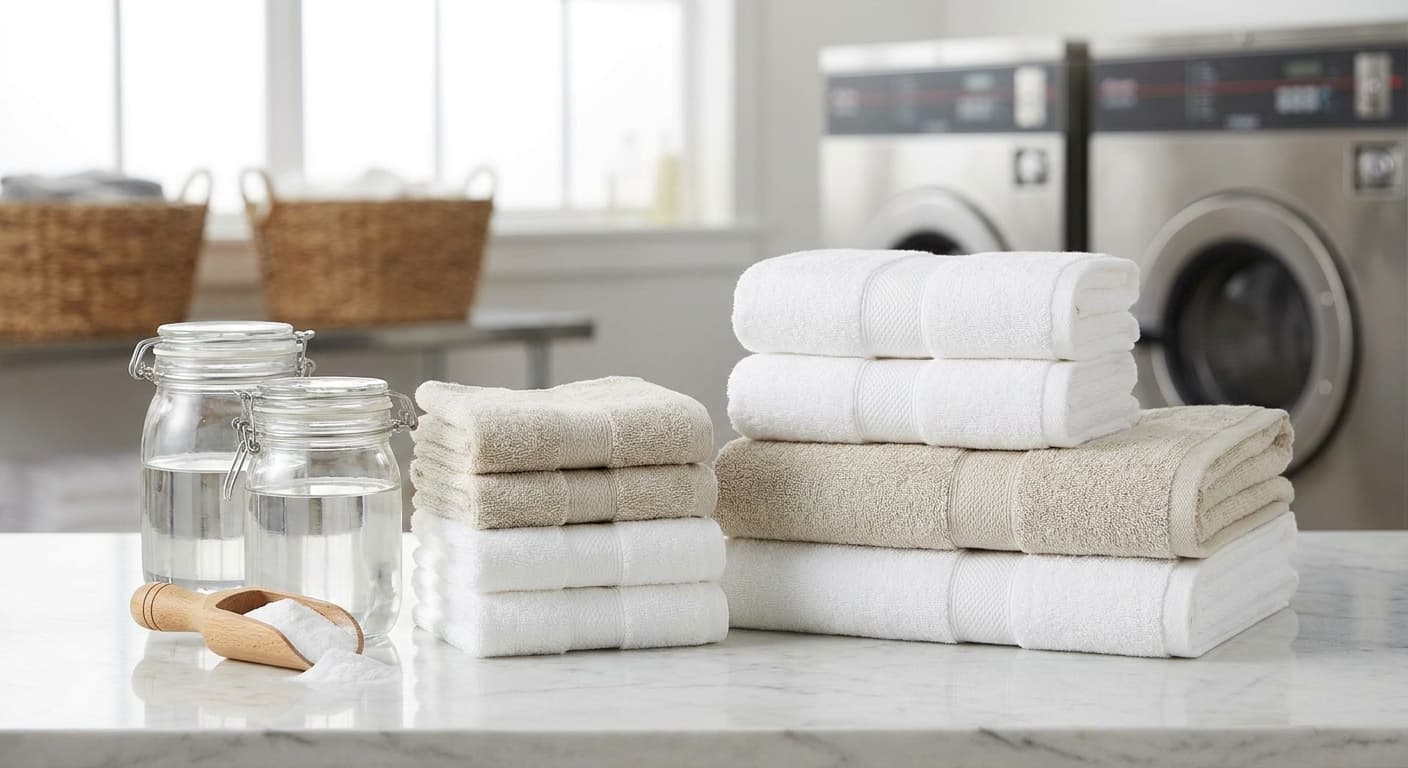
Wash towels in two separate cycles. First cycle with one cup of white vinegar in hot water. Second cycle with half a cup of baking soda in warm water. This strips residue, kills odors, and restores absorbency. Do not combine them in the same load.
What Makes Vinegar and Baking Soda Effective for Commercial Towels?
Vinegar is a mild acid. White vinegar contains about 5 percent acetic acid. That acid dissolves the alkaline buildup left behind by fabric softeners, detergents, and hard water. When you wash towels in hot water at 140 F (60 C) with vinegar, the acetic acid breaks down calcium and magnesium deposits. It also cuts through the fatty residue of body oils and lotions that cling to cotton fibers. After a few cycles, towels that felt slick or repelled water start to absorb again. The improvement is measurable. Towels that originally showed a water absorption time of over 30 seconds can drop to under 5 seconds after one vinegar wash.
Baking soda is a mild alkali. Its pH sits around 8 to 9. When you use baking soda in the second wash, it neutralizes any remaining acid from the vinegar step. It also works as a deodorizer. The alkaline environment lifts embedded dirt and organic material from deep within the yarns. For towels used in gyms or spas where sweat and oils are heavy, baking soda helps break down those protein based stains. It also softens the water, which lets the rinse water carry away loosened particles more effectively. For best results, use baking soda in warm water around 110 F (43 C). Hotter water can reduce its cleaning power.
The two step process works because vinegar and baking soda tackle different forms of contamination. Vinegar handles the chemical scale and mineral crust. Baking soda handles the organic odors and physical grit. When you use them in sequence, you get a deep clean without the aggressive pH swings that can damage cotton fibers over many cycles. The United States Environmental Protection Agency recognizes vinegar and baking soda as safer cleaning alternatives when used correctly. For more on safer cleaning practices, see the EPA Safer Choice program.
How to Wash Towels with Vinegar and Baking Soda Step by Step
Start by sorting your towels. Separate heavily soiled items from lightly used ones. For commercial operations, you should already have a system for separating whites, lights, and darks. The vinegar and baking soda method works on all colors, but test a single towel first if you have concerns about dye stability. Load the washer to no more than 80 percent capacity. Overloading prevents proper circulation and leaves residue behind. For a standard 40 pound commercial washer, that means about 32 to 35 pounds of dry towels.
Run the first cycle with vinegar. Set the water temperature to hot, between 140 F and 160 F (60 C to 71 C). These temperatures are standard for commercial laundry and are recommended by the CDC for disinfection in healthcare settings. Add one cup of white vinegar directly into the wash drum or into the detergent dispenser if your machine has one. Do not use laundry detergent in this cycle. Let the machine run its full wash cycle, including the drain and spin. The vinegar will break down mineral scale and dissolve soap scum.
Run the second cycle with baking soda. After the vinegar cycle finishes, keep the towels in the washer. Set the temperature to warm, between 100 F and 120 F (38 C to 49 C). Add half a cup of baking soda. Again, no detergent. Run the machine through the full cycle. The baking soda neutralizes any remaining vinegar and lifts embedded grime. After this cycle, inspect a towel. It should feel softer and smell neutral. If you still detect residue or odor, repeat the vinegar cycle once more. Then dry the towels on a medium heat setting. High heat can set any remaining oils into the fibers.
What Towel Types and GSM Levels Work Best with This Method?
The method works on 100 percent cotton towels of any GSM. GSM stands for grams per square meter. It measures the fabric weight and density. Lower GSM towels, around 300 to 400 GSM, are common in gyms and budget hotels. These towels are thinner and dry quickly. They respond well to the vinegar and baking soda strip because there is less fiber mass to trap residue. You will see improvement after just one treatment. Higher GSM towels, 500 to 700 GSM or more, are used in luxury hotels and spas. They have thick loops that hold onto detergent and fabric softener more stubbornly. These may require three or four cycles to fully strip.
Do not use this method on microfiber towels. Microfiber is synthetic. Vinegar can damage the fibers and reduce their cleaning effectiveness. Also avoid blends that contain polyester or nylon. The acid in vinegar can degrade synthetic yarns over time. If your inventory includes 100 percent cotton wholesale bath towels, wholesale beach towels, or wholesale hotel towels, you are safe. Always check the care label. For blended towels, stick with standard commercial detergents designed for synthetics.
GSM also affects how much water the towel holds during washing. Thicker towels absorb more water per cycle. That means you may need to adjust the vinegar and baking soda amounts for larger loads. A good rule of thumb: for every 20 pounds of dry towels, use one cup of vinegar and half a cup of baking soda. If your commercial washer holds 100 pounds, use five cups of vinegar and two and a half cups of baking soda. But do not exceed the manufacturer’s recommended maximum for your machine. Overdosing can leave residues that require extra rinsing.
How Often Should You Use This Stripping Method?
Frequency depends on soil load and water hardness. For hotel bath towels that see moderate use and are washed every 20 to 30 cycles with standard detergent, a vinegar and baking soda strip every 40 washes keeps them performing well. For spa towels that come into contact with oils, lotions, and essential oils, strip every 25 washes. Gym towels that absorb heavy sweat and are often washed with high alkalinity detergents may need stripping every 15 to 20 cycles. Track the number of washes per towel using a simple tally or a laundry management system.
Signs that your towels need stripping include a sour or musty smell that does not go away with regular washing, reduced absorbency (water beads on the surface instead of soaking in), and a stiff or rough texture. You can test absorbency by dropping a few ounces of water on a dry towel. If it takes more than 10 seconds to absorb, it is time to strip. Another test: fill a bucket with water and drop a towel in. If the towel floats for more than 5 seconds before sinking, it has significant buildup.
Do not strip every wash. Overuse of vinegar can weaken cotton fibers over time. The acetic acid, even at low concentration, breaks down cellulose if applied too frequently. Limit vinegar washes to once every 15 cycles at most. For routine maintenance between strips, consider adding half a cup of baking soda to your regular detergent cycle once a week. This helps control odor without the aggressive descaling action of vinegar. For facilities with hard water above 7 grains per gallon, you may need to strip more often. Consult your local water utility for hardness levels.
Are There Any Risks or Precautions for Commercial Laundry?
Do not pour vinegar and baking soda into the same wash load. They react and produce carbon dioxide gas, which reduces cleaning effectiveness and can cause a mess in the machine. Always run them in separate cycles. Also, do not mix vinegar with chlorine bleach. The combination produces chlorine gas, which is toxic. If your laundry routine includes bleach for whitening, use the bleach in a separate wash before the vinegar cycle, or use oxygen bleach instead of chlorine.
Vinegar can damage rubber seals and gaskets over time. In top loading commercial washers with rubber seals, repeated exposure to concentrated vinegar may cause the rubber to dry out and crack. After a vinegar cycle, run an empty rinse cycle to clear residual acid from the machine. For front load washers with metal drums, vinegar is safer but still recommend wiping the door gasket after the strip cycle. The OSHA chemical hazards page provides guidance on handling cleaning agents safely in the workplace.
Always test a small batch of towels before applying the method to your entire inventory. Different towels may have different dye fastness. Some dark colored towels may fade slightly after repeated vinegar washes. If you see color transfer or fading during the test, reduce the vinegar amount or use a lower water temperature. Also, do not use this method on towels with waterproof coatings, such as certain spa treatment towels. The vinegar can strip the coating. Stick with standard cotton terry towels for best results.