
How Do Hotels Keep Towels Soft?
In this guide:
- What washing techniques do hotels use to keep towels soft?
- How does drying temperature affect towel softness?
- Why do hotels avoid fabric softeners for towels?
- How often should commercial towels be replaced to maintain softness?
- What type of detergent do hotels use for soft towels?
- Frequently asked questions
If you manage a hotel, spa, salon, or gym, you know that towel softness directly impacts guest satisfaction. Hotels have perfected towel care over decades, and their methods are backed by science and experience. Understanding how hotels keep towels soft helps you extend the life of your linen investment and deliver a luxury feel every time.
Hotels keep towels soft through precise washing temperatures, controlled drying cycles, avoidance of fabric softeners, timely replacement, and use of mild commercial detergents. Each step is calibrated to preserve fiber integrity and absorbency.
What washing techniques do hotels use to keep towels soft?
Hotels start with water temperature. They wash towels in warm water around 110°F (43°C). This temperature activates detergent without breaking down cotton fibers. Hotter water above 140°F (60°C) can shrink and roughen towels over time. Many commercial operations use a two stage process. A prewash removes loose soil, then a main wash deep cleans. Each cycle lasts 10 to 12 minutes. Overloading the machine is the top mistake. Towels need room to move. A full load should fill the drum to about 70 percent capacity. This allows water and detergent to reach every fiber.
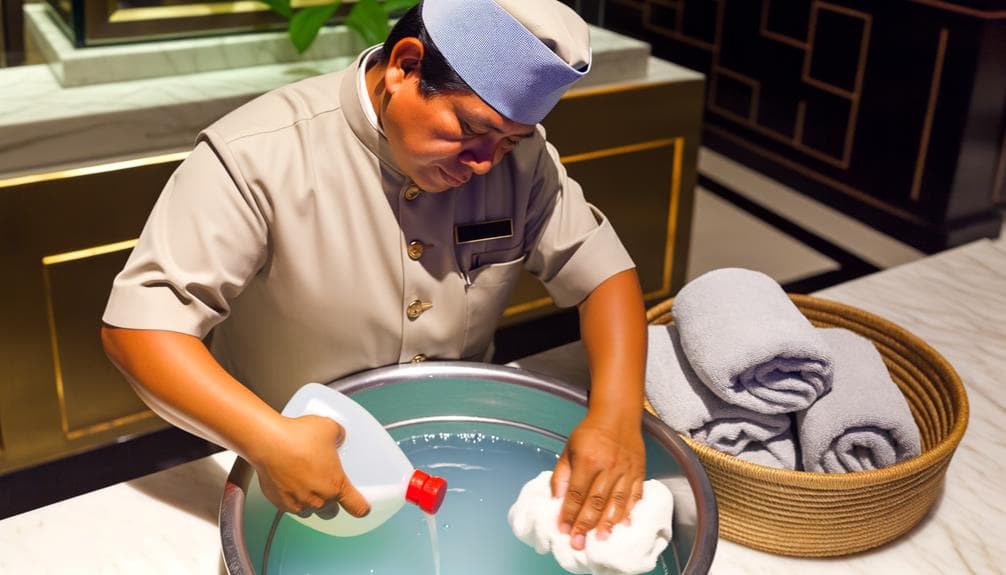
Detergent dosage is measured precisely. Hotels use one tenth of a cup per standard load. Too much detergent leaves residue. Too little leaves dirt. Commercial washers have programmable detergent injectors. They deliver the exact amount at the right stage. Some hotels add a mild acid rinse, often citric acid or vinegar, in the final cycle. This neutralizes alkaline residues from detergent and water. The result is a towel that feels soft and clean without stiffness. These techniques are outlined in guidelines from the CDC for healthcare laundry, which many hotel operators adopt for hygiene standards.
Wash cycle count matters. Hotel towels typically go through 300 to 500 cycles before retirement. To maintain softness, hotels separate towels by color and weight. Heavy 600 GSM towels need a longer gentle cycle than lighter 400 GSM ones. They also avoid bleach unless absolutely necessary. When bleaching is required, they use oxygen bleach at low concentrations. Chlorine bleach damages fibers and causes yellowing. Hotels that buy from a reliable wholesale bath towels supplier ensure consistent fabric quality that responds well to these gentle washing methods.
How does drying temperature affect towel softness?
Drying is where most hotels either maintain or lose softness. The ideal drying temperature is around 135°F (57°C). At this level, moisture evaporates slowly without cooking the fibers. High heat above 160°F (71°C) breaks down cotton's natural structure. It makes towels stiff and brittle. Commercial dryers have adjustable thermostats. Hotels set them to a medium heat cycle that runs for 30 to 40 minutes. They stop the dryer while towels are still slightly damp. This prevents over drying. Over drying strips the towel of its internal moisture, leaving it scratchy.
After the dryer stops, hotels remove towels immediately. They shake each towel to fluff the loops. Some tumble towels with a cool down period of 5 minutes. This resets the fibers and reduces static. Air drying is not common in hotels because of time and space limits. But when space allows, line drying in a shaded area preserves softness better than any machine. Hotels that dry in high humidity conditions use moisture sensors. These sensors stop the dryer when moisture content hits 4 percent. That is the sweet spot for softness and shelf life.
Drying also affects GSM retention. A 500 GSM towel dried at the right temperature keeps its weight and plush feel. Over drying can shrink the fabric and reduce GSM by up to 10 percent over time. Hotels track drying cycles per towel batch. They replace worn out dryer seals and lint filters to ensure even airflow. For commercial buyers who need consistent quality, wholesale hotel towels from a seasoned supplier are pre tested for drying performance. This saves you the trial and error of guessing correct heat levels.
Why do hotels avoid fabric softeners for towels?
Fabric softeners coat cotton fibers with a thin layer of wax or silicone. This coating reduces friction, making towels feel soft initially. But it also blocks water absorption. A towel that cannot absorb water is useless in a hotel bathroom. Guests expect towels that dry them quickly. Softener residue builds up after every wash. After 10 washes, a towel can lose 30 percent of its absorbency. Hotels know this and skip softeners entirely. Instead, they rely on mechanical fluffing from tumbling and proper drying.
Some hotels use a commercial fabric conditioning agent designed for towels. These products are not the same as home softeners. They contain mild lubricants that do not leave heavy deposits. They also include a sour rinse to balance pH. pH balanced towels feel soft without a greasy coating. Hotels test absorbency with a simple drop test. A few drops of water should vanish into the towel within three seconds. If it takes longer, the towel needs a stripping wash. Stripping removes all residue. It involves a hot wash with a degreasing agent followed by several rinses.
Avoiding softeners also extends towel life. Coated fibers trap bacteria and odors. This leads to more frequent washing at higher temperatures, which wears out the towel faster. Hotels that follow these practices see towel replacement cycles extend by 20 percent or more. When you buy wholesale beach towels for pool or spa use, the same rules apply. Softeners reduce sand and water pickup, which defeats the purpose. Stick to the no softener rule and your towels will stay fluffy and functional longer. The EPA Safer Choice program lists detergents and softeners that are low impact on fabrics and the environment, a resource many hotels consult.
How often should commercial towels be replaced to maintain softness?
Softness fades as cotton fibers break down from repeated washing and drying. Hotels set a replacement schedule based on wash cycles, not calendar months. On average, a hotel towel lasts 300 to 400 washes. For a high volume hotel that washes towels daily, this translates to replacement every 9 to 12 months. Lower volume facilities like spas or gyms may get 18 months. The key indicator is the towel's pile. When the loops no longer stand up, softness is gone. Graying or discoloration also signals it is time to rotate out.
Hotels inspect towels after every wash. They look for frayed edges, thin spots, and pulled loops. Any towel with visible wear is pulled from service. They do not wait until all towels are worn. They stage replacements to maintain consistent quality in guest rooms. A good rule is to replace 25 percent of your towel inventory every quarter. This rotates the stock evenly. Using a higher GSM towel from the start also delays replacement. A 600 GSM towel may last 100 more washes than a 400 GSM towel before losing softness.
Hotels track wash cycles with digital counters or simple log sheets. Each batch of towels gets a cycle count. When it hits 350, the batch is downgraded to pool or gym use. After another 100 washes, it is retired to rags. This system keeps guest towels consistently soft. For buyers ordering 100 to 500 units, ask your supplier for GSM and expected wash life. A reputable wholesale hotel towels partner will provide this data. Then you can plan your replacement budget accurately and avoid the complaint of rough towels.
What type of detergent do hotels use for soft towels?
Hotels use commercial liquid detergents with a neutral pH between 7 and 8. Alkaline detergents with high pH can strip natural oils from cotton and leave a brittle feel. Powdered detergents often do not dissolve fully in warm water, leaving white residue. Liquid detergents rinse cleaner. Many hotels choose detergents that are free of optical brighteners and heavy perfumes. Brighteners can make towels look clean but they react with chlorine and cause yellowing over time. Perfumes can irritate sensitive skin.
Detergent concentration is controlled by automatic injection systems. These systems feed detergent into the wash at a rate of 0.5 to 0.8 ounces per pound of laundry. For a 50 pound load, that is about 25 to 40 ounces of detergent. Too much detergent creates foam that redeposits onto towels. Too little leaves soil behind. Hotels also use a detergent booster called a sour. Sour is a mild acid that lowers the pH of the final rinse to 5.5, the same pH as skin. This makes towels feel soft and reduces static.
Some hotels use detergents certified by the EPA Safer Choice program. These detergents meet strict criteria for biodegradability and fiber safety. They avoid harsh chemicals like chlorine bleach and nonylphenol ethoxylates. Another resource is OSHA guidelines for commercial laundry operations, which cover safe handling of chemicals to protect staff and linen. Hotels that follow these guidelines not only keep towels soft but also extend the life of their equipment. When you order from Towel Depot, our wholesale bath towels are designed to work with these detergents, ensuring you get maximum softness and durability.