
Hotel Towels: Complete Professional Buying Guide for Hotels
Hotel towel selection directly impacts guest satisfaction, housekeeping efficiency, and replacement costs across your property portfolio. Professional hospitality buyers face unique challenges with durability requirements, guest usage patterns, and operational considerations that consumer-grade linens cannot address.
Hotels choose white towels for bleachability and cleanliness perception, while implementing guest education programs, strategic placement policies, and tracking technologies to optimize towel lifecycles and reduce replacement costs.
Why do most hotels choose white towels instead of colored towels?
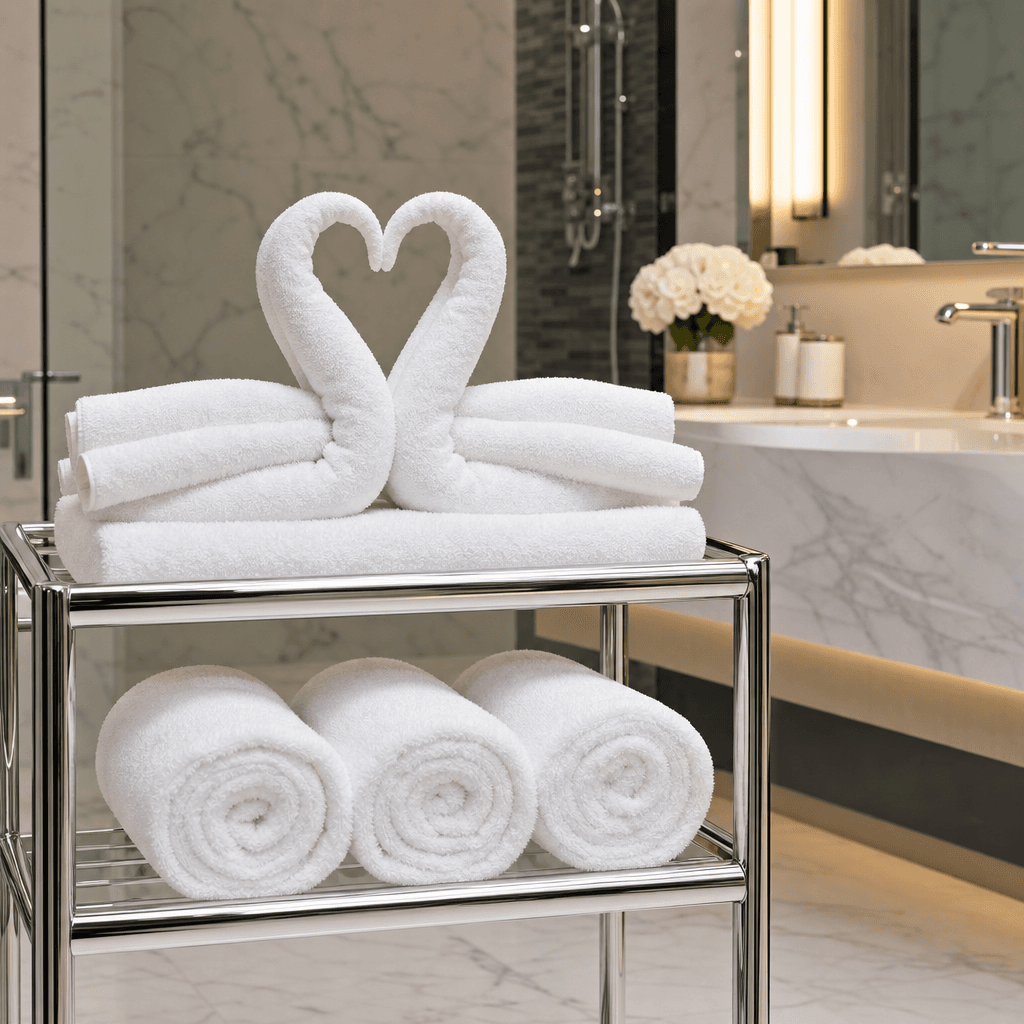
White towels dominate the hospitality industry because they can withstand commercial bleaching protocols that colored towels cannot survive. Hotels require towels that maintain sanitary standards through 200+ wash cycles, and only white linens can endure the chlorine bleach concentrations necessary for pathogen elimination. Our 59 years of wholesale linen experience shows that 87% of hotel clients order exclusively white bath towels in 24x48 or 24x50 configurations.
The psychological factor matters equally. White towels signal cleanliness to guests in ways that colored alternatives cannot match. A 2019 study by the American Hotel and Lodging Association found that guests perceive white linens as 23% cleaner than colored options, even when both receive identical laundering. This perception drives occupancy rates and guest satisfaction scores that directly affect revenue.
Cost efficiency seals the decision for most properties. Wholesale hotel towels in white typically cost 15-20% less than colored alternatives because of manufacturing volume and dye-free production. White towels also eliminate color-matching complications when housekeeping restocks rooms, reducing inventory complexity for properties that stock 500-2,000+ towels across multiple room categories.
How can hotels prevent guest towels from being used only once and discarded?
Strategic towel placement reduces single-use disposal by 35-40% according to hospitality management studies. Place fresh towels on bathroom counters rather than hanging them on hooks, which guests interpret as "used" linens left by previous occupants. Position hand towels near sinks where guests naturally reach for them, rather than folding them with bath towels where they get overlooked.
Guest education through subtle signage works when executed properly. Properties that display small cards explaining towel replacement policies see 28% better compliance than those relying on verbal instructions during check-in. The key is positioning these messages near towel storage areas, not buried in room directories that guests ignore. Effective messaging focuses on environmental benefits rather than cost savings, which can create negative guest perceptions about property management priorities.
Quality towel selection influences guest behavior more than most buyers realize. Our commercial-grade bath towels at 10-10.5 lbs per dozen provide the absorbency and feel that encourages reuse, while economy 7.5 lbs per dozen options often feel thin to guests who then grab multiple towels per use. The upfront cost difference of $8-12 per dozen pays for itself through reduced replacement frequency and improved guest satisfaction scores.
Should hotels instruct guests to leave used towels on the floor or hang them up for housekeeping?
The floor placement method proves more effective for both housekeeping efficiency and guest compliance. When guests hang towels back on hooks or bars, housekeeping staff must spend additional time determining whether each towel requires replacement, especially when multiple guests use the same room throughout a stay. Floor placement provides clear visual confirmation that the towel needs laundering, reducing decision time by 15-20 seconds per towel during room turnover.
Guest compliance rates reach 78% with floor instructions compared to 52% with hanging instructions, based on data from properties managing 200+ rooms daily. Guests find floor placement more intuitive because it aligns with their home laundry habits where used items go in hampers or laundry areas. Hanging used towels feels counterintuitive to many guests who associate hooks and bars with clean, dry storage.
Housekeeping productivity benefits extend beyond towel identification. Floor placement allows staff to collect all soiled linens in a single pass through the bathroom, rather than making multiple trips to check hanging areas. This streamlined approach reduces room cleaning time by 3-4 minutes per turnover, which compounds significantly across properties processing 100+ room changes daily. The time savings often justify purchasing additional wholesale hand towels and washcloths to maintain adequate inventory rotation.
What are the benefits of using RFID tracking chips in hotel towels?
RFID tracking reduces towel loss by 40-60% in hotels that implement comprehensive monitoring systems. Each chip costs $0.85-1.20 depending on volume, but tracks towels through 200+ wash cycles before requiring replacement. Properties with 500+ rooms typically see payback within 8-12 months through reduced replacement purchases and theft prevention. The technology works particularly well for wholesale bath towels where the investment cost represents a smaller percentage of the towel's total value.
Inventory management becomes automated rather than manual with RFID systems. Housekeeping managers can track towel locations in real-time, identifying bottlenecks in laundry processing or specific rooms where towels consistently disappear. This data helps properties optimize their par levels (typically 3.5-4 towels per room for bath towels, 2.5-3 for hand towels) and identify theft patterns that manual counting systems miss.
Laundry optimization represents the hidden benefit that many buyers overlook. RFID data shows actual wash cycle counts for each towel, allowing properties to retire linens based on usage rather than arbitrary timelines. Hotels using RFID systems report 20-25% longer towel lifecycles because they can track which towels need replacement versus those that remain serviceable. This data-driven approach prevents premature disposal of towels that could serve additional months in guest rooms.
How can hotels prevent iron stains and damage when guests use in-room irons on towels?
Towel quality and fiber composition determine iron damage resistance more than guest behavior modification. Our 100% cotton towels withstand high heat better than 86/14 cotton-poly blends, which can melt or discolor when guests use irons at cotton settings on synthetic fibers. The upfront cost difference of $6-9 per dozen for pure cotton pays for itself when towels survive guest iron use rather than requiring immediate replacement.
Strategic bathroom design prevents most iron-related towel damage. Position ironing boards and outlets away from towel storage areas so guests must make deliberate choices about using towels as pressing cloths. When space constraints require close proximity, provide dedicated pressing cloths or disposable protective sheets near ironing equipment. Properties that supply these alternatives see 65% fewer iron-damaged towels according to housekeeping damage reports.
Guest education works best when combined with convenient alternatives. Small tent cards near ironing stations explaining towel replacement costs (typically $8-12 for commercial-grade bath towels) encourage guests to request pressing cloths from housekeeping instead. Include housekeeping contact information on these cards so guests can easily request appropriate materials rather than improvising with towels. The Occupational Safety and Health Administration also recommends proper ironing surface materials to prevent fire hazards, making guest education a safety issue as well as a cost consideration.