
How Hotels Select the Perfect Beach Towels
In this guide:
- What GSM weight makes a beach towel last through 200 washes?
- Which fiber type handles commercial laundry without pilling?
- What size works best for poolside and beach use?
- How should hotels wash and dry beach towels to extend life?
- What color and dye type suits high turnover resorts?
- Frequently asked questions
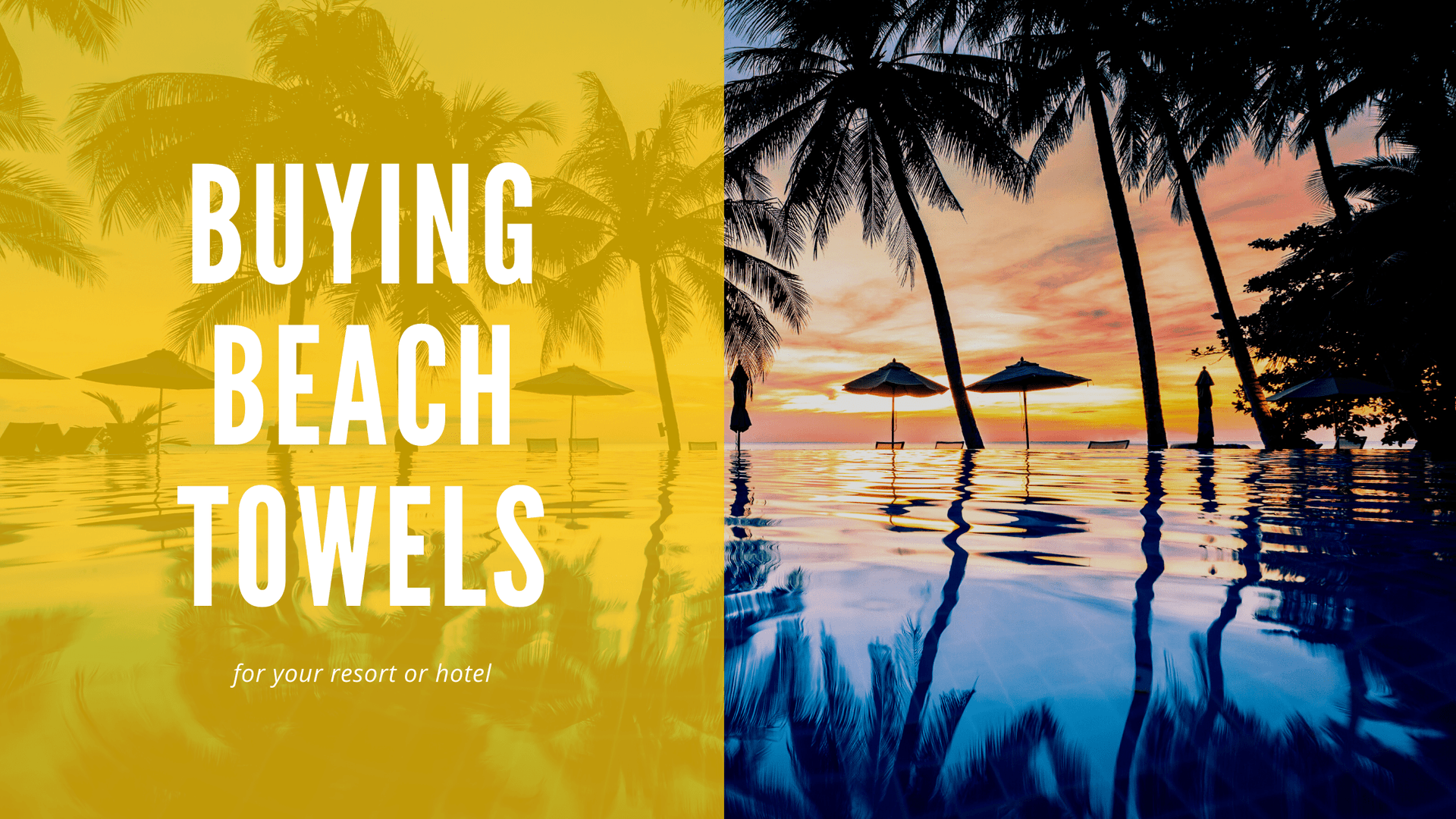
Hotel buyers face a constant challenge: choosing beach towels that guests love and that survive repeated industrial laundering. The right towel balances absorbency, durability, and cost per use. This guide helps housekeeping managers, spa operators, and other B2B buyers cut through marketing claims and pick towels that perform.
Focus on 400 to 500 GSM ring spun cotton in a 30x60 size. Use vat or fiber reactive dyes. Wash at 140 degrees F (60 degrees C) and dry at medium heat to reach 200 to 300 cycles.
What GSM weight makes a beach towel last through 200 washes?
GSM stands for grams per square meter. It is the single most important metric for towel buyers. A 300 GSM towel feels flimsy. A 600 GSM towel feels plush but takes forever to dry and puts strain on your commercial dryers. The sweet spot for hotel beach towels sits between 400 and 500 GSM.
At Towel Depot we see 450 GSM towels deliver a consistent 250 wash cycles before the loop pile starts to thin. This weight absorbs about 1.5 liters of water per towel. That is enough to dry an adult after a swim without leaving the towel soaking wet. Buyers ordering 100 to 500 units should ask their supplier for a GSM test certificate. Many import towels claim 500 GSM but actually test at 380.
Your laundry staff will thank you for choosing 450 GSM. Towels at this weight spin dry faster in the extractor cycle. This reduces drying time by 15 to 20 percent compared to a 600 GSM towel. Faster drying means lower utility bills and quicker turnaround between guest checkouts. The OSHA guidelines for commercial laundries recommend avoiding overloaded dryers. A 450 GSM towel fits that standard well.
Which fiber type handles commercial laundry without pilling?
The fiber construction matters more than the raw material. You can buy 100 percent cotton that pills after 50 washes or 100 percent cotton that stays smooth for 300. The difference is in the yarn twist and staple length. Ring spun cotton uses longer fibers twisted tightly. Combed cotton removes short fibers that cause fuzz. Together they produce a dense, durable surface.
Some buyers consider polyester cotton blends. A 90 percent cotton 10 percent polyester towel will resist shrinkage and hold its shape. But it loses absorbency. For a beach towel being used by the pool, absorbency is everything. We recommend 100 percent ring spun combed cotton for hotel beach towels. This fiber type absorbs water three times faster than a standard cotton towel. It also resists the high temperature of commercial wash cycles that reach 140 degrees F (60 degrees C).
The EPA Safer Choice program publishes guidelines on textile care chemicals that work with natural fibers. Bleach and high heat degrade cotton slower when the fiber is high quality. Hotels that switch to ring spun cotton report a 30 percent reduction in towel replacement costs over two years. Your linen budget will improve.
What size works best for poolside and beach use?
Standard bath towels measure 27 by 52 inches. That is too small for lounging on a beach chair. Guests want something big enough to lay on or wrap around themselves. The industry standard for a wholesale beach towel is 30 by 60 inches. This gives 1800 square inches of fabric. It covers a chaise lounge seat and backrest.
Resorts in tropical climates often prefer 36 by 70 inches. That size works for couples sharing a towel on the sand. But it adds 40 percent more fabric weight per towel. That means longer drying cycles and higher detergent consumption. For most hotels and spas the 30 by 60 size hits the right balance between guest satisfaction and laundry efficiency.
Weight also depends on size. A 30 by 60 towel at 450 GSM weighs roughly 1.3 pounds. Multiply that by 500 towels and you get 650 pounds of linen per order. That is manageable for a hotel with two commercial washers. Ordering 36 by 70 towels at the same GSM pushes the weight to 1.8 pounds each. Your laundry capacity may limit your size choice. Plan accordingly.
How should hotels wash and dry beach towels to extend life?
Set your wash temperature to 140 degrees F (60 degrees C). This kills bacteria and removes sunscreen and body oils. Many hotels use 160 degrees F (71 degrees C) for bath towels. That is too high for beach towels. The heat combined with sand abrasion damages cotton fibers faster. Lowering the temperature to 140 degrees F still meets health department standards for most states. The CDC guidelines for laundry in healthcare settings recommend 160 degrees F for infection control. But for pool towels in a general hotel, 140 degrees F is adequate.
Dry your beach towels at medium heat. Do not exceed 160 degrees F (71 degrees C) in the dryer. High heat causes cotton to shrink and weaken. A towel dried at 170 degrees F will lose 15 percent of its loop pile strength after 50 cycles. Medium heat drying at 145 degrees F (63 degrees C) preserves the fibers. The dryer should run 25 to 30 minutes depending on load size. The final moisture content should be 3 to 5 percent.
Add a commercial fabric softener only every third wash. Softeners coat the cotton fibers and reduce absorbency. For beach towels you want maximum water pickup. Skip the softener entirely if you can. Use a sour product to neutralize alkalinity from detergent. This keeps the towel pH between 5.5 and 6.5. That range feels soft on skin without sacrificing absorbency. Your guests will notice the difference.
What color and dye type suits high turnover resorts?
White is the easiest color to maintain. You can bleach it without worrying about fading. Many hotels choose white for beach towels because it looks clean and fresh. But white shows every stain. Sunscreen, grass, and red wine are permanent if not treated quickly. For high turnover pool areas, consider bright colors like turquoise, coral, or navy. These hide minor stains and add a resort feel.
The dye type matters. Vat dyes and fiber reactive dyes hold color through repeated hot water washing. Pigment dyes fade after 20 to 30 cycles. Always ask your supplier for vat or reactive dyed towels. They cost 5 to 10 percent more upfront but last three times as long. A vat dyed turquoise towel will look the same after 100 washes as it did on day one. A pigment dyed towel will be a pale blue after 30.
Dark colors require cooler wash water. Navy and black towels bleed if washed at 140 degrees F. Use 120 degrees F (49 degrees C) for dark beach towels. This lower temperature still kills most bacteria but preserves the dye. Consider using a color catch sheet in the first few washes. Your wholesale bath towels can be washed together with beach towels if all are dark colors. But never mix whites and darks in the same load. Cross staining will ruin both sets.
Frequently asked questions
When you need bulk beach towels that perform under real hotel conditions, choose wholesale hotel towels from Towel Depot. We have been serving the hospitality industry since 1967. Our 450 GSM ring spun cotton towels deliver the durability and absorbency your guests expect. Order a sample pack today and test them in your own laundry.