
Healthcare Linen Management Best Practices
In this guide:
- What fabric and GSM best suit healthcare linens?
- What wash temperatures kill pathogens and extend linen life?
- When should you replace towels in a high volume environment?
- How to store bulk linens to prevent mold and contamination?
- How to control shrinkage and maintain GSM over time?
- Frequently asked questions
Managing healthcare linens is about balancing infection control, budget, and comfort. Whether you run a hotel housekeeping operation, a spa, a gym, or a restaurant, the same principles apply. You need towels that hold up to repeated commercial washing, stay soft for guests, and meet sanitation standards. This guide covers the real numbers and procedures that work after 20 years in the wholesale linen business.
Proper linen management cuts replacement costs by 30 percent and reduces infection risk. Focus on correct fabric GSM, wash temperatures, storage conditions, and timely replacement.
What fabric and GSM best suit healthcare linens?
The single most important factor in healthcare linen performance is the fabric weight measured in GSM (grams per square meter). For patient care towels, the industry standard is 400 to 500 GSM. That weight gives you enough absorbency to handle moisture from bathing, wound cleaning, and hand drying. Below 350 GSM the towel feels thin and wears out fast. Above 600 GSM the towel becomes too heavy and takes longer to dry, which promotes bacterial growth in storage.
Fabric construction matters just as much. Look for 100 percent ring spun combed cotton. Ring spun fibers are twisted tighter, which makes the yarn stronger and less likely to pill. Combed cotton removes short fibers and debris, leaving a smoother surface that stays soft after dozens of washes. Some buyers choose a 60/40 cotton polyester blend for reduced shrinkage and lower cost. That works for low risk areas like patient rooms, but for operating rooms or isolation units stick with pure cotton. Polyester can trap odors and oils, and it doesn't handle high heat disinfection as well as cotton.
We carry a full line of healthcare linens that meet these specs, including wholesale bath towels in 400, 450, and 500 GSM. For rehabilitation centers or pool areas, our wholesale beach towels at 350 GSM work well. They are lighter but still durable enough for commercial laundry. Always request a swatch before placing a bulk order. Feel the towel. Fold it. Test absorbency with a few ounces of water. The right GSM and fiber construction will save you money over the long run.
What wash temperatures kill pathogens and extend linen life?
Thermal disinfection is the most reliable method for killing bacteria and viruses on reusable linens. The Centers for Disease Control and Prevention (CDC) recommends a minimum wash temperature of 160 degrees Fahrenheit (71 degrees Celsius) for at least 25 minutes. That temperature denatures proteins in harmful microorganisms including MRSA and norovirus. For high risk areas such as operating rooms, raise the temperature to 180 degrees Fahrenheit (82 degrees Celsius). Commercial washers with programmable cycles are essential to maintain these temperatures consistently.
Heat alone is not enough. You need the right chemical balance. Use a neutral pH detergent (pH 6.5 to 7.5) to avoid damaging cotton fibers. Chlorine bleach is effective but harsh. It breaks down cotton faster and turns whites yellow after repeated use. Consider oxygen based bleach or hydrogen peroxide based disinfectants. They work at lower temperatures and are gentler on fabric. Always follow the detergent manufacturer's dosage recommendations. Too much soap leaves residue that attracts soil. Too little fails to clean.
Every laundry operation should have a log of wash temperatures and cycle times. Check your machine calibration monthly. A simple thermometer verification can catch drift. For more detailed guidelines, refer to OSHA's healthcare laundry standards. They outline specific requirements for handling soiled linens and preventing cross contamination. Your staff should treat all used linen as potentially infectious. Use gloves and separate hampers. The wash room itself should have negative air pressure relative to the clean storage area.
When should you replace towels in a high volume environment?
Every towel has a finite lifespan. In a commercial setting, a good quality healthcare towel lasts 75 to 100 wash cycles. At three washes per week per towel, that is about 6 to 9 months. After that the fabric loses absorbency. The GSM drops by 15 to 20 percent. Frayed edges and holes appear. You can push towels to 120 washes but the cost of guests complaining about rough or thin towels is higher than the cost of early replacement.
Track your inventory with a simple color coding system. When you receive a new batch of towels, mark them with a dot of colored fabric paint on the tag. Rotate colors every quarter. When a towel reaches the end of its cycle, pull it out of service. Do not donate or repurpose worn towels for patient care. They can harbor bacteria in frayed areas and are harder to launder effectively. Instead turn them into rags for janitorial use or send them to textile recycling.
The Environmental Protection Agency (EPA) offers guidance on textile waste reduction through the Sustainable Materials Management program. Many municipalities also accept commercial textiles for recycling. By planning your replacement schedule you avoid expensive last minute emergency orders. You also keep your linen inventory at the right level. A good rule of thumb is three to five par levels of towels per bed or guestroom. That accounts for one in use, one in laundry, and one in storage or backup.
How to store bulk linens to prevent mold and contamination?
Mold and mildew are the enemies of clean linens. They thrive in warm, humid, and dark environments. Store all healthcare linens in a room with controlled temperature and humidity. Keep relative humidity below 60 percent. The ideal temperature range is 65 to 75 degrees Fahrenheit (18 to 24 degrees Celsius). Use a standalone dehumidifier if the room does not have HVAC control. Install a simple digital hygrometer and check it daily.
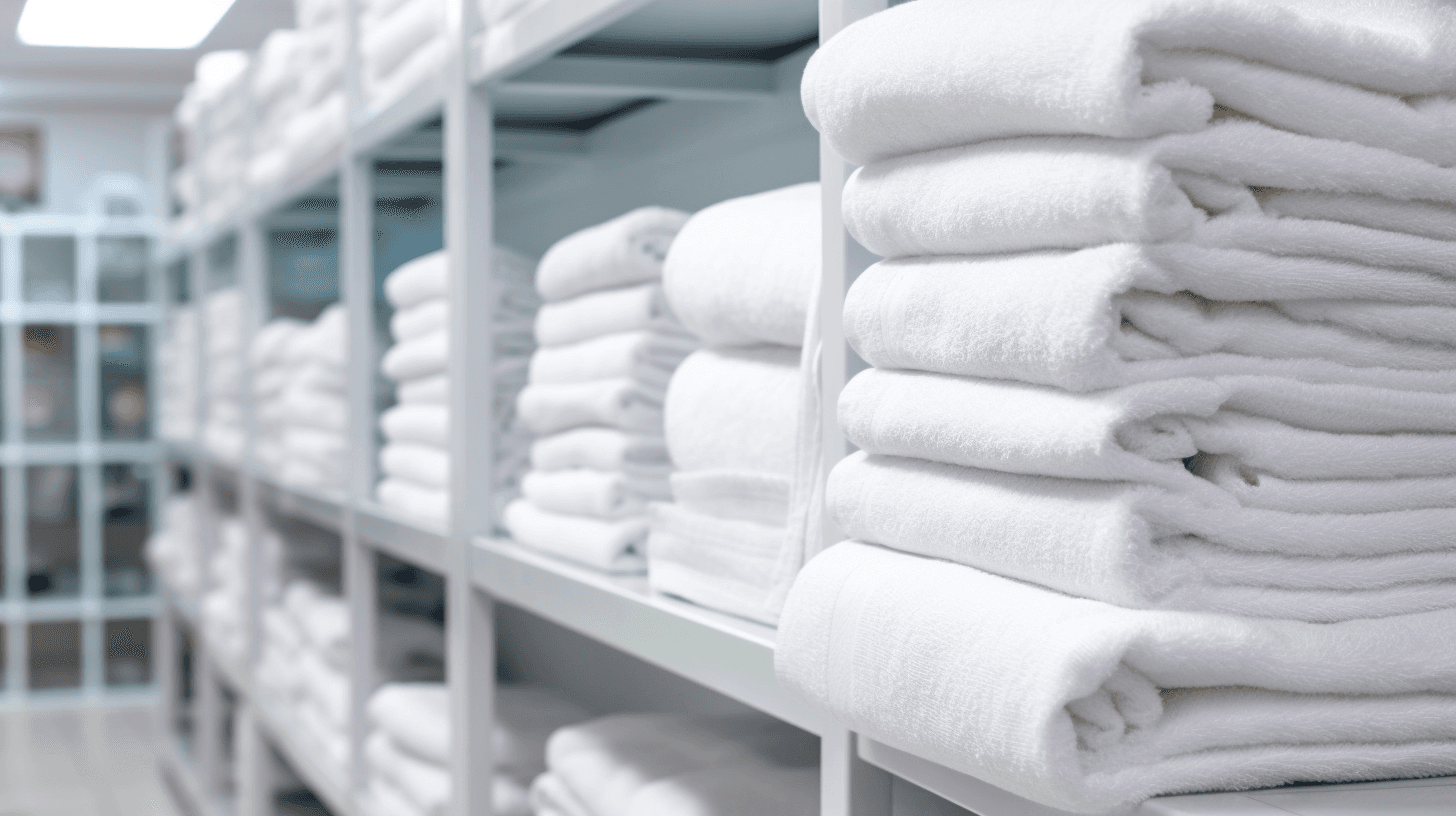
Never store linens directly on the floor. Use open wire shelving or slatted plastic shelves. This allows air to circulate under and around the towels. Stack towels loosely. Do not compress them into tight piles. Compression traps moisture and reduces airflow. Separate clean linens from soiled linens by at least one air barrier. Ideally have a dedicated clean linen room with a positive pressure air system. That keeps airborne particles from entering.
Inspect your storage area weekly for signs of moisture. Look for condensation on pipes, water stains on ceiling tiles, or musty odors. Rotate your stock so older towels are used first. The first in first out (FIFO) method ensures no towel sits unused for months. If you have high seasonal demand, such as in a resort spa, adjust your ordering accordingly. Overstocking leads to stale inventory. Understocking forces you to use towels before they are fully dry. That is a direct path to mold problems.
How to control shrinkage and maintain GSM over time?
Shrinkage is inevitable with 100 percent cotton towels. Expect 5 to 8 percent shrinkage after the first five washes. Most of it happens in the first three cycles. To minimize this, pre wash new towels before putting them into service. Run them through a full cycle at 140 degrees Fahrenheit (60 degrees Celsius) with no bleach. This removes mill finishes and allows the cotton to relax. After drying, measure the dimensions. Record them. Use this as a baseline for future comparisons.
Drying temperature matters a lot. Do not exceed 160 degrees Fahrenheit (71 degrees Celsius) in the dryer. High heat damages cotton fibers and accelerates shrinkage. Tumble dry on medium to low heat until the towels are just dry. Overdrying makes them stiff and brittle. Remove them while still slightly damp. Fold them immediately. The residual moisture will redistribute and keep the fabric supple. If you use a flatwork ironer, set the roller temperature to 300 degrees Fahrenheit (149 degrees Celsius) maximum. Higher temperatures will set wrinkles but also weaken the fibers.
Chemical softeners can affect absorbency. Use them sparingly. A better way to maintain softness is to add a vinegar rinse (pH neutral) during the last cycle every ten washes. Vinegar helps dissolve detergent residue and restores pH balance. It also reduces static cling. Another trick is to shake towels out before loading the dryer. This prevents tangling and allows even drying. For detailed care instructions, refer to ASTM D4231: Standard Practice for Evaluation of Launderable Textiles. That standard provides reproducible testing methods for shrinkage and fabric weight loss.