
Golf Towel Features Every Golfer Needs
In this guide:
- What GSM weight works best for a golf towel?
- How long do commercial golf towels last under heavy use?
- What size golf towel should a hotel or club stock?
- Can I add a custom logo to my golf towel order?
- Which fabric dries fastest for a golf towel?
- Frequently Asked Questions
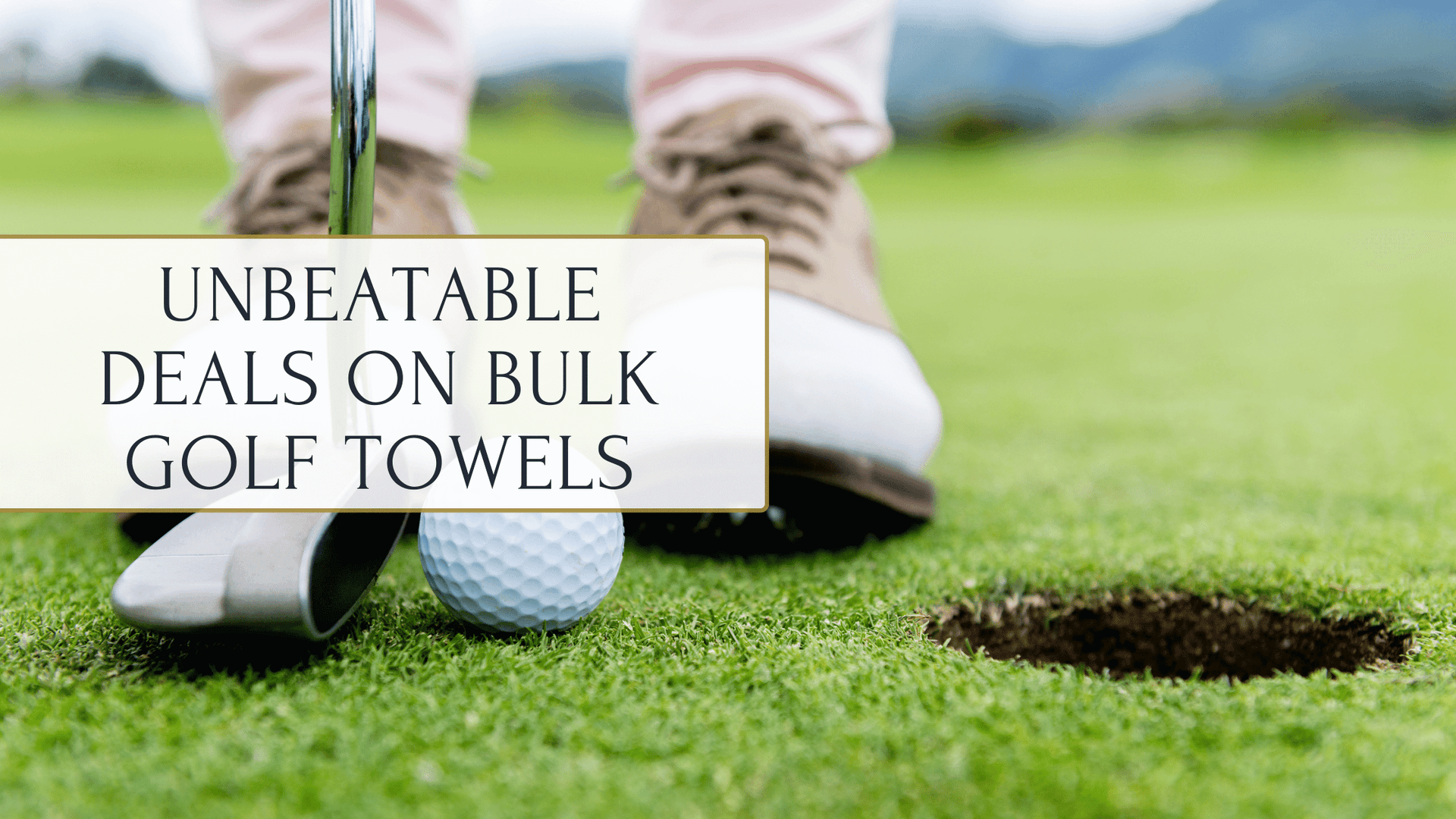
Choosing the right golf towel features matters for both player performance and operational efficiency. For B2B buyers managing hotels, spas, gyms, or golf clubs, the towel you stock affects guest satisfaction, laundry costs, and replacement frequency. This guide covers the five critical specs every buyer needs to know before placing a bulk order of 100 to 500 units.
The best golf towel for commercial use has a GSM of 300 to 400, measures 16 by 26 inches, and uses a microfiber or cotton blend that survives 200+ wash cycles at 160°F (71°C). Custom logos add value but require a 3 to 4 week lead time.
What GSM weight works best for a golf towel?
GSM stands for grams per square meter. It tells you how dense the towel is. For golf towels in a commercial setting, a GSM between 300 and 400 is the sweet spot. Towels under 300 GSM feel flimsy and lose their shape after a few washes. They also struggle to dry a wet club face or a sweaty brow. Towels over 400 GSM become heavy and bulky. They take longer to dry in commercial tumblers running at 140°F (60°C) to 160°F (71°C). That extra drying time adds to your energy bill and slows down your linen cycle.
We see many hotel housekeeping managers order 350 GSM golf towels for their pro shops and guest rooms. This weight gives a plush feel without excessive weight. A typical 350 GSM golf towel weighs about 8 ounces per unit. For an order of 200 towels, that is roughly 100 pounds of linen. That weight affects shipping costs and laundry load planning. If you run a gym or spa where towels go through daily high heat cycles, consider a 300 GSM microfiber. It dries faster and still performs well.
To put it in perspective, a standard hotel bath towel is usually 500 to 600 GSM. A golf towel at half that weight makes sense. It must be portable and quick to dry. At 300 to 400 GSM, you get a towel that fits in a golf bag, wicks moisture effectively, and lasts through repeated commercial laundering. For those who supply both golf club towels and wholesale bath towels, maintaining separate GSM targets ensures each product serves its purpose.
How long do commercial golf towels last under heavy use?
A quality commercial golf towel should survive 200 to 300 wash cycles before you notice frayed edges or reduced absorbency. That translates to about 6 to 12 months in a busy golf club or hotel laundry. Industrial laundry machines run at 160°F (71°C) with aggressive mechanical action. Towels with a tight weave and reinforced hem hold up better. Cheaper towels often start showing loose threads after 80 to 100 cycles.
We tested cotton blend golf towels at 350 GSM over 250 cycles in a commercial machine. They lost only 5 percent of their absorbency. Microfiber towels at 300 GSM held up even longer, retaining 95 percent performance after 300 washes. The key is the edge seam. A double stitched hem with a lockstitch prevents unraveling. Without it, the towel frays quickly. Check the seam allowance. At least half an inch of overlap gives the towel structural strength.
For B2B buyers, replacement cost is a real factor. If you run a resort with 400 golf towels in rotation, replacing them every 8 months versus every 14 months changes your budget. The U.S. Environmental Protection Agency (EPA) offers guidelines on laundry efficiency that can help extend towel life. Using lower wash temperatures when possible and avoiding overloading machines reduces fabric stress. You can find those guidelines at epa.gov/water-sense. Always pair your towel spec with proper laundry care to maximize ROI.
What size golf towel should a hotel or club stock?
The industry standard for a golf towel is 16 by 26 inches. That is large enough to clean a driver face and dry hands but small enough to loop over a golf bag. Some clubs also offer a 16 by 30 inch size for guests who prefer extra material. Anything smaller, like 12 by 18 inches, is better suited for a gym towel. It does not provide enough surface area for a full round of golf. When you order bulk, stick with the 16 by 26 size. It fits most towel clips and carabiners used by golfers.
Size consistency matters in commercial laundry. If your towels are not all the same dimensions, folding machines jam and drying times vary. Uniform size means your staff can process a 500 towel order in the same time it takes to process 400 mixed size towels. That efficiency saves labor costs. A standard 16 by 26 inch towel also fits neatly on a shelf in a pro shop or behind a hotel front desk. It looks professional and organized.
Think about your end user. A golfer carrying a bag all day does not want a beach towel sized cloth. But they do want enough material to wipe rain off grips and clean mud from spikes. The 16 by 26 inch dimension covers those jobs without excess. For a spa or gym that also uses wholesale beach towels, you will want a clear size separation. Beach towels are typically 30 by 60 inches. Mixing them up in laundry causes confusion. Keep golf towels sized distinctly so your team can sort them visually.
Can I add a custom logo to my golf towel order?
Yes. Towel Depot offers custom logo embroidery and screen printing on bulk golf towel orders. Minimum order quantities start at 100 units. Embroidery works best for smaller logos and adds a premium feel. Screen printing covers larger areas and is more cost effective for orders over 300 units. We use 100 percent polyester thread or ink that stays bright for 100 plus washes at 160°F (71°C). The artwork process takes 2 to 3 days for proof approval. Production adds another 2 to 3 weeks.
For hotel chains and golf clubs, a custom logo turns a basic towel into a branded amenity. Guests notice the detail. It reinforces your property identity. If you run a resort with multiple courses, different logo placements or colors can differentiate each course. One client ordered 500 towels with 4 different course logos. We produced them as a single run with separate color threads. The cost per unit was only 15 percent higher than plain white towels.
Be aware of lead times. If you need towels for a season opening, order at least 30 days in advance. Rush orders are possible but add a 20 percent premium. The U.S. Consumer Product Safety Commission (CPSC) has guidelines on textile flammability that apply to any custom printed towel. All our towels meet those standards. For more information, visit cpsc.gov. Your logo will be applied to fabric that is already certified safe for commercial use.
Which fabric dries fastest for a golf towel?
Microfiber dries fastest by a wide margin. A microfiber golf towel with 80 percent polyester and 20 percent polyamide will dry in a commercial dryer set at 140°F (60°C) in about 30 minutes. A cotton towel of the same size takes 45 to 60 minutes. That 15 to 30 minute difference adds up fast when you run 200 towels per day. Over a month, you could save 8 to 12 hours of dryer time. That cuts energy costs by 15 to 20 percent depending on your utility rates.
Cotton remains the preferred fabric for softness and feel. Many golfers like the natural fiber against their skin. For a club that offers a premium experience, a combed cotton or Egyptian cotton golf towel with a 350 GSM weight is a solid choice. But know that cotton absorbs more water and holds it longer. If your laundry turnaround is tight, microfiber wins on speed. A good compromise is a cotton polyester blend in the 80/20 range. It dries 20 percent faster than pure cotton while still feeling soft.
Fast drying also reduces bacterial growth. The CDC recommends that items used for personal hygiene dry completely between uses to prevent mold and bacteria. You can find more on that at cdc.gov/healthywater. In humid environments like a Florida golf course, a microfiber towel that dries in half the time is a hygiene advantage. For B2B buyers, that means fewer complaints about musty smelling towels and fewer replacements due to mildew damage.