
Fitted Sheets Vs. Flat Sheets
In this guide:
- How do fitted sheets and flat sheets differ in design and function?
- Which sheet type is better for hotels, salons, and gyms?
- What are the recommended laundering practices for sheets?
- How do I choose the right quality for bulk orders?
- What considerations apply to sizing and ordering in bulk?
- Frequently asked questions about fitted and flat sheets
Choosing between fitted sheets and flat sheets affects your bottom line. For B2B buyers in hospitality, salons, and gyms, the right sheet type saves time and money. This guide compares fitted sheets versus flat sheets with real data on laundering, durability, and cost.
Fitted sheets save housekeeping time and reduce linen loss. Flat sheets offer flexibility as top sheets or for nonstandard mattresses. For bulk orders, invest in fitted sheets for efficiency.
How do fitted sheets and flat sheets differ in design and function?
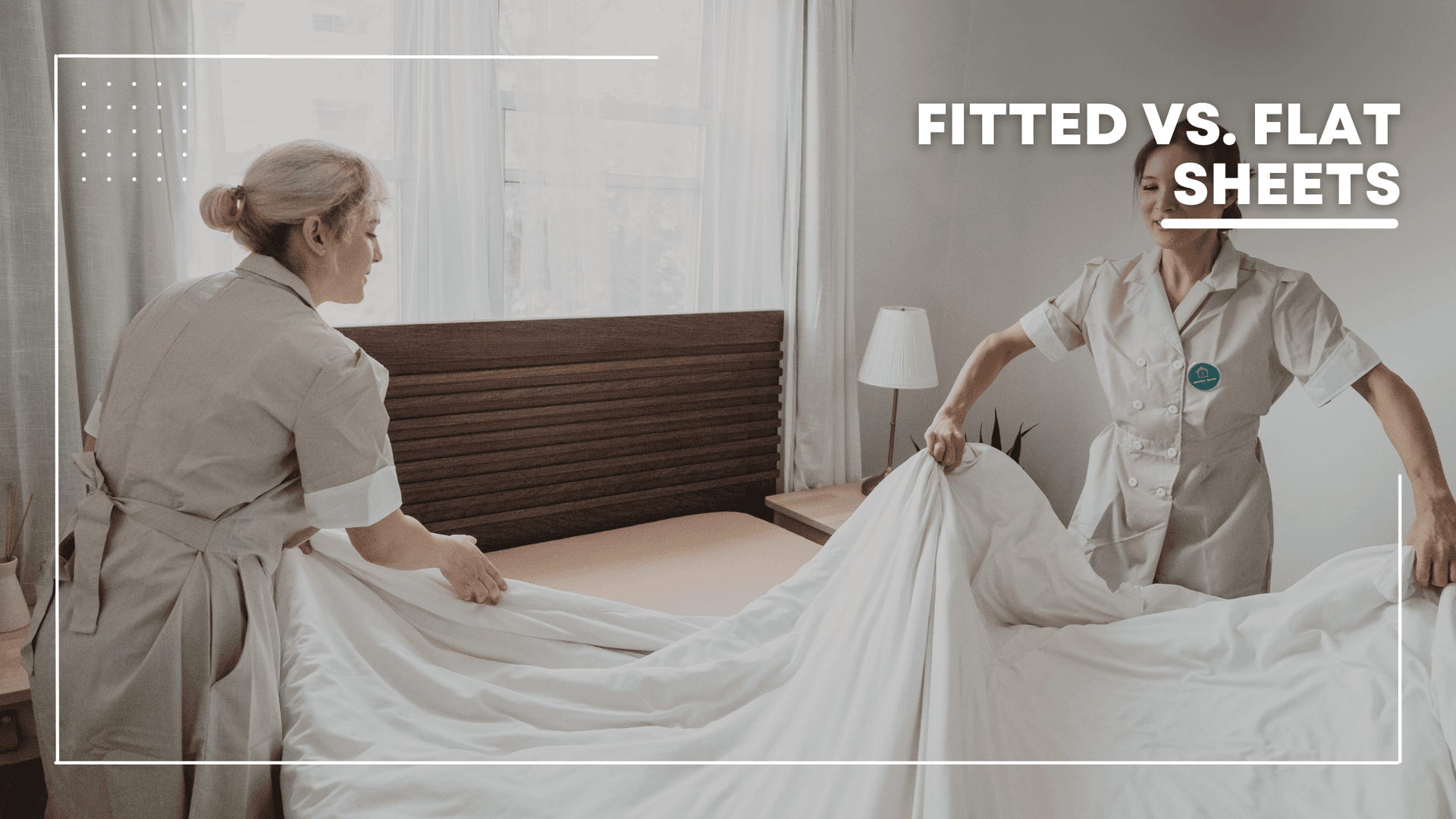
Fitted sheets have elastic bands sewn into the corners. This design grips the mattress and stops shifting. Flat sheets are simple rectangles. They require tucking under the mattress to stay in place. For hotels, fitted sheets cut down on bed making time by about 30 percent compared to flat sheets alone. A housekeeper can finish a bed with a fitted bottom sheet in under 2 minutes. A flat sheet on the bottom takes closer to 3 minutes.
The elastic on fitted sheets is typically 1/4 inch wide. It runs along the entire hem. This provides a snug fit for mattresses up to 15 inches deep. For thicker mattresses, look for deep pocket fitted sheets. Flat sheets can be used as a top sheet or as a lightweight blanket. They are easier to fold and store because they have no elastic. Fold flat sheets in thirds and stack on shelves.
When ordering bulk bed linens, consider your bed types. If all mattresses are the same size and depth, fitted sheets are efficient. If you have odd sized beds or need versatility, flat sheets work. Many businesses order both: fitted for the bottom, flat for the top. This combination offers the best of both worlds. The fitted sheet holds the bed. The flat sheet adds a layer that is easy to change.
Which sheet type is better for hotels, salons, and gyms?
For hotels, motels, and resorts, fitted sheets are the standard for the bottom sheet. They stay in place during the night. This means guests do not wake up with a wrinkled bottom sheet. Housekeeping can make the bed faster because there is no tucking on the bottom. A typical hotel bed can be made in under 2 minutes with a fitted sheet versus 3 minutes with a flat sheet. Over 100 rooms, that saves 100 minutes per shift.
Salons and spas often use flat sheets as covers for treatment tables. They are easier to remove and wash quickly. But fitted sheets can be used if the table has a standard size mattress. Gyms with massage rooms prefer fitted sheets for a clean, tight fit. The elastic keeps the sheet from slipping during a session. For changing rooms, flat sheets are common as privacy drapes or temporary covers.
Business owners who also need wholesale bath towels can match sheet quality to towel quality. Use the same thread count range for both. This creates a consistent guest experience. Our wholesale beach towels are also available in coordinating colors. A unified look improves your brand image.
What are the recommended laundering practices for sheets?
Commercial laundry requires high heat for sanitation. The CDC recommends washing linens at a minimum of 160°F (71°C) for at least 25 minutes. This kills bacteria and viruses. Lower temperatures of 120°F (49°C) can be used for light soil with proper chemical disinfectants. Always follow the fabric care label, but for bulk sheets the upper temperature is safe if the fabric is 100 percent cotton or a cotton polyester blend.
Fitted sheets need extra care in the wash. The elastic can degrade with high heat. Use a gentle cycle and avoid bleach unless necessary. Flat sheets are more durable because they lack elastic. They can withstand higher temperatures and more aggressive washing. A typical flat sheet can last 500 cycles. A fitted sheet lasts 300 to 400 cycles before the elastic starts to fail. That is about 25 percent fewer cycles. Plan your replacement schedule accordingly.
Drying also matters. Tumble dry at 140°F (60°C) to reduce wrinkles. Remove promptly to avoid set in wrinkles. Fold fitted sheets by tucking corners together. Train staff on proper folding to save time. Track your wash cycles to know when to replace linens. A good rule is to replace sheets after 250 to 300 cycles. Use a laundry log for each batch. This extends the life of your investment. For more on infection control, see the CDC laundry guidelines.
How do I choose the right quality for bulk orders?
Thread count is the primary quality metric for sheets. A thread count of 180 to 300 is standard for commercial use. Higher thread counts like 600 feel softer but may not last as many washes. The yarn thickness matters more than count. Two ply yarns are stronger. Look for 180 to 200 thread count percale for durability. Sateen weaves are smoother but show wear faster. For bulk orders, percale is the workhorse.
Fabric weight is measured in GSM for towels. For sheets the weight is expressed in ounces per square yard. A typical percale sheet weighs 3.5 to 4.5 ounces per square yard. That translates to about 120 to 150 GSM. Heavier sheets are more durable but feel less crisp. For hot climates, lighter sheets are better. For cold climates, heavier flannel is an option. Flannel sheets have a GSM of 170 to 200. But flannel is less common in bulk commercial orders.
When ordering bulk, request a sample. Test the fabric for hand feel and shrinkage. Wash a sample 10 times to see how it holds up. The FTC requires accurate fiber content labels. Check that the label says 100 percent cotton or a blend. Blends with polyester can reduce shrinkage. For more on labeling, see the FTC textile labeling guide. A trusted supplier like Towel Depot provides clear labels on every case.
What considerations apply to sizing and ordering in bulk?
Fitted sheets come in standard sizes: twin, full, queen, king. Deep pocket versions fit mattresses 12 to 18 inches thick. Measure your mattress depth before ordering. For bunk beds or rollaways, use standard depth. Flat sheets are sized similarly but require extra length for tucking. A flat queen sheet is 90 by 102 inches. A fitted queen sheet is typically 60 by 80 inches with a 14 inch pocket. Know your dimensions to avoid waste.
When placing a bulk order of 100 to 500 units, ask about case pack quantities. Most wholesalers sell sheets by the dozen. Order in even numbers to simplify inventory. Color matters for hospitality. White is standard because it can be bleached. Colors may fade faster above 160°F. For a consistent look, stock one color and rely on towels for accent. Our wholesale bath towels come in 24 colors to match your sheet whites.
Safety in the laundry is regulated by OSHA. Train employees on proper handling of soiled linens. Use gloves and avoid shaking sheets. This reduces airborne particles. Follow OSHA laundry safety guidelines. A safe workplace reduces liability and improves efficiency. Track your inventory with a simple sheet per bed ratio. Order 3 to 5 sets per bed for full rotation. This extends the life of your sheets and reduces emergency orders.