
Fingertip Towels: Uses & Sizing Guide
In this guide:
- What are fingertip towels and where do they work best?
- What sizes and GSM should you expect?
- Cotton, microfiber, or bamboo: which material delivers?
- How many commercial washes can you count on?
- Care and maintenance for long service life
- Frequently asked questions
Fingertip towels are a staple in any commercial setting that values guest experience and cleanliness. Whether you manage a hotel, run a spa, operate a salon, or stock a restaurant restroom, these compact linens serve a specific purpose without the bulk of a full hand towel. This guide gives you the sizing, material, and durability facts you need to buy with confidence.
Fingertip towels measure 11x18 inches on average, weigh 400 to 600 GSM, and last 80 to 120 commercial washes when cared for properly. For B2B buyers ordering 100 to 500 units, ring spun cotton offers the best balance of absorbency and cost.
What are fingertip towels and where do they work best?
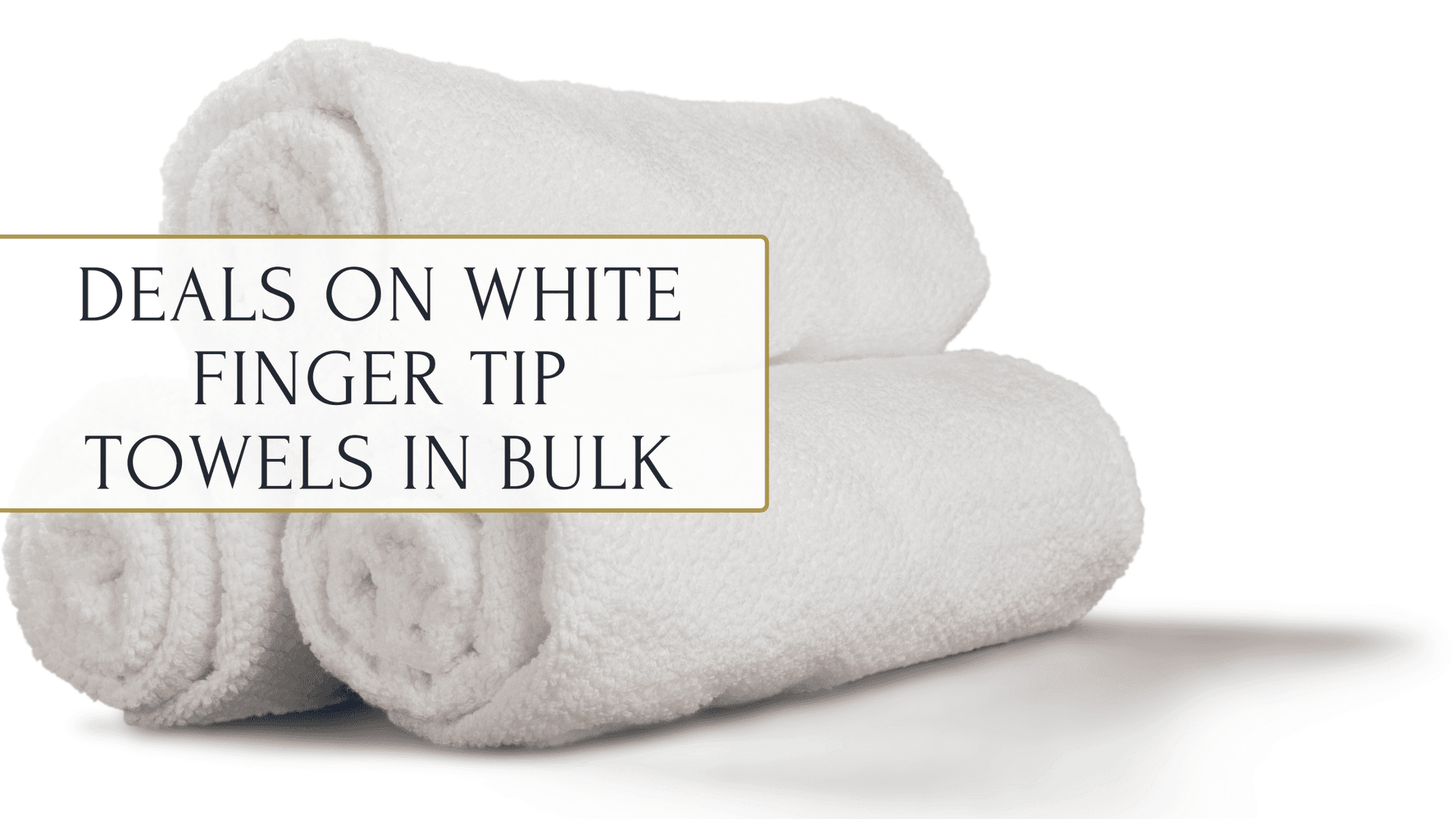
Fingertip towels are small hand towels designed for quick drying after hand washing. They are smaller than standard hand towels and larger than washcloths. The name comes from their primary use. You dry only your fingertips with them. But their application goes far beyond that.
In hotel bathrooms, fingertip towels sit on the vanity or next to the sink. They add a touch of elegance and give guests a dedicated towel for drying hands without reaching for a bath towel. Spas and salons use them to place under a client neck or to wipe up small spills during services. Gyms and health clubs stock them at locker room sinks for convenience. Restaurant buyers place them in restrooms or at host stands for staff use. A typical bulk order from a hotel housekeeping manager might be 200 units for a 50 room property. We also recommend pairing them with our wholesale hand towels for a complete guest room set.
The versatility comes from the size. They fold neatly on a shelf. They fit in small spaces. They don’t take up laundry capacity the way larger towels do. And they are cheaper per unit than full size options. For any buyer watching linen budgets, fingertip towels are a smart line item. The Centers for Disease Control and Prevention recommends dedicated hand drying towels in public restrooms to support proper hand hygiene. You can read more about hand washing guidelines here.
What sizes and GSM should you expect?
The standard fingertip towel is 11 inches wide by 18 inches long. That is the size you will find from most wholesale suppliers. Some mills offer 10x16 or 12x20. Stick with the standard unless you have a specific custom need. 11x18 fits most towel bars and racks without overhang. Conference tables and vanity tops accommodate them easily.
GSM stands for grams per square meter. It measures fabric density. For fingertip towels, the sweet spot is 400 to 600 GSM. At 400 GSM, the towel is lighter, dries faster, and costs less. It is suitable for high turnover gyms or staff restrooms where appearance matters less than utility. At 600 GSM, the towel feels plush and absorbent. That is the choice for boutique hotels and high end salons. Most of our bulk buyers pick 500 GSM. It gives good absorbency without the premium price.
You will also find differences in hemming and stitching. Commercial grade towels have reinforced hems and bar tacks at stress points. Those details prevent fraying after 50 or more washes. Check the finished size before you order. Some suppliers list cut size before hemming. The finished size will be 1 to 2 inches smaller. For a full range of sizes, browse our wholesale bath towels when you need larger formats for guest rooms.
Cotton, microfiber, or bamboo: which material delivers?
100% ring spun cotton is the industry gold standard. It offers high absorbency and softness wash after wash. Ring spun cotton produces stronger yarns with fewer loose fibers. That means less lint in the dryer and longer fabric life. For most B2B buyers, this is the right choice. You can expect absorbency of 16 to 18 times the towel weight when using cotton.
Microfiber towels are a different tool. They dry in half the time. That matters in high humidity environments or when labor costs for laundry are high. Microfiber picks up fine dust and hair better than cotton. Salons and gyms frequently choose microfiber for these reasons. The downside is that microfiber feels less plush to the touch. Hotel guests often notice the difference. If softness is a priority, stay with cotton. The Occupational Safety and Health Administration has guidelines for laundering microfiber terry cloth and other industrial textiles. You can review laundry safety practices here.
Bamboo towels are a newer option. They are naturally antibacterial and sustainable. But bamboo has a shorter fiber length. That can lead to faster wear. The cost is also higher. For most commercial applications, the return on investment is not there yet. Stick with cotton for durability and cost. If you are buying beach towels for a resort pool area, check our wholesale beach towels for larger cotton options.
How many commercial washes can you count on?
A well made 500 GSM cotton fingertip towel will last 80 to 120 commercial wash cycles. That number drops to 60 cycles for lower GSM and climbs to 150 cycles for premium 600 GSM towels. The difference comes down to fiber quality and construction. A towel that uses combed long staple cotton outlasts a standard carded cotton towel by 40%.
Water temperature matters. Commercial laundry typically runs hot at 160F (71C). That is fine for white towels. Colored towels should wash at 110F (43C) to prevent fading. Chlorine bleach used correctly boosts lifespan instead of degrading it. Use 5% chlorine bleach at a ratio of 0.5 ounces per pound of dry linen. Over bleaching shortens fiber life. Under bleaching leads to bacterial buildup and odor. ASTM International sets testing standards for textile durability. Their standard test methods are the benchmark for our own quality control. You can find them here.
The drying cycle also affects longevity. High heat weakens cotton fibers over time. The ideal drying temperature is 140F (60C). Tumble dry low and remove the towels while slightly damp. Then pull them to finish drying flat. That step reduces wear on the hem and prevents over drying. For bulk orders of 100 or more, you will see consistent performance if you follow these parameters. Track your own tally. When a towel starts showing thin spots or frayed edges after 100 washes, replace it.
Care and maintenance for long service life
Wash fingertip towels at 140F (60C) with a mild detergent. That temperature kills common bacteria while preserving fiber strength. Use a neutral pH detergent. Avoid high alkali formulas. They break down cotton cellulose faster. For white towels, you can use chlorine bleach every other wash to maintain whiteness. Dilute the bleach in water before adding it to the machine. Undiluted bleach causes color loss and weakens fabric.
Never use fabric softener on fingertip towels. Softeners coat the fibers with a waxy film that blocks absorption. Absorbency drops by 30% or more after a few softener cycles. That defeats the purpose of a hand towel. Instead, use white vinegar in the rinse cycle. One cup of vinegar per industrial load helps remove detergent residue and restores fluff. It also naturally deodorizes towels that have been sitting in a damp locker room.
Store cleaned towels in a cool dry place with air circulation. Humidity above 60% encourages mildew. Fold towels loosely. Do not stack them too high. Heavy stacks compress the fibers and create hard creases. For volume storage, rotate your inventory. Use the oldest stock first. This simple first in first out method prevents long term degradation from sitting on a shelf. Your guests will notice the difference in softness and appearance.