
Custom Beach Towels With Logo
In this guide:
- What GSM and material is best for custom logo beach towels?
- How durable are custom beach towels under commercial laundry conditions?
- What logo printing methods work best for beach towels?
- What are the minimum order quantities and pricing for bulk orders?
- How do custom beach towels comply with safety and flammability regulations?
- Frequently asked questions
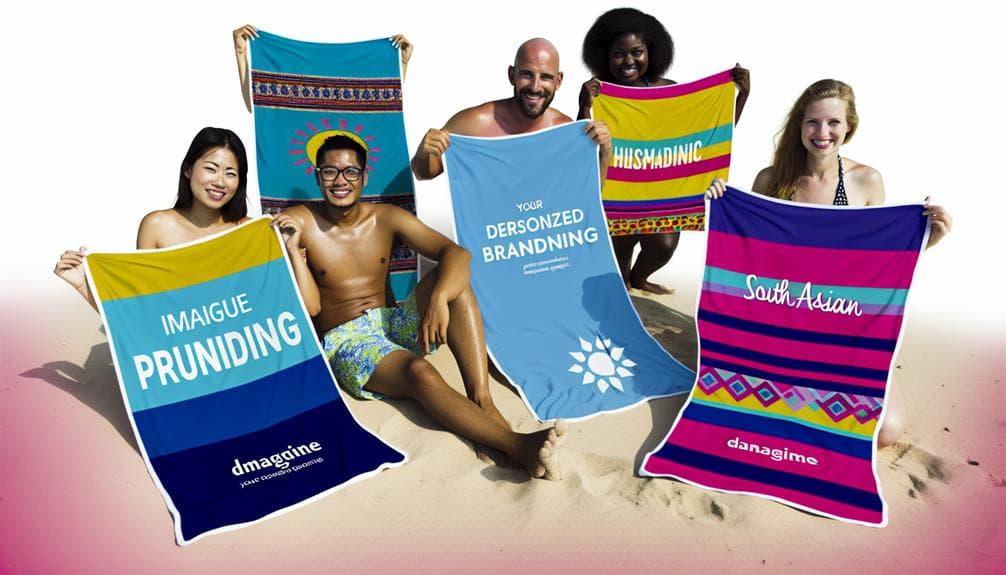
Custom beach towels with logo give your business a mobile billboard that guests use at the pool, spa, or gym. For hotel housekeeping managers, spa operators, and gym owners ordering 100 to 500 units, the right towel builds brand recognition and lasts through hundreds of commercial washes. This guide covers the material specs, print techniques, and compliance standards you need to make a smart bulk purchase.
For B2B buyers, a 400 to 500 GSM ring-spun cotton or cotton polyester blend towel with screen printed logos gives the best durability, absorbency, and print retention for 100 to 500 unit orders.
What GSM and material is best for custom logo beach towels?
GSM stands for grams per square meter. It measures fabric density. For custom beach towels that will be used in commercial settings like hotel pools or resort spas, 400 to 500 GSM is the sweet spot. Towels under 350 GSM feel thin and sheer. They wear out after 30 to 40 washes. Towels over 550 GSM are heavy. They take longer to dry in commercial dryers and increase your utility costs. A 450 GSM towel hits the balance between plush feel and fast drying time. At that weight, the towel dries in about 25 minutes in a 200 degree Fahrenheit (93 degree Celsius) commercial dryer.
Material choice affects print quality and longevity. One hundred percent ring-spun cotton gives the best crispness for screen printed logos. The long fibers hold dye deep, so colors stay bright for 80 to 100 washes. A 60/40 cotton polyester blend is a close second. The polyester adds strength and resists pilling. We see blends last 20 percent longer in high heat commercial laundry cycles. Avoid low grade polyester or microfiber for logo towels. The synthetic surface does not hold plastisol or water based inks well. Logos crack and peel after 30 to 40 cycles. Stick with cotton or a cotton heavy blend for your logo investment.
Terry cloth loop height matters too. Longer loops mean more absorbency but also more snag risk. For poolside use, a medium loop height of 5 millimeters works best. It absorbs 1.5 times its weight in water without catching on fingernails or chair straps. Shorter loops of 2 to 3 millimeters are better for spa environments where lint shedding is a concern. Your wholesaler can provide loop height specs for each GSM range. Ask for a swatch card before placing your bulk order.
How durable are custom beach towels under commercial laundry conditions?
Commercial laundry is tough. Water temperatures range from 140 to 180 degrees Fahrenheit (60 to 82 degrees Celsius). Detergents are high alkaline. Drying cycles run at 180 to 200 degrees Fahrenheit (82 to 93 degrees Celsius). A well made custom beach towel with reinforced edges and double stitched hems holds up for 100 to 150 cycles before noticeable pilling or fraying shows. The specific test standard used in the industry is AATCC 135. This test simulates five home laundry cycles, but for commercial use we multiply that by the harsher conditions. At 100 cycles, a 400 GSM cotton towel retains about 85 percent of its original absorbency.
Edge construction is the weak point on most budget towels. Look for towels with a reinforced hem that is stitched with a lockstitch at 8 to 10 stitches per inch. That density prevents unraveling when towels are pulled from a commercial extractor. Single needle hems with only 5 stitches per inch often fail before 50 cycles. Also check the corner tacking. A bar tack at each corner adds 15 to 20 percent more life to the towel. Without it, corners curl and fray faster. We recommend ordering a pre production sample and running it through 10 wash cycles before committing to the full run.
Colorfastness is a separate durability factor. In commercial wash, dark logo colors can bleed onto the white towel base. A standard test like AATCC 61 measures color loss after 5 washes equivalent to 5 home launderings. For a custom beach towel, look for a rating of 4 or higher on a 1 to 5 scale. A rating of 4 means minimal color change visible only under close inspection. Many cheap printed towels from overseas suppliers test at 2 or 3. The logo fades to a pastel after 20 washes. Always request a colorfastness certificate from your supplier. The FTC textile labeling rules require accurate fiber content and care instructions on every towel. That helps you maintain proper washing protocols.
What logo printing methods work best for beach towels?
Screen printing is the gold standard for custom beach towels at 100 to 500 unit orders. Plastisol ink and water based ink both work well on cotton terry. Plastisol gives a thicker feel and very vivid colors. Water based ink soaks into the fibers for a softer hand and better breathability. For beach towels that will be used wet and folded repeatedly, we recommend water based screen printing. It does not crack or peel when the towel is twisted. Plastisol prints can develop hairline cracks after 60 to 80 washes if the ink film is too thick. A good printer applies the ink at 1.5 to 2 millimeters thickness. That keeps print durability high while maintaining flexibility.
Embroidery is an alternative for small logos on the hem or corner. It looks premium, but it adds weight and reduces absorbency at the stitch site. Each embroidered logo uses about 8000 to 12000 stitches. That creates a dense patch that does not dry as fast as the surrounding terry. For pool towels that need to dry quickly for next day use, embroidery is not ideal. Use it only if the logo is small and located on the fringe or border where absorbency does not matter. The thread should be 100 percent polyester to withstand chlorine and bleach. Cotton embroidery thread fades and bleaches out within 30 commercial washes.
Direct to garment printing is not recommended for beach towels. DTG uses water based inks sprayed onto the fabric. On terry cloth, the ink wicks into the loops unevenly. The result is a fuzzy, low resolution image that looks faded from day one. DTG prints also wash out faster because the ink stays on the surface. After 15 to 20 washes, DTG logos on terry show 50 percent loss in color density. Stick with screen printing for volume orders. Your setup cost is higher per color. But the per unit price drops fast at 250 units and above. Setup fees for screen printing with 1 to 3 colors range from $50 to $150 per color. That is a one time cost amortized over all units. For a 400 GSM cotton towel with a two color logo, expect per unit pricing of $4.50 to $6.00 at 250 pieces. For larger orders of 500, the price can fall to $3.50 per towel. Ask your supplier for a breakdown that includes screen fees and per unit cost.
What are the minimum order quantities and pricing for bulk orders?
The standard minimum order quantity for custom beach towels with logo is 100 units. Below that number, the per piece cost jumps because screen setup and artwork charges stay the same. At 100 units, per towel pricing ranges from $5.00 to $7.00 for a 400 GSM towel with a one color print. At 250 units, that price drops to $4.00 to $5.00. At 500 units, it can fall to $3.50 to $4.50. These prices assume a standard size of 30 by 60 inches. Larger towels like 36 by 72 add 10 to 15 percent to the cost. The same GSM but bigger surface area uses more fabric and ink.
Setup fees include screen creation for each color, artwork separation, and proofing. For a one color logo, expect $50 to $100 setup. Two colors cost $80 to $150. Three colors run $120 to $200. Artwork separation is often included in the setup if you supply a vector file. If you supply a raster image, the supplier may charge an extra $25 to $50 to convert it. Always send an .AI or .EPS file at 300 DPI. That avoids delays and additional charges. Proof turnaround is usually 2 to 3 business days. After approval, production takes 15 to 25 business days depending on order size and current load.
Shipping costs depend on weight and distance. A 400 GSM 30x60 towel weighs about 1.2 pounds. For 250 towels, that is 300 pounds of total weight. Ground freight from a US based supplier runs $80 to $150 depending on your zone. If you need the towels fast, ask about express service. Some suppliers offer 10 business day rush for a 20 percent surcharge. But plan ahead. Custom print is not a last minute purchase. Order at least 6 weeks before your peak season. If you supply your own towel blanks, check with your supplier about a drop ship program. Many wholesalers can ship directly to your hotel or spa locations. Make sure the OSHA guidelines for commercial laundry facilities are followed in your housekeeping department to extend towel life.
How do custom beach towels comply with safety and flammability regulations?
Commercial beach towels sold in the United States must meet the Consumer Product Safety Commission standard 16 CFR Part 1610. This standard classifies fabrics by their burn rate. Most plain woven terry cloth towels fall into Class 1. That means normal flammability. The fabric passes the 45 degree angle test with a flame spread time of at least 3.5 seconds. For a custom beach towel, the printed area can affect the test. Thick plastisol ink can slow the burn by acting as an insulator. But it can also create a surface that melts in certain synthetics. Pure cotton towels pass easily without any chemical treatment. Cotton polyester blends up to 50 percent polyester also pass because the polyester melts away rather than supporting a flame.
Your supplier should provide a certificate of compliance with each bulk order. The certificate lists the fabric composition, the test method, and the test results. If you are buying for a hotel or resort in a state with stricter fire codes, check local regulations. California Technical Bulletin 117 requires upholstered furniture and some textile products to meet a smolder test. Beach towels are not typically covered by TB 117. But some hospitality chains require compliance as a precaution. Ask your supplier if they can provide a smolder test report if requested. The CPSC flammability regulations page has the full list of test methods and classifications.
Lead and phthalate content is another concern for children's items. If your custom beach towels will be used in family pools or given to kids, check for compliance with CPSIA lead limits of 100 parts per million for substrate and 90 ppm for paint or coating. Screen printed inks are generally lead free. But if you use plastisol with metallic additives, confirm the supplier uses compliant pigments. A simple declaration of conformity from the printer covers most requirements. For total peace of mind, request a third party test report from a CPSC accepted laboratory. That test costs $300 to $500 but it protects you from recalls and fines. Most commercial buyers skip this step until a client specifically asks. But if you supply towels to a government facility or a school district, the certificate of compliance is mandatory. Keep it in your purchasing files.