
Create Stunning Tie-Dye Towels with Fun Materials
In this guide:
- What towel fiber and GSM are best for tie-dye in bulk orders?
- How do I ensure colorfastness and dye safety in commercial use?
- What dyeing methods produce consistent results across 500 towels?
- How many wash cycles should tie-dye towels withstand before fading?
- What is the cost difference between custom tie-dye and plain white towels in bulk?
- Frequently Asked Questions
Tie-dye towels are a proven way to add brand personality to your hotel, spa, or gym while keeping linen budgets under control. For B2B buyers ordering 100 to 500 units, knowing the right materials and methods makes the difference between a consistent product line and a costly mistake. This guide gives you the numbers, temperatures, and industry specs you need to produce stunning tie-dye towels that last.
Use 100 percent cotton towels between 400 and 600 GSM with fiber reactive dyes. Pre wash at 140 F (60 C). Apply dye in 6 to 8 hours at 70 F (21 C). Expect 20 to 30 commercial wash cycles before fading. Budget 30 percent to 50 percent more than plain white towels for custom tie-dye.
What towel fiber and GSM are best for tie-dye in bulk orders?
Fiber content and weight drive how well a towel accepts and holds dye. For bulk tie-dye, you want 100 percent cotton. Cotton fibers have hydroxyl groups that bond with fiber reactive dyes. Polyester blends above 10 percent synthetic content will resist dye. Dye will wash out or leave a faded uneven look. Cotton towels also shrink predictably. Expect 3 percent to 5 percent shrinkage in the first wash at 140 F (60 C). Pre shrinking before dyeing avoids dimensional changes in your final product.
GSM, or grams per square meter, matters for color saturation. Towels between 400 and 600 GSM are the sweet spot. At 400 GSM you get a medium weight towel that air dries quickly. At 600 GSM you get a plush feel with deeper color absorption. Lighter 300 GSM towels work but will show more white spots where the dye did not reach. Heavier 700 GSM towels absorb more dye solution. You need up to 30 percent more dye per towel to achieve full coverage. That increases per unit cost.
We recommend ordering our wholesale bath towels in 500 GSM ring spun cotton for your tie-dye project. Ring spun cotton has longer fibers that pill less and hold dye more evenly. Ask for unbleached or white towels. Brighteners in some whites can interfere with certain dye colors. A quick test: wet a sample towel and apply a drop of dye. If the color spreads uniformly without beading, the towel is ready. Check with your supplier about custom pre washing service to save labor in your facility.
How do I ensure colorfastness and dye safety in commercial use?
Colorfastness is non negotiable for hotel and spa towels that go through high temperature wash cycles. Use fiber reactive dyes only. These dyes chemically bond with cotton cellulose. They resist fading better than direct dyes or acid dyes. After dyeing, wash the towels at 120 F (49 C) with a mild pH neutral detergent for two complete cycles. This removes excess dye that has not bonded. Test a sample by rubbing a damp white cloth on the dyed towel. No color transfer means the towel is ready.
Safety compliance matters when handling dye powders in bulk. Dye dust can irritate lungs and skin. Follow OSHA guidelines for particulate handling. Wear a NIOSH approved N95 dust mask and nitrile gloves. Work in a well ventilated area. If using powder dyes, mix them in a separate room or outdoors. Do not eat or drink near dye stations. Store dyes in labeled containers away from heat. Check your local EPA requirements for dye wastewater disposal. Many municipal treatment plants accept small amounts of neutralized dye. But check pH limits. Target a pH between 6 and 8 before discharge.
For commercial laundry operations, run a full scale wash test before production. Use your own machines and detergents. Wash a tie-dye sample at 160 F (71 C) for 30 minutes. Check for bleeding into white trim or other towels. Adjust dye fixing time or use a commercial dye fixative if needed. The FTC expects textiles to meet care labeling accuracy. If your tie-dye towel label says wash with like colors, that is fine for most buyers. But if you want to sell to hospitals or high volume hotels, aim for a colorfastness rating of 4 or higher on the AATCC Gray Scale. That standard is achievable with proper dye technique.
What dyeing methods produce consistent results across 500 towels?
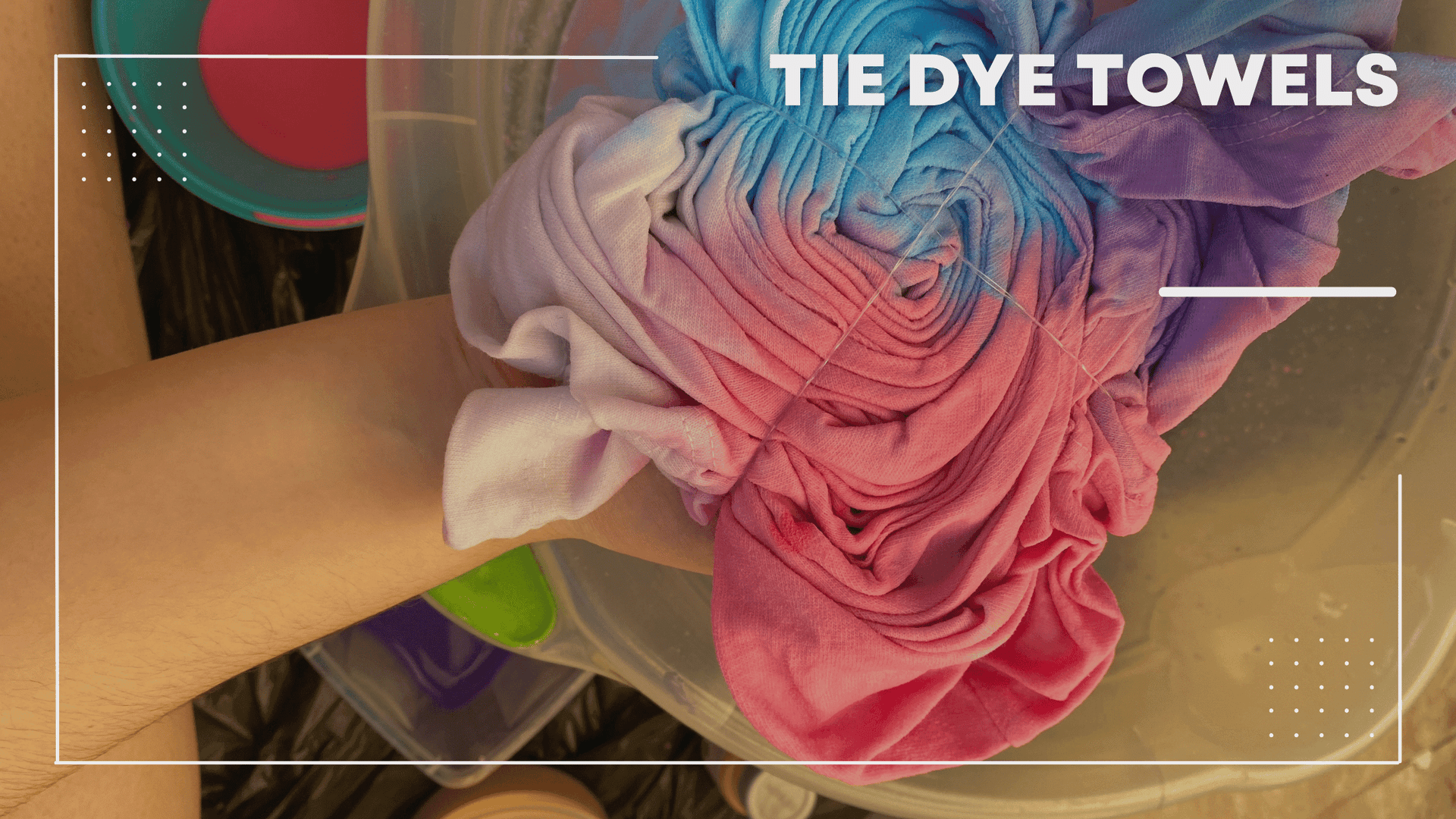
Consistency is the biggest concern when dyeing 100 to 500 towels for a single client. The spiral method and the scrunch method are the most repeatable. For the spiral method, lay the towel flat. Pinch the center and twist into a tight spiral. Secure with three rubber bands at 120 degree angles. Apply dye in three or four color sections. Each towel will have a similar spiral pattern. Variation comes from how tight you twist. Train one person to do the twisting for the entire batch to keep tension uniform.
The scrunch method involves gathering the towel into a loose ball. Secure with two perpendicular rubber bands. This method produces a more random pattern but still yields consistent density of color across towels. Weight each towel before dyeing to control solution uptake. For 500 GSM towels, a standard ratio is 200 milliliters of dye solution per 100 grams of dry towel. Mix dye powder with water at the rate of 30 grams per liter for medium depth. Keep the application time between 6 and 8 hours at 70 F (21 C). Shorter times produce lighter colors. Longer times risk dye migration and uneven blotches.
After the dye sets, rinse in cold water at 70 F (21 C) until the water runs clear. Then wash at 120 F (49 C) with detergent. Dry on low heat at 140 F (60 C). Inspect each towel for color consistency. Use a handheld color spectrophotometer if you want to match colors across batches. For small runs, a visual check against a reference towel works. Always keep a control sample from the first production batch. Compare new batches to that sample under daylight spectrum lighting. This method helps you deliver a uniform product to your wholesale beach towels customers.
How many wash cycles should tie-dye towels withstand before fading?
Commercial laundry cycles are harsh. High alkalinity detergents, hot water, and mechanical action all stress dye bonds. With fiber reactive dyes and correct after treatment, you can expect 20 to 30 cycles before visible fading. That is equivalent to about three to six months in a busy hotel. To maximize longevity, wash tie-dye towels at 120 F (49 C) maximum for the first five cycles. After that, 140 F (60 C) is acceptable. Avoid chlorine bleach. Use oxygen bleach if whitening is needed. Chlorine attacks the dye molecules and breaks the fiber bond.
Test a production towel before shipping to your client. Wash it 10 times at 140 F (60 C) with a standard commercial detergent. Check color loss after each two cycles using a grayscale rating. If the rating drops below 4 after 10 washes, increase dye fixation time. Another approach is to use a silicone based dye fixative applied after the final rinse. Fixatives can add 10 percent to 15 percent more wash durability. ASTM D5386 provides a standard test method for colorfastness to washing. You do not need to certify every batch. But running one test per production run gives your buyer confidence.
For gym and salon towels that see more bleaching and hotter water, expect lower durability. These towels may need replacing after 15 to 20 washes. That is acceptable for promotional items or limited use towels. If you supply wholesale hotel towels, include a care card that recommends washing in warm water with like colors. Avoid fabric softeners. They coat the fibers and reduce dye absorption in future laundering. Softeners also make towels less absorbent over time. A simple care instruction sheet helps your clients get the most from their tie-dye investment.
What is the cost difference between custom tie-dye and plain white towels in bulk?
Plain white cotton towels in the 400 to 600 GSM range cost about 2.50 to 4.00 per unit for orders of 100 to 500. Custom tie-dye adds 30 percent to 50 percent to that base price. For a 3.00 white towel, tie-dye would cost 3.90 to 4.50 per unit. The increase comes from dye materials, labor for folding and banding, extra water and energy for washing, and quality inspection. Setup fees for custom colors can run 50 to 100 dollars per color. If you want three colors, expect 150 to 300 in upfront setup.
Labor is the largest variable. A skilled worker can tie and dye about 25 towels per hour using the spiral method. The scrunch method is faster at 40 towels per hour. For a 500 towel order, that means 12.5 to 20 hours of labor. At 15 dollars per hour in a US facility, labor adds 188 to 300 dollars to the order. Add dye costs. Fiber reactive dye powder costs roughly 8 to 15 dollars per pound. One pound dyes about 100 towels for medium depth. That is 0.08 to 0.15 per towel. Rubber bands, gloves, and plastic wrap add another 0.05 per towel.
Economies of scale kick in above 300 units. Setup costs spread across more towels. Labor per towel drops because you can batch processes. A single large dye vat can handle 50 towels at once. Drying time per batch is constant. Ordering 500 towels costs less per towel than ordering 100. Price per unit for tie-dye can drop from 50 percent premium at 100 units to 30 percent premium at 500 units. Always ask your supplier for a quote that separates materials, labor, and setup. That way you know where to negotiate. For any questions, speak with our sales team about your specific towel weight and dye colors.