
Commercial Washcloths: Professional Buying Guide for Hotels
Purchasing managers face real decisions when stocking washcloths for commercial operations. Guest expectations vary significantly between hotels, spas, and salons, while operational costs demand products that survive hundreds of wash cycles without losing absorbency or developing odors.
Commercial washcloths require different specifications than consumer products, with 12x12 sizing, 200+ wash cycle durability, and proper care protocols preventing common absorption and odor issues that plague hospitality operations.
Do guests expect washcloths to be provided, or is hand washing sufficient?
Guest expectations depend entirely on your property type and positioning. Hotels rated three stars and above universally provide washcloths in guest bathrooms. Our 59 years serving the hospitality industry shows that omitting washcloths generates more guest complaints than any other linen shortage, including missing bath towels. Properties attempting to cut costs by eliminating washcloths typically see negative reviews within the first month.
Spa and salon operations face different dynamics. Day spas treating facial services require wholesale washcloths for every treatment room, typically stocking 6-8 units per treatment bed to handle multiple daily clients. Hair salons use washcloths primarily for color application cleanup and scalp treatments, with busy locations requiring 20-30 washcloths daily. Medical spas performing chemical peels or microdermabrasion procedures mandate washcloths for safety protocols.
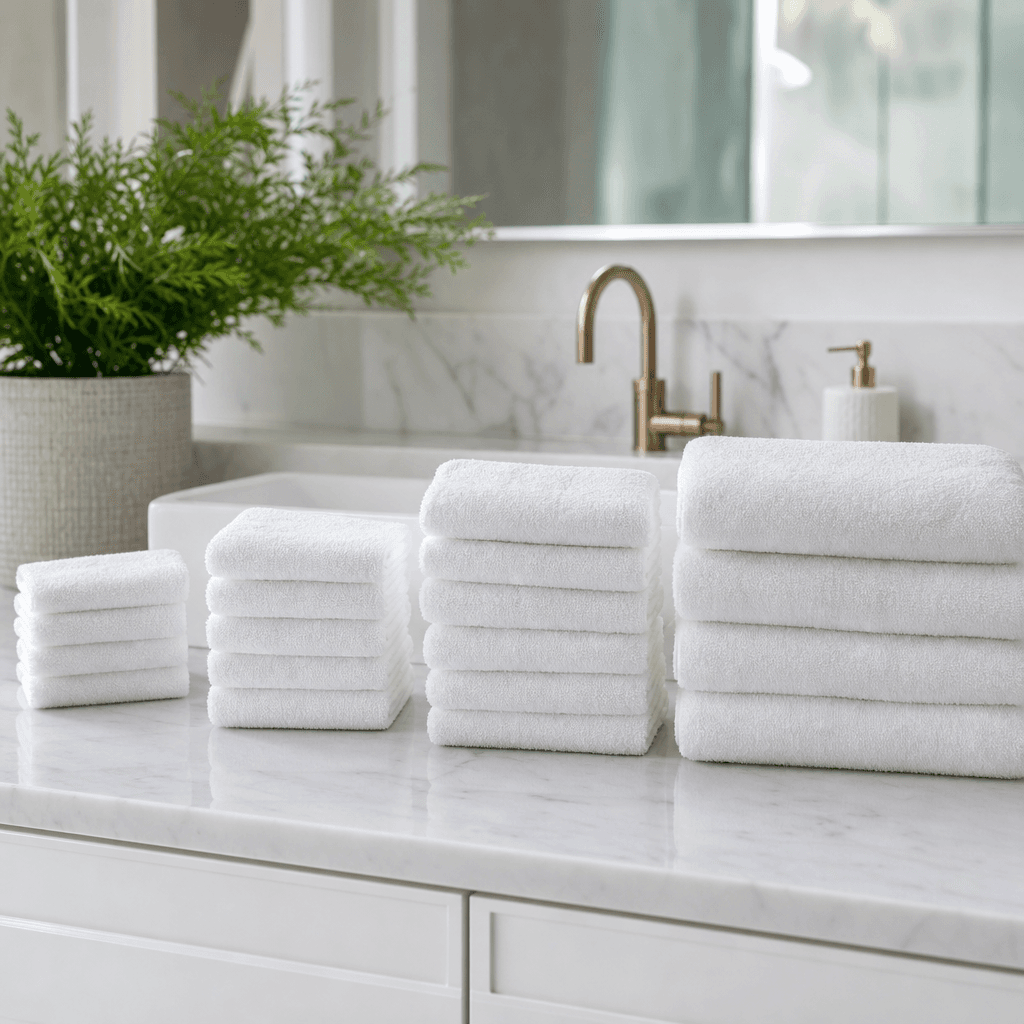
The standard commercial washcloth size of 12x12 inches provides adequate coverage for guest face washing while fitting efficiently in housekeeping carts. Properties serving business travelers see higher washcloth usage rates than leisure destinations, with corporate hotels averaging 1.3 washcloths per occupied room compared to 0.8 at resort properties where guests spend more time at pools and beaches.
What causes some washcloths to repel water instead of absorbing it?
Water repellency in washcloths stems from three primary causes: fabric softener buildup, detergent residue accumulation, and manufacturing treatments that haven't been properly removed. Fabric softener creates a hydrophobic coating on cotton fibers, essentially waterproofing the fabric you need to absorb moisture. Commercial laundries processing hotel linens often over-soften washcloths to achieve that "fluffy" feel guests associate with luxury, unknowingly destroying absorbency.
Detergent residue compounds this problem when wash cycles use insufficient water temperature or rinse time. We see this frequently with properties trying to reduce utility costs by washing at 120°F instead of the recommended 160°F minimum for commercial linen sanitation. The lower temperature prevents complete detergent dissolution, leaving soap film that repels water. Economy washcloths made from 86% cotton and 14% polyester blends are particularly susceptible because polyester fibers naturally resist water absorption.
Manufacturing treatments present another challenge with imported washcloths. Many overseas producers apply sizing agents or finishing chemicals that must be completely removed before first use. Wholesale bath towels and washcloths from established domestic suppliers typically receive proper pre-washing to remove these treatments, while direct-import products often skip this crucial step to reduce costs.
How often should washcloths be replaced in a commercial setting?
Commercial washcloth replacement schedules vary dramatically by industry and usage intensity. Hotels with standard guest turnover should expect 2-3 years of service life from quality washcloths rated for 200+ wash cycles. High-volume properties processing 300+ occupied rooms daily may need replacement every 18-24 months due to accelerated wear from constant laundering. Luxury hotels often replace washcloths more frequently to maintain that pristine white appearance guests expect.
Spa and salon operations face different replacement timelines due to exposure to chemicals and treatments. Salons using washcloths for hair color removal typically replace inventory every 12-18 months because chemical exposure degrades cotton fibers faster than standard washing. Medical spas performing chemical peels require washcloth replacement every 6-12 months due to exposure to glycolic acid and other aggressive treatments that break down fabric integrity.
Our client data from serving 10,000+ commercial buyers shows that properties purchasing consumer-grade washcloths need replacement every 3-6 months compared to 2-3 years with commercial-grade products. The upfront cost difference of 40-60% pays for itself within the first year through reduced replacement frequency. Volume purchasing at our 15% discount tier for orders of 15+ units makes commercial-grade washcloths more cost-effective than frequent replacement of cheaper alternatives.
How can I prevent washcloths from developing musty odors after washing?
Musty odors in freshly washed washcloths indicate bacterial or mildew growth caused by insufficient washing temperatures, inadequate drying, or improper storage. The most effective prevention requires washing at minimum 160°F water temperature with proper detergent chemistry designed for commercial linen processing. OSHA guidelines for commercial laundry operations emphasize these temperature requirements to prevent pathogen survival that creates odor problems.
Drying protocols prevent most odor issues when properly executed. Washcloths must reach internal temperatures of 180°F during the drying cycle to eliminate bacterial spores. Under-drying leaves moisture content above 12%, creating perfect conditions for microbial growth in storage areas. Commercial dryers require 45-60 minutes for complete washcloth drying, while residential units may need 90+ minutes to achieve proper moisture removal.
Storage environment controls the final variable in odor prevention. Washcloths stored in humid housekeeping areas above 70% relative humidity will develop musty odors regardless of proper washing and drying. Climate-controlled linen storage maintains 40-50% humidity levels that prevent bacterial growth. Properties without climate control should implement rotation systems ensuring washcloths don't remain in storage longer than 48 hours before guest use. Adding proper ventilation to linen closets costs less than dealing with guest complaints about musty-smelling amenities.
What's the difference in quality between microfiber washcloth brands?
Microfiber washcloth quality varies significantly based on fiber density, construction method, and blend ratios. Premium microfiber washcloths typically measure 900 GSM (grams per square meter) compared to economy versions at 240-320 GSM. The higher density creates more surface area for absorption while maintaining durability through hundreds of wash cycles. Split-fiber construction, where individual polyester and polyamide fibers are split during manufacturing, produces superior cleaning and absorption compared to standard woven microfiber.
Blend ratios determine performance characteristics and longevity. Professional-grade microfiber washcloths use 80% polyester and 20% polyamide ratios optimized for absorbency and quick-drying properties. Economy blends often increase polyester content to 85-90% to reduce costs, but sacrifice absorption capacity and durability. The polyamide component provides the electrostatic properties that attract dust and bacteria, making it essential for spa and medical applications.
Construction differences separate quality microfiber brands more than fiber content alone. Ultrasonic edge sealing prevents fraying and extends service life compared to standard hemmed edges that deteriorate quickly in commercial laundry operations. Terry loop microfiber provides higher absorption for spa treatments, while flat weave microfiber works better for precision cleaning in salon applications. Properties using wholesale beach towels alongside microfiber washcloths should verify chemical compatibility, as some fabric softeners that work well with cotton can damage microfiber structure.