
Commercial Towel Grades Explained
In this guide:
- What is the best GSM for hotel bath towels?
- How many wash cycles should a commercial towel last?
- What is the difference between ringspun and open-end cotton?
- How should commercial towels be washed to maximize lifespan?
- What are the key factors in choosing a towel for a spa versus a gym?
- Frequently Asked Questions
Not all commercial towels are built the same. Understanding towel grades helps B2B buyers choose the right product for their facility without wasting money on fabric that fails early or underperforms. This guide explains the key measurements and construction methods that define commercial towel grades so you can make confident bulk purchasing decisions for your hotel, spa, salon, gym, or restaurant.
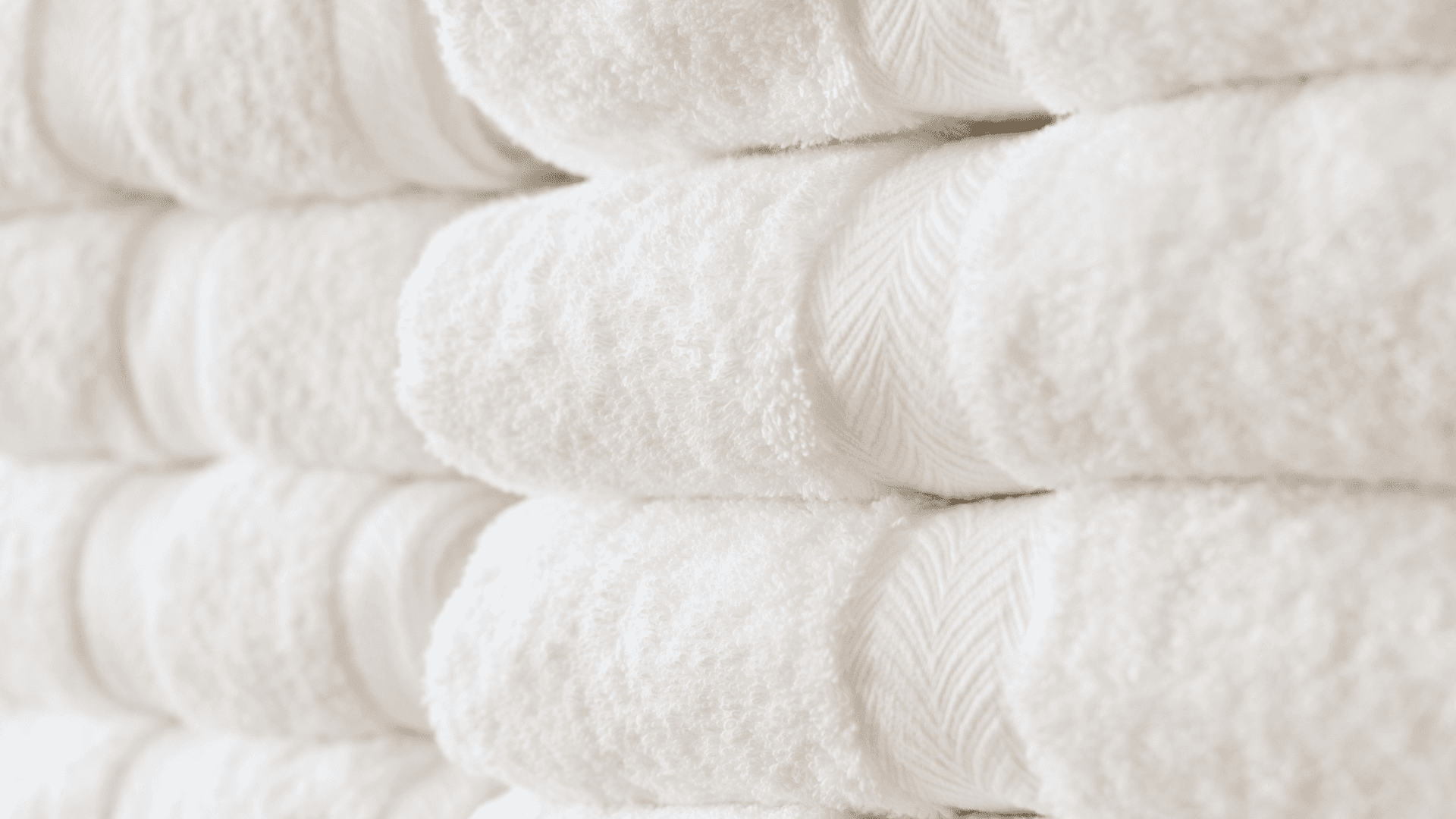
Commercial towel grade comes down to GSM, cotton quality, and weave. For most B2B needs, a 500 to 600 GSM ringspun cotton towel gives the best balance of absorbency, softness, and longevity over 100+ wash cycles.
What is the best GSM for hotel bath towels?
GSM stands for grams per square meter. It measures the density of the fabric. For hotel bath towels, the industry sweet spot is 500 to 600 GSM. At this weight the towel feels plush to guests but still dries quickly enough to turn rooms fast. A 600 GSM towel absorbs roughly 1.5 liters of water, which is enough for a full body dry without leaving the guest damp.
Towels below 400 GSM feel thin and scratchy. Guests often complain about them. Towels above 700 GSM, while luxurious, take longer to dry and put extra load on your laundry equipment. They also cost more per unit. In a mid scale hotel running 200 rooms, using 600 GSM instead of 800 GSM can save you 20% on linen costs while keeping guest satisfaction scores high. For luxury properties, 650 to 700 GSM is acceptable but requires careful drying management.
We have seen many buyers confuse GSM with ply or thread count. GSM is a direct measurement of weight per area. A 500 GSM wholesale bath towel from Towel Depot uses a tight terry weave with 100% ringspun cotton. That combination delivers the durability you need for commercial laundry cycles. Always test a sample at your facility before ordering bulk. Run it through your machines for 10 washes. Then decide if the GSM works for your operation.
How many wash cycles should a commercial towel last?
A high quality commercial towel should survive 75 to 150 wash cycles before it starts fraying at the edges or losing absorbency. The best ringspun cotton towels, washed correctly, can hit 200 cycles. That translates to 1.5 to 3 years of daily use in a busy hotel or gym. Cheap open end towels often fail after 30 to 40 washes, which means you replace them every few months.
The number of cycles depends on water temperature, detergent type, and dryer heat. If you wash at 160°F (71°C) as recommended by the CDC for hygienically clean linen, the cotton fibers remain stable. Higher temperatures above 190°F (88°C) shorten life by melting the fiber ends. Dryer temperatures over 220°F (104°C) are even more destructive. We have tested towels from the same batch in different facilities. The ones dried at 195°F (91°C) lasted 130 washes. The ones dried at 235°F (113°C) were trash by wash 70.
Buyers should ask suppliers for independent lab results showing cycle counts. Towel Depot provides a wash test report on every bulk order of 300 units or more. We test to ASTM D5431, the standard for woven terry towels. That data gives you a real expectation. If a supplier won't share cycle data, walk away. Your laundry budget depends on knowing how long the towel will last.
What is the difference between ringspun and open-end cotton?
Ringspun cotton is made by twisting fibers into a tight, smooth yarn. The process removes short fibers and aligns the long ones. This produces a strong, soft yarn that resists pilling and linting. Open-end cotton uses a rotor spinning method that is faster and cheaper. The yarn has a rougher texture and contains more short fibers, which shed lint and weaken over time.
For commercial use, ringspun is the clear winner. A ringspun towel loses 2% to 3% of its weight in the first 20 washes from lint shedding. An open-end towel can lose 8% to 12%. That weight loss means less absorbency and a thinner feel. Open-end towels also develop weak spots faster, especially along the hem. In our wholesale towels line, the ringspun polo towels cost about 15% more upfront but last 2.5 times longer than open-end equivalents. The total cost per use is lower.
The FTC textile fiber rules require accurate labeling but do not mandate specifying ringspun versus open-end. Many suppliers hide this detail. Ask your vendor directly. If they cannot tell you the yarn construction, assume it is open-end. Then factor that into your buying decision. Towel Depot labels every product with yarn type, GSM, and care instructions so you know exactly what you are getting.
How should commercial towels be washed to maximize lifespan?
Wash commercial towels at 160°F to 180°F (71°C to 82°C). This temperature kills bacteria and dissolves oils without damaging cotton. Use a mild alkaline detergent with a pH between 10 and 11. Avoid chlorine bleach. It weakens fibers after repeated use. Instead use oxygen bleach for whitening. Never use fabric softener. Softeners coat the cotton fibers and reduce absorbency by up to 30% after three treatments.
Dry towels at 190°F to 210°F (88°C to 99°C). Pull them out when the moisture content drops below 5%. Overdrying creates brittleness and shortens fiber life. A typical 60 pound commercial washer can handle 40 to 50 bath towels per load. Do not overload. Overloading reduces mechanical action, leaving soil in the fibers and causing uneven wear. Run a full wash cycle of 30 to 40 minutes plus a rinse and an extract cycle at 100 to 120 G force.
Follow these steps and you will get 50% more cycles out of your towels. We work with a 300 room hotel in Phoenix that switched from 180°F (82°C) wash to 165°F (74°C) and added a sour rinse to neutralize alkalinity. Their average towel lifespan went from 90 washes to 135 washes. That is a 50% reduction in replacement costs. Check the ASTM D5431 standard performance specification for woven towel products for more guidance on recommended care procedures.
What are the key factors in choosing a towel for a spa versus a gym?
Spas require towels that feel soft and absorbent against the skin after a treatment. A 600 to 700 GSM ringspun cotton towel is the standard. The high GSM holds moisture for a few minutes of drying, which is fine in a low turnover spa room. The softness comes from the tight yarn and a two ply construction. Spas also need towels that resist chemical damage from essential oils and lotions. A 100% cotton towel with a high density weave handles these chemicals better than blends.
Gyms have different priorities. Members grab towels to wipe sweat and then toss them in a bin. The towels go through hot water, high detergency, and aggressive drying. You need a towel that dries fast and stays strong. A 300 to 450 GSM towel made from a 50/50 polyester cotton blend is ideal. Polyester adds strength and speeds drying. The lower GSM means less fabric to process per load, which cuts water and energy costs. Many gym chains use 350 GSM blend towels and get 180 wash cycles out of them.
Restaurants and salons fall in between. For hand towels in a restaurant, 400 to 500 GSM ringspun cotton works well because it dries quickly between uses and feels good on customers' hands. For salon towels used repeatedly on wet hair, choose a 500 GSM ringspun cotton towel with a loop density that resists snagging. Towel Depot's wholesale beach towels are also popular for poolside use in hotels, where a 450 GSM blend offers fast drying for high turnover. Match the grade to your environment and you will optimize both guest experience and linen budget.