
Fitness facilities face unique challenges when selecting and managing towel programs. Unlike hospitality or spa environments, gyms see heavy daily use with high bacterial loads, frequent washing, and diverse member needs ranging from quick workouts to extended training sessions.
Small gyms can cut towel costs 40% through outsourced laundry services, while proper antimicrobial treatments and 160°F washing prevent odor buildup in commercial-grade cotton towels.
How do small gyms manage towel laundry costs and logistics effectively?
Small fitness centers typically go through 200-500 towels daily depending on membership size and services offered. The most cost-effective approach involves partnering with commercial laundry services rather than handling washing in-house. Our 59 years in the wholesale linen business have shown that facilities with under 1,000 members save 30-40% on total towel costs by outsourcing laundry operations.
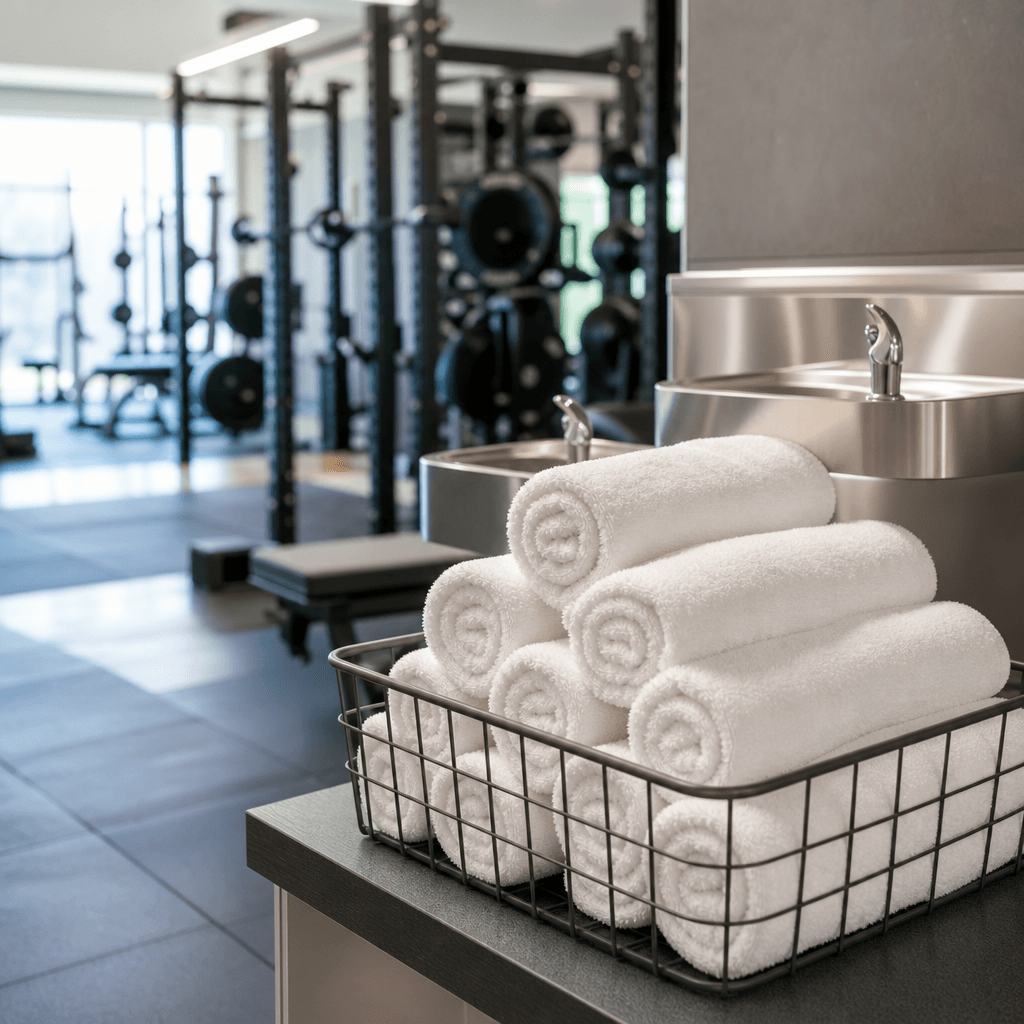
When selecting wholesale gym towels for small operations, focus on mid-size 20x40 inch options weighing 4 pounds per dozen. These economy-grade towels cost approximately $2.50 per unit when purchased in quantities of 100+ units, and commercial-grade construction provides 200+ wash cycles compared to consumer towels that fail after 50-100 cycles. The 86% cotton, 14% polyester blend works well for budget-conscious facilities, though 100% cotton remains the gold standard for premium operations.
Inventory management requires maintaining a 3:1 ratio of clean towels to daily usage. A gym using 300 towels daily needs approximately 900 towels in total rotation to account for washing, drying, and transportation time. Most commercial laundry services operate on 24-48 hour turnaround, making this ratio essential for uninterrupted service. Facilities ordering wholesale bath towels in bulk can secure volume discounts of 5% at 5 units, 10% at 10 units, and 15% at 15+ units.
What's the best way to prevent gym towels from developing odors over time?
Odor prevention starts with proper washing protocols, not towel selection. The key temperature for eliminating bacteria and preventing odor buildup is 160°F minimum water temperature, according to CDC laundry guidelines. Many gyms make the mistake of washing at lower temperatures to preserve fabric life, but this allows bacterial growth that creates persistent odors even in clean towels.
Antimicrobial treatments applied during manufacturing provide additional odor resistance. Commercial-grade gym towels often include silver ion treatments or zinc-based antimicrobials that inhibit bacterial growth during use. These treatments typically last 50-75 wash cycles before requiring renewal or replacement. White towels remain the preferred choice for most facilities because they can be bleached regularly without color fading, and the bleaching process eliminates both stains and odor-causing bacteria.
Pre-treatment protocol makes a significant difference in odor control. Towels should never sit wet for more than 4 hours before washing. Facilities generating high volumes of towels wholesale should implement immediate collection systems with ventilated containers to prevent moisture buildup. Adding oxygen bleach to wash cycles helps break down protein-based stains and odors from sweat, while avoiding fabric softeners prevents buildup that can trap bacteria.
Should fitness facilities provide towels or require members to bring their own?
The towel provision decision impacts both member satisfaction and operational costs. Premium facilities with membership fees above $75 monthly typically include towel service as a differentiating amenity, while budget gyms often make towels optional or charge separately. Member surveys consistently show towel service ranks among the top 5 desired amenities for facilities targeting professionals and time-constrained demographics.
Cost analysis shows provided towels add approximately $3-8 per member monthly in operational expenses, including towel acquisition, laundering, replacement, and labor. For a 500-member facility, this translates to $1,500-4,000 monthly in towel program costs. However, facilities offering towel service often command 15-25% premium pricing, making the investment financially viable for many operators. The convenience factor particularly appeals to members who work out during lunch breaks or commute directly from the gym.
Hybrid models work well for many facilities. Some gyms provide 16x27 inch hand towels for equipment wiping while requiring members to bring their own shower towels. Others offer towel service as a premium add-on for $10-15 monthly. When facilities do provide towels, maintaining quality standards becomes essential because worn, thin, or stained towels reflect poorly on overall facility management. Commercial buyers typically replace gym towels every 18-24 months under heavy use conditions.
What towel etiquette policies should gyms establish for members?
Clear towel policies prevent equipment damage and maintain hygiene standards across the facility. The fundamental rule requires members to wipe down equipment after use, whether using provided towels or personal ones. Posted signage should specify that towels must be used on all equipment contact points, including seats, handles, and backrests. This policy protects equipment surfaces from salt damage caused by dried sweat and reduces transmission of skin infections between users.
Usage limitations help control costs and inventory. Many successful facilities implement a two-towel maximum per visit, with one designated for equipment use and another for shower use. This prevents hoarding while ensuring adequate supply for all members. Some facilities use color-coded systems where blue towels are designated for equipment use only and white towels for shower areas, reducing cross-contamination between high-bacteria areas.
Enforcement mechanisms require staff training and consistent implementation. Facilities purchasing bulk towels often invest in towel dispensers that track usage and prevent overconsumption. Digital check-in systems can monitor towel distribution and flag members who exceed established limits. The key is balancing member convenience with operational sustainability, since towel abuse can quickly escalate program costs beyond budget parameters.
How can gyms prevent members from using towels to reserve equipment?
Equipment reservation through towel placement creates frustration among other members and reduces facility utilization efficiency. The most effective solution involves posted time limits for equipment use combined with active staff monitoring during peak hours. Clear signage stating that unattended equipment marked with towels will be considered available after 3-5 minutes helps establish expectations and prevents conflicts between members.
Technology integration provides automated solutions for larger facilities. Some gyms implement equipment reservation apps that eliminate the need for physical markers entirely. Members can book specific machines for designated time slots, reducing dependence on towels for claiming equipment. This approach works particularly well for popular cardio machines and specialized equipment with limited availability during rush hours.
Staff intervention protocols require training and consistent enforcement. Front desk personnel should be empowered to address towel reservation situations diplomatically but firmly. Many facilities train staff to approach unattended equipment after the designated time limit and politely move towels to lost-and-found areas. The goal is maintaining equipment accessibility while avoiding confrontational situations between members. Facilities that purchase towels in bulk often find that providing ample supply reduces hoarding behavior, since members don't feel compelled to claim towels early in their workout.