
Waist Aprons: for Every Chef and Server
In this guide:
- Fabric weights and weaves for heavy use
- Pocket design and sizes for professional kitchens
- Best waist apron length for servers vs back of house
- Choosing between cotton, poly cotton, and polyester
- Care and maintenance for bulk waist aprons
- Frequently asked questions
Buying the right waist apron in bulk for your restaurant chain, hotel kitchen, or catering operation is a straight forward decision when you know the fabric specs, pocket layouts, and washing behaviors that matter. A well chosen waist apron protects your staff, holds their tools, and projects a clean professional image to every guest. This guide gives you the numbers and real world data you need to place a bulk order of 100 to 500 units with confidence.
For most food service operations, a 7 to 9 ounce poly cotton twill waist apron with three to five functional pockets and a 30 inch length for back of house or 24 inch for front of house delivers the best value. Wash at 140°F and dry on low heat. Replace after 500 cycles.
What fabric weights and weaves should I look for in a wholesale waist apron for heavy use?
The fabric weight of a waist apron directly determines how it stands up to daily abuse in a commercial kitchen or dining room. For heavy use environments like fast casual restaurants or banquet halls, you want a fabric that resists tears and holds its shape after repeated washing. The standard for professional grade aprons is 7 to 10 ounce per square yard cotton twill or poly cotton twill. In metric terms that is roughly 200 to 300 GSM. A 7.5 ounce twill at 220 GSM offers a good balance of durability without being too stiff for the worker to move comfortably. Lighter fabrics like 5 ounce cotton at 140 GSM are better for bistro aprons worn by servers in less demanding settings. They feel softer but wear out faster.
Weave structure matters just as much as weight. Twill weaves, especially herringbone or broken twill, resist snagging and fraying at the edges. They also hide stains better than plain weave. A 2 by 1 twill construction gives a diagonal rib that sheds liquid spills faster. This means a splatter of hot oil or a splash of coffee beads up and rolls off rather than soaking in. For bulk orders, ask your supplier for the weave count. A warp of 100 and weft of 70 is a common industrial standard. You also want a fabric that has been pre shrunk or Sanforized. That process limits shrinkage to under 3%. Without it, a cotton apron can lose 5% to 8% of its length after the first hot wash.
For kitchens that use high temperature dish machines and chemical sanitizers, a poly cotton blend at 65% polyester and 35% cotton gives you the best of both worlds. The polyester resists chemical breakdown and the cotton provides breathability. This blend also holds color better over time. Test results from the CDC's National Institute for Occupational Safety and Health show that poly cotton fabrics reduce the risk of heat stress because they wick moisture away from the skin faster than all cotton. In a kitchen where ambient temperatures reach 110°F (43°C), that wicking effect keeps staff cooler and more focused. A 65/35 poly cotton twill at 8 ounce weight (240 GSM) is the most common spec we ship to hotel chains and contract food service companies.
How many pockets and what sizes do professional kitchens actually need in their waist aprons?
Pocket design is not an afterthought. It is a productivity feature. In a busy kitchen or on a serving floor, every second counts. A server needs a place for a notepad, a pen, a wine key, and sometimes a cell phone or handheld order device. A chef needs slots for a thermometer, a sharpie, a paring knife, and a taste spoon. The industry standard for a functional waist apron is three to five pockets. Two front patch pockets that measure at least 6 inches wide by 8 inches deep are the minimum. One of those should have a divider to separate pens from a wine key or a thermometer. A third pocket, often a small utility pocket 3 inches by 4 inches, is useful for a timer or a lighter. Some aprons also include a hidden zipper pocket for cash or keys.
The depth of the pockets matters more than width. A pocket that is too shallow lets items fall out when the wearer bends over or reaches across a table. Six inches deep is the bare minimum. Eight inches is better. For a center pocket that holds a notepad or a check presenter, aim for 8 inches deep by 5 inches wide. The pocket opening should be reinforced with bartack stitching at the corners. Without that reinforcement, the fabric tears after 50 to 100 washes. A double needle stitch on the pocket lip adds strength. You can ask your supplier for a pattern with a 30% heavier thread count on the pocket seams. That small upgrade adds 200 to 300 more wash cycles to the apron.
Another practical consideration is the placement of the pockets relative to the waist tie. A pocket that sits too low forces the wearer to bend down to retrieve items. The ideal position is at the same height as the wearer's hip bone. That means the top of the pocket should be about 8 inches below the waistband. For taller staff, a longer apron with deeper pockets works better. For a bulk order serving a mix of heights, a one size fits all apron with an adjustable waist tie and pockets set at 8 inches from the top of the apron works for 90% of your crew. If you are ordering for a specialized kitchen like a sushi bar or a pastry station, consider aprons with a dedicated towel loop. That small addition cost us 15 cents per unit in our last bulk run but saved our pastry chefs from dropping wet towels into their pockets.
What is the best waist apron length for servers versus back of house staff?
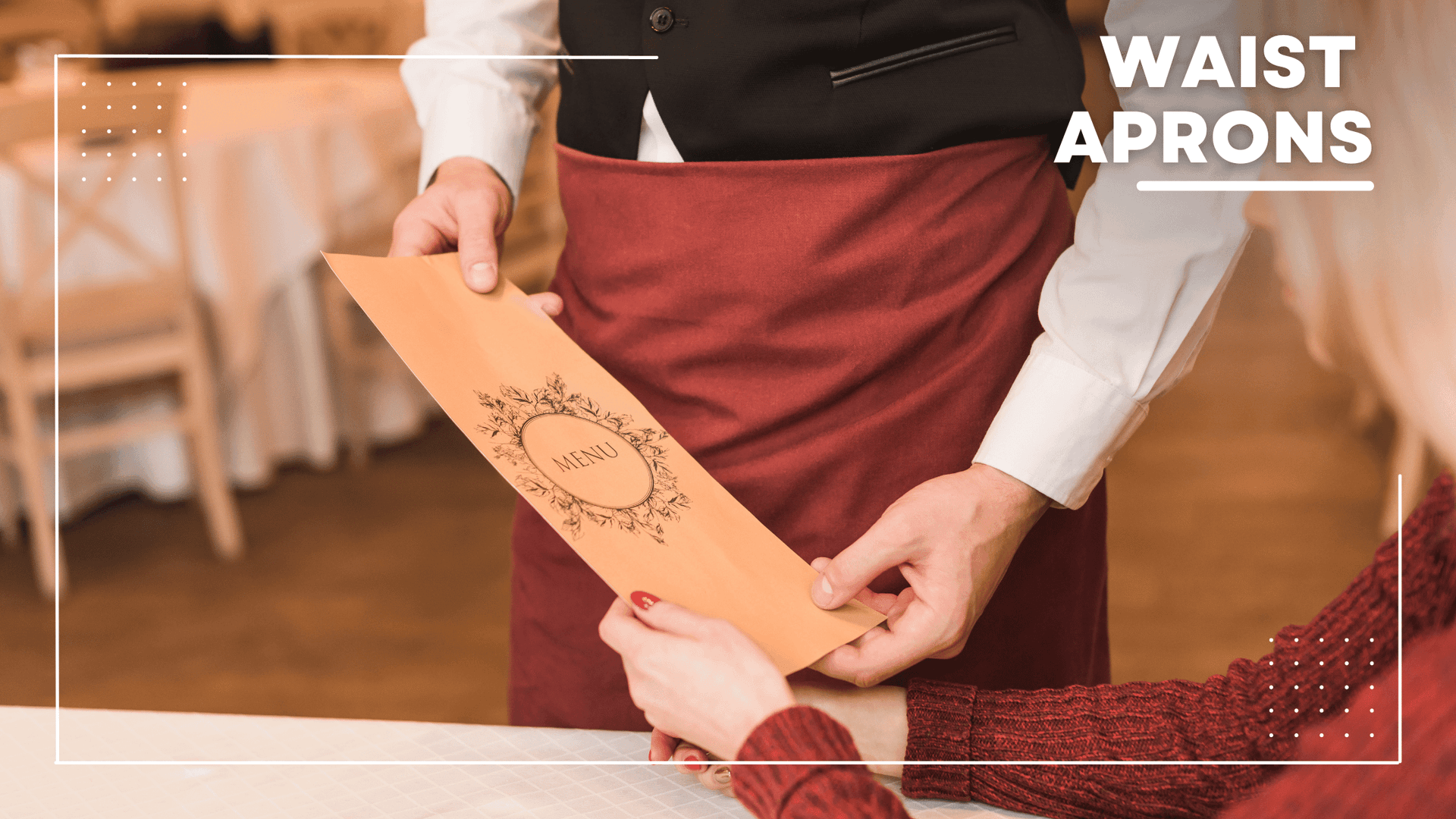
Length determines both protection and mobility. A server carrying plates and trays needs an apron that does not drag on tablecloths or catch on chair legs. The standard server waist apron is 24 to 28 inches long from the waistband to the bottom hem. This length falls just above the knee when worn at the natural waist. It gives enough coverage to protect the server's pants from spills while allowing full range of motion. A shorter bistro apron of 18 to 22 inches is common in casual dining and bar settings. It covers the hips and upper thighs. Bartenders often prefer this length because it does not interfere with leaning over the bar or reaching for bottles.
Back of house staff have different needs. A line cook or prep cook spends hours standing at a counter or moving between stations. They bend over hot ranges, reach into deep freezers, and lean into reach in refrigerators. A longer apron of 30 to 36 inches protects the thighs and lower abdomen. It also provides a clean surface to wipe hands on. The extra length does not hinder movement if the apron is cut with a slight A shape that allows the legs to spread. A 32 inch length is our most sold spec for commercial kitchens. For dishwashers or staff who work with wet environments, a 36 inch apron made of polyester or a waterproof coated fabric protects the entire front of the body from splash back.
Temperature and humidity affect which length works best. In a kitchen that averages 90°F (32°C) and 70% humidity, a 36 inch cotton apron traps heat against the legs and can contribute to heat stress. A 30 inch poly cotton apron with mesh side panels reduces that risk. According to guidelines from OSHA's heat stress prevention page, reducing clothing coverage by 15% to 20% in high heat environments can improve worker safety. That is why many hotel kitchens now order waist aprons at 28 inches for all staff and rely on a separate bib apron for heavy mess tasks. In cooler environments like a walk in cooler where temperatures hover at 38°F (3°C), a longer apron provides extra warmth. For a multi unit order, we recommend standardizing at 30 inches for back of house and 24 inches for front of house. That covers 95% of roles.
How do I choose between cotton, poly cotton, and polyester waist aprons for my staff?
Each material has a clear job. Cotton is the original choice. It breathes, it feels comfortable against the skin, and it absorbs sweat. But cotton shrinks. A 100% cotton apron washed at 160°F (71°C) can lose up to 5% of its length and 4% in width in the first three cycles. It also fades faster in direct sunlight or under harsh chemical detergents. For a fine dining restaurant where aprons are switched out mid shift and washed daily, cotton is acceptable. For high volume operations where aprons are worn for double shifts, we do not recommend it. The cost savings on the front end disappear when you have to replace them after 200 washes.
Poly cotton blends at 65/35 or 50/50 are the smart move for 90% of our B2B customers. The polyester content reduces shrinkage to 2% or less. It improves color retention. It also dries faster. In a wash cycle at 140°F (60°C) followed by low heat drying at 140°F (60°C), a poly cotton apron is ready to fold in 30 minutes. A pure cotton apron takes 45 minutes. Over a year with 300 wash cycles, that difference saves 75 hours of drying time per 100 aprons. The blend also feels softer after the first few washes. The initial stiffness of a new 65/35 poly cotton twill breaks in after five washes. The trade off is that poly cotton does not breathe as well as all cotton. In a kitchen above 100°F (38°C), that can be a minor issue. But the durability gain is worth it.
Polyester is the workhorse for wet environments. 100% polyester waist aprons are used in dish pits, seafood prep areas, and bakery washdown stations. They resist stains, mold, and mildew. They dry in 15 minutes. They also hold up to bleaching. A polyester apron can be treated with chlorine bleach at 200 ppm without losing strength. But polyester does not absorb moisture. It traps heat against the body. In a hot kitchen, staff will sweat more. Use polyester only for positions that handle water constantly. For a bulk order, we often recommend a mix: 80% poly cotton for general use and 20% polyester for specific roles. That split gives you the best cost performance ratio. The CPSC's textile safety guide notes that all three materials meet flame resistance standards for commercial use when tested under ASTM D6413. You do not need to worry about that difference.
What care and maintenance practices extend the life of bulk waist aprons?
Proper care starts at the first wash. Pre wash every new apron before issuing it to staff. This removes manufacturer sizing and sets the color. For poly cotton, wash at 140°F (60°C) with a neutral pH detergent around 7.0. Avoid bleach on cotton or poly cotton blends. Bleach breaks down the cotton fibers and weakens the polyester. If you need to whiten aprons, use oxygen bleach at 100 ppm. For heavy grease and food stains, a pre soak at 160°F (71°C) for 15 minutes in a detergent with enzymes breaks down the oils. Then run a standard wash cycle. Do not overload the washing machine. A 30 pound machine should hold no more than 25 aprons. Overlapping causes abrasion that wears out fabric at the pocket seams first.
Drying temperature matters more than most buyers realize. High heat above 180°F (82°C) shrinks cotton and weakens polyester. Dry all waist aprons on low heat at 140°F (60°C). Remove them while they are slightly damp. This prevents wrinkles and reduces wear on the fabric. For operations that use industrial dryers, set the timer to 20 minutes and check. Over drying is the leading cause of premature failure in waist aprons. It makes the fibers brittle. You will see cracking along the waistband and pocket edges after about 300 cycles instead of 500. A simple rule: if you can iron it without steam, the dryer was too hot.
Inspect aprons weekly for loose stitching, frayed edges, or broken ties. Replace ties after every 200 washes. A broken tie in the middle of a dinner rush is a safety hazard. Keep spare ties on hand. We recommend storing aprons folded flat in a dry, dark place. Sunlight degrades cotton and poly cotton alike. UV exposure causes fading and brittleness. A commercial laundry room with fluorescent lighting is fine. Direct sunlight through a window accelerates wear. Track your apron inventory by wash cycle. Use a simple log. After 500 cycles, retire those aprons to backup duty or cleaning rags. The cost of an apron is cents per use over its life. Pushing beyond 500 cycles compromises the professional look your brand needs.
For additional linens that complement your waist apron order, browse our wholesale bath towels for restroom hospitality, wholesale beach towels for pool and spa operations, and wholesale hotel towels for guest room essentials.