
Best Washcloths for Body: Bulk Buying Guide for Hotels & Spas
In this guide:
- Why Cotton Dominates Body Washcloths
- GSM Weights: What’s Right for Body Use
- Weave Structure Matters More Than You Think
- Laundry Endurance: How Many Cycles Can You Expect
- Microfiber vs. Cotton vs. Bamboo: Which Wins for Spas
- Frequently Asked Questions
Buying washcloths for your hotel or spa sounds simple until you face the reality of guest complaints about thin fabric, poor lather, or pilling after a few washes. Body washcloths need to hold up to daily commercial laundering while feeling soft and absorbent every time. This guide walks you through the key factors that matter most for B2B buyers ordering 100 to 500 units at a time.
Choose 100% ring spun cotton washcloths in 450 to 550 GSM with medium length terry loops. That combination gives you the best balance of guest comfort, absorbency, and durability through 150 plus laundry cycles. Test samples with your specific laundry chemicals and water temperature before placing a large order.
Why Cotton Dominates Body Washcloths
Cotton remains the standard for good reason. It absorbs water fast and releases it quickly when wrung. That matters for guests who need to lather soap or body wash and rinse off. Cotton fibers also soften over time, unlike synthetic options that can feel slick or stiff. A 100% cotton washcloth at 500 GSM holds about 20 percent of its weight in water within the first five seconds. That is enough to create a rich lather without dripping all over the guest.
Commercial laundry operators know that cotton handles high temperatures better than blended fabrics. A standard commercial wash cycle runs at 140 to 160 degrees Fahrenheit (60 to 71 degrees Celsius). Cotton can take those temperatures cycle after cycle without breaking down. Polyester blends may start to lose their absorbency after 80 cycles because the synthetic fibers trap detergent residues. The Occupational Safety and Health Administration (OSHA) recommends hot water at 140 degrees F for laundry in facilities that handle sheets and towels from multiple guests to prevent pathogen transfer.
There is a cost difference between open end and ring spun cotton. Open end cotton uses shorter fibers twisted together. It costs roughly 15 to 20 percent less per pound. But it pills faster and loses fabric integrity around cycle 120. Ring spun cotton uses longer fibers twisted tightly. It resists pilling and maintains its texture through 200 cycles. A luxury spa that changes washcloths daily should invest in ring spun. A budget gym replacing towels at 100 cycles may be fine with open end cotton to save upfront cost.
GSM Weights: What’s Right for Body Use
GSM stands for grams per square meter. For body washcloths the sweet spot is 450 to 550 GSM. Under 400 GSM the washcloth feels thin. It does not hold enough water for a full body wash. Guests will grab two washcloths instead of one. That doubles your laundry load and replacement cost. Above 600 GSM the towel becomes heavy when wet. It takes longer to dry between guest uses and increases wear on washer and dryer equipment.
A 12x12 inch washcloth at 500 GSM weighs about 2.9 ounces (82 grams). That is a good hand feel for most adults. The weight packs enough fiber to hold water and create lather without being bulky. A hotel ordering 500 washcloths at this weight adds only 145 pounds to their linen inventory. Moving up to 650 GSM adds 30 percent more fiber weight for negligible performance gain. The Environmental Protection Agency (EPA) offers guidelines for commercial laundry water and energy efficiency, and lighter GSM towels reduce water consumption in each cycle.
Some properties ask about double thick washcloths. We usually steer spa buyers to 500 GSM single sided terry for body use. Double thick 700 GSM washcloths double your laundry weight and take 15 to 20 percent longer in the dryer. The extra thickness is better suited for face towels or hand towels where the guest expects a plush feel. For body washing the medium weight absorbs just as well and dries faster, reducing your turnaround time.
Weave Structure Matters More Than You Think
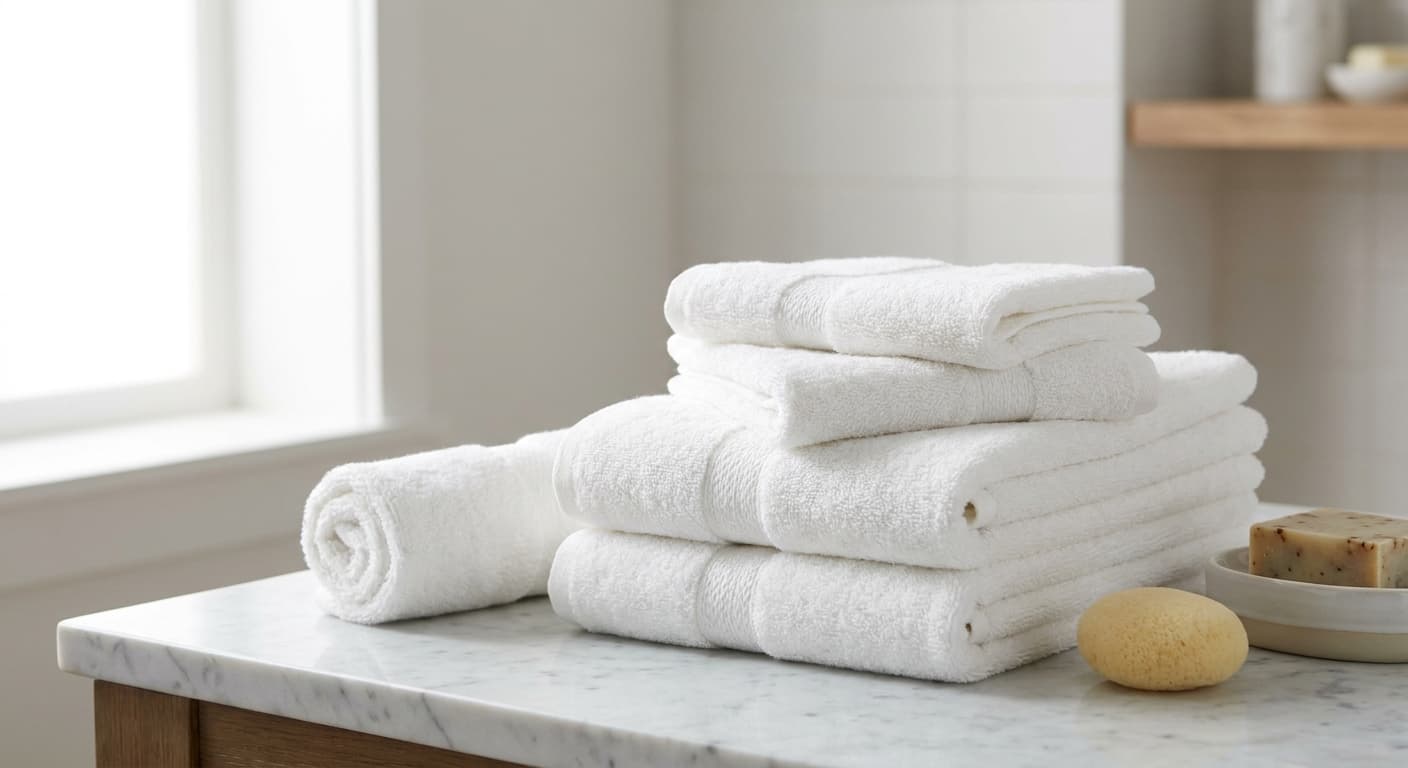
Terry cloth is the standard for body washcloths. The loops in terry create surface area that traps water and soap. Longer loops hold more water but snag easily on zippers, buttons, or nylon scrubbers. Short loops are tough but barely hold enough water for a good lather. Medium length loops give you the best compromise. They hold about 15 percent more water than short loops and resist snagging for at least 150 cycles.
Double sided terry has loops on both sides of the fabric. This gives you a thicker washcloth with more absorbency. The extra side helps create lather faster. For a luxury hotel or spa that charges premium rates, double sided terry at 500 GSM is a strong choice. The cost premium is about 20 percent over single sided terry, but the guest satisfaction scores often make up for that difference.
Waffle weave and velour are alternatives but have drawbacks for body use. Waffle weave dries fast and is fine for face cloths, but the texture does not hold soap well. Guests end up running the cloth across a bar of soap multiple times. Velour has a cut pile surface that feels very soft against the face. However, the cut loops reduce total water absorption. We see velour used mostly on face cloths in high end hotels. For body washcloths terry is the practical winner.
Laundry Endurance: How Many Cycles Can You Expect
A commercial laundry cycle is harsh. Hot water at 150 degrees F (65 degrees C), strong alkaline detergents, mechanical agitation, and high speed extraction all stress the fibers. A good quality 100% cotton washcloth should last 150 to 200 cycles before showing fraying, thinning, or pilling. At 200 cycles a typical 500 GSM washcloth will have lost about 15 percent of its original weight. That is when it starts to feel thin. You should plan to replace at that point.
Microfiber washcloths can last 300 cycles because the synthetic fibers are more resistant to abrasion. But microfiber does not absorb water the same way. It pushes water around rather than trapping it in fibers. Guests often complain that microfiber does not create a good lather. The Consumer Product Safety Commission (CPSC) sets flammability standards for textiles, and microfiber is less flammable than cotton. That matters for some commercial settings but does not change the guest experience.
Bleach and fabric softeners cut washcloth life significantly. Oxygen bleach used at 1 to 2 percent concentration at 140 degrees F is safe for cotton. Chlorine bleach can break cotton fibers in as few as 50 cycles. Softeners coat the fibers and reduce absorbency by up to 30 percent after 50 washes. A good rule is to run a sample through your specific laundry program before ordering bulk. Test at 100 cycles and see how the fabric holds. That simple step saves you from buying 500 washcloths that fail at 120 cycles.
Microfiber vs. Cotton vs. Bamboo: Which Wins for Spas
Cotton is the winner for most hotels and spas. Bamboo comes in second for eco conscious buyers. Real bamboo towels use lyocell or viscose from bamboo cellulose. They are softer than cotton and have natural antimicrobial properties. But bamboo fibers are shorter and weaker. A bamboo washcloth may last only 100 to 120 cycles before the fabric starts to tear. The cost is 30 to 40 percent higher than cotton. If sustainability is a priority for your brand, bamboo works, but plan to replace more frequently.
Microfiber made from polyester and polyamide is cheaper than cotton by about 20 percent. It dries fast and resists staining. Spas that do body scrubs and use heavy oils sometimes prefer microfiber because it wipes off grease better. But microfiber does not feel plush against the skin. Guests who pay for a luxury spa experience often notice the difference. The wholesale washcloths we sell to day spas are almost all cotton for that reason.
Blended towels that mix cotton and polyester claim to combine durability with softness. In our experience the blends rarely satisfy. The polyester reduces absorbency and the cotton portion puffs out after washing. The result is a washcloth that feels uneven after 50 cycles. Stick with pure cotton for body washcloths. If you need faster drying for your laundry operation, pair your cotton washcloths with a high spin extraction cycle. That removes more water in less time. For pool or beach operations where quick drying is critical, consider our wholesale beach towels made from a cotton polyester blend but keep body washcloths as pure cotton.