
Commercial bar operations demand towels that can handle hundreds of wash cycles while maintaining absorbency and durability. After 59 years supplying bar and restaurant towels to over 10,000 B2B clients, we see the same purchasing mistakes costing operators money and efficiency. Professional-grade bar mop towels last 2-3 years with proper care, while consumer towels fail within 3-6 months under commercial use.
Choose 17x20 inch cotton bar mop towels at 24 oz weight for best durability, wash in 140°F water with oxygen bleach to prevent odors, and separate towels by task to extend lifespan and maintain hygiene standards.
What are the best alternatives to paper towels for commercial cleaning applications?
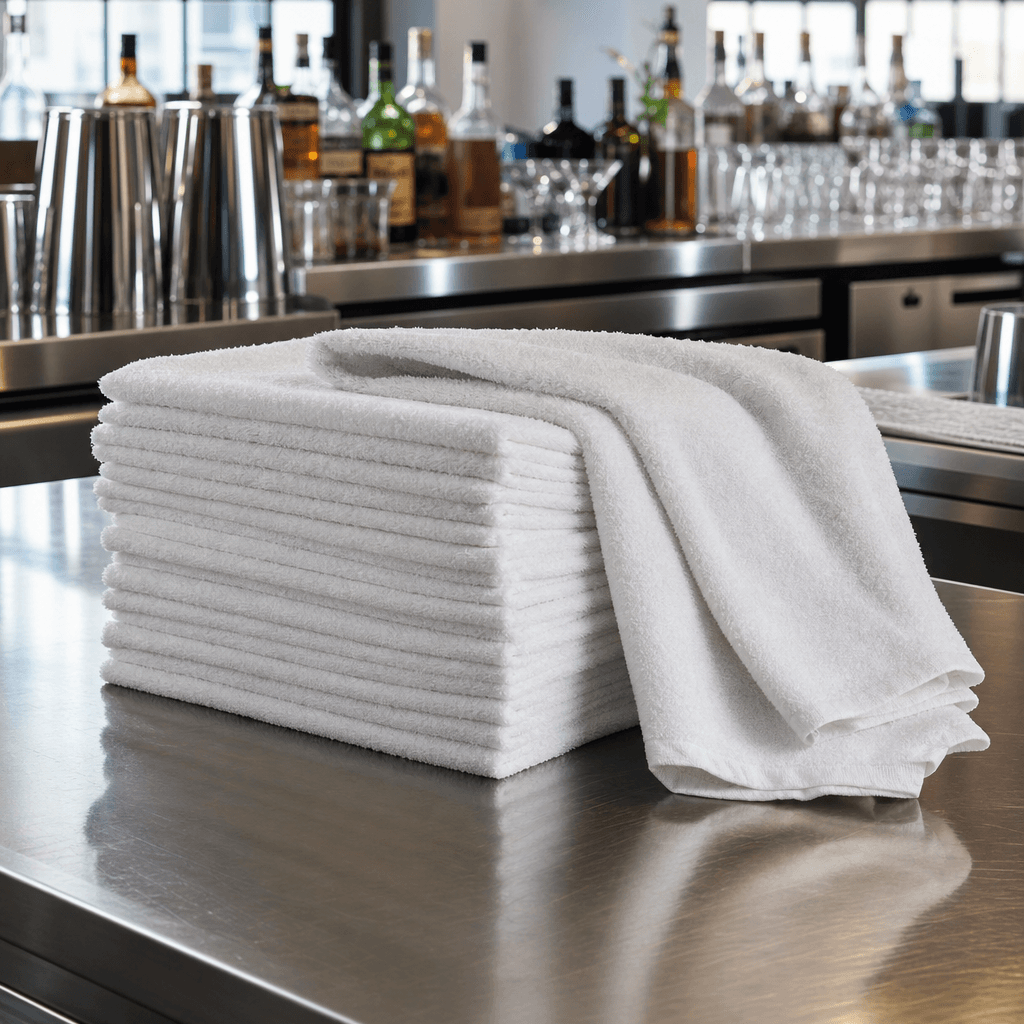
Cotton bar mop towels represent the most cost-effective alternative to paper towels for high-volume commercial operations. A single 17x20 inch cotton towel replaces approximately 200-300 paper towels over its commercial lifespan of 200+ wash cycles. Restaurant managers report savings of 60-70% annually when switching from paper to reusable commercial towels for routine cleaning tasks.
The 24 oz weight specification provides optimal absorbency for bar spills while maintaining structural integrity through repeated washing. Unlike lighter consumer towels that deteriorate quickly, commercial-grade cotton handles the aggressive washing protocols required in food service environments. The traditional stripe pattern (blue and white or red and white center stripe) serves a functional purpose beyond aesthetics, as the contrasting colors help staff identify wear patterns and determine replacement timing.
Microfiber presents another viable alternative, particularly for glass polishing and stainless steel surfaces. However, microfiber requires different care protocols and cannot withstand bleach sanitizing, making it less versatile than cotton for establishments that need one towel type for multiple applications. The initial cost per unit runs 40-50% higher than cotton, though the cleaning performance on smooth surfaces often justifies this premium for upscale establishments focused on presentation.
How do I prevent bar mop towels from developing odors over time?
Temperature control during washing represents the critical factor in odor prevention for bar towels in commercial use. Water temperature between 140-160°F activates detergent enzymes that break down organic matter and grease residue that creates bacterial growth. Most commercial operators make the mistake of using standard 120°F water, which fails to eliminate odor-causing bacteria embedded in cotton fibers after repeated exposure to alcohol, food residue, and cleaning chemicals.
Oxygen bleach provides superior odor elimination compared to chlorine bleach while preserving cotton fiber integrity over hundreds of wash cycles. Add one cup of oxygen bleach per 20-pound load during the wash cycle, not the rinse cycle where dilution reduces effectiveness. The OSHA guidelines for commercial laundry recommend this temperature and chemical combination for healthcare facilities, standards that apply equally to food service operations handling similar contamination risks.
Storage practices between use and washing significantly impact odor development. Wet towels left in closed containers or bins create anaerobic conditions that accelerate bacterial growth and set permanent odors that resist removal. Establish a system where soiled towels air-dry on open racks or perforated bins before collection for washing. Replace towels every 2-4 hours during peak service periods rather than allowing extended exposure to contaminants that embed deeply into cotton fibers.
What's the difference between cotton, microfiber, and cellulose towels for cleaning performance?
Cotton bar mop towels excel at liquid absorption and retention, making them ideal for cleaning up spills and wiping down wet surfaces. The natural fiber structure creates capillary action that draws liquid into the towel and holds it there, preventing redeposition on cleaned surfaces. Cotton handles temperatures up to 200°F during washing and can withstand chlorine bleach sanitizing, meeting health department requirements for food service environments. The 24 oz weight specification provides the optimal balance between absorbency and manageable bulk for bartenders working in confined spaces.
Microfiber towels demonstrate superior performance for dry dusting and polishing applications due to the electrostatic properties of synthetic fibers. The split fiber construction creates millions of microscopic hooks that capture dust, lint, and small particles rather than pushing them around surfaces. However, microfiber loses effectiveness when saturated with liquids and requires separate washing protocols since fabric softener and bleach damage the fiber structure permanently. Commercial operations using microfiber typically maintain separate inventory and washing systems, increasing operational complexity compared to simpler cotton towel operations that also handle wholesale bath towels and other cotton products through the same washing protocols.
Cellulose towels, made from wood pulp, offer biodegradable properties that appeal to environmentally conscious operations. These towels provide moderate absorbency and can be composted after use, eliminating washing costs entirely. However, cellulose towels cost 3-4 times more per unit than cotton and lack the durability for heavy-duty cleaning tasks. They work best as supplementary towels for light cleaning or as a paper towel alternative for customer-facing areas where environmental messaging adds value.
Should I use different types of towels for different cleaning tasks in my business?
Task-specific towel allocation prevents cross-contamination while extending overall towel lifespan through appropriate use matching. Designate cotton bar mop towels for liquid spills, general surface cleaning, and glassware drying based on their superior absorbency and bleach compatibility. The 17x20 inch size provides adequate coverage for most bar and restaurant surfaces while remaining manageable for staff to handle efficiently during busy periods.
Color coding systems prevent accidental cross-use between cleaning tasks and maintain health department compliance. Use white towels for food preparation areas and glassware since bleach sanitizing maintains hygiene standards and the light color shows contamination clearly. Reserve darker colors like the traditional red and blue striped pattern for general cleaning and floor work where staining is expected. Many successful operations maintain a 3:1 ratio of general-purpose towels to specialized towels, ensuring adequate supply during peak periods without excess inventory costs.
Separate shop rags for maintenance and mechanical cleaning tasks from food service towels entirely. Automotive-grade towels designed for oil and grease absorption contain different fiber treatments that can transfer flavors or odors to food contact surfaces. Hospitality operations often source different towel categories from the same supplier to streamline procurement, similar to how beach resorts coordinate wholesale beach towels with their bar towel orders to achieve volume pricing benefits while maintaining appropriate towel specifications for each use case. Establish clear storage and washing separation between food service towels and maintenance rags to prevent contamination and maintain health department compliance.
What type of reusable towel dries fastest and resists odor buildup?
Cotton terry towels with loop pile construction dry fastest among natural fiber options due to increased surface area that promotes air circulation. However, the same loop structure traps soil and bacteria more readily than flat-weave cotton bar mop towels, creating higher odor risk over time. The flat-weave construction of traditional bar mop towels provides the optimal balance between reasonable drying time and easy soil release during washing.
Microfiber dries significantly faster than cotton due to synthetic fiber properties that repel moisture rather than absorbing it. A quality microfiber towel typically air-dries within 30-45 minutes compared to 2-3 hours for cotton. The synthetic fibers also resist bacterial growth that causes odors, since bacteria require moisture and organic matter to thrive. However, microfiber costs more initially and requires separate washing protocols that many commercial operations find impractical for high-volume use.
Proper air circulation during storage and drying affects odor resistance more than towel material in most commercial applications. Install ventilated storage systems that allow air movement around clean towels and ensure soiled towel collection areas have adequate airflow. Even the most odor-resistant towel materials will develop permanent odors when stored in humid, poorly ventilated conditions common in many bar and restaurant back-of-house areas. The 24 oz weight of commercial bar mop towels provides good durability while remaining light enough to dry thoroughly between uses when properly stored.