
Best Automotive Shop Rags for Professional Auto Detailing
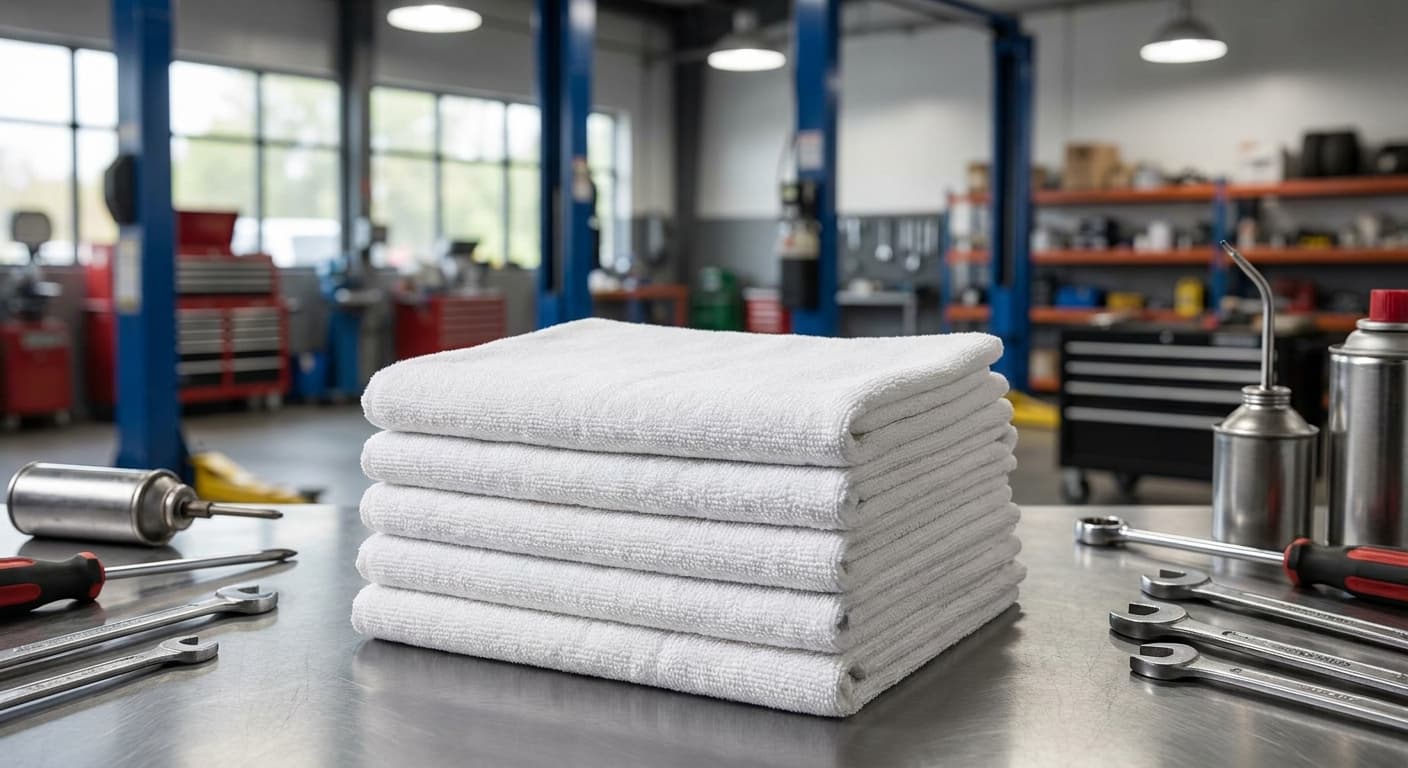
Professional automotive shops burn through hundreds of towels monthly, making fabric choice critical for both cleaning performance and operational costs. The wrong automotive shop rags can scratch paint, leave residue, or fall apart after just a few washes, forcing shops to constantly reorder and train staff on new products.
Commercial-grade microfiber and cotton terry towels in the 400-600 GSM range offer the best balance of durability, absorbency, and paint safety for professional automotive cleaning operations.
What type of towels work best for removing stubborn adhesive residue without damaging paint?
Microfiber towels with a 400-500 GSM weight provide the ideal balance for adhesive removal work. The synthetic fibers create enough friction to break down sticky residues without scratching clear coat, while the lower GSM prevents excessive thickness that can trap debris particles. Professional detailers consistently choose white or light-colored microfiber for adhesive work because they can see contamination buildup and know when to switch to a clean section.
Cotton terry towels work well for initial adhesive softening when paired with heat or solvents, but should never be used for final removal passes on painted surfaces. The looped construction of terry cloth can grab and hold particles that later scratch paint during subsequent cleaning motions. Smart shops keep separate towel inventories for different tasks, using terry for pre-cleaning and microfiber for finish work.
Commercial-grade towels built for 200+ wash cycles handle the repeated solvent exposure that adhesive removal demands. Retail towels typically fail after 50-100 washes when exposed to automotive chemicals, making them false economy for professional operations. Our wholesale clients in the automotive sector typically order wholesale shop rags in quantities of 100-500 units to maintain consistent quality and take advantage of volume pricing that starts at 5% off for 5+ units.
Which rags are most durable for heavy-duty automotive cleaning and detailing work?
Heavy cotton terry towels in the 600-700 GSM range dominate heavy-duty cleaning applications in professional shops. This weight class delivers maximum absorbency for engine bay cleaning, undercarriage work, and initial paint decontamination where durability matters more than finish quality. The tighter weave and higher cotton content in commercial-grade terry towels resist tearing when scrubbing textured surfaces like tire treads, plastic trim, and metal components.
Blended cotton-polyester towels offer another excellent option for shops prioritizing longevity over pure cotton performance. The polyester fibers add tensile strength and reduce shrinkage, while cotton provides the absorbency automotive work demands. These blended towels typically survive 250+ wash cycles in commercial laundry operations, compared to 150-200 cycles for pure cotton varieties of similar weight.
Professional shops operating multiple service bays often standardize on red shop rags for heavy-duty work because the color coding prevents cross-contamination with finish towels. Red towels hide grease and oil stains better than white alternatives, extending their useful appearance life between replacements. With 59 years of wholesale linen experience, we've observed that color-coded towel systems reduce training time for new employees and improve overall shop efficiency by 15-20% in busy automotive environments.
How do I prevent streaking when cleaning windows and glass with towels?
Waffle weave microfiber towels eliminate streaking issues that plague glass cleaning in automotive applications. The textured surface creates channels that direct moisture away from the glass instead of spreading it around like flat microfiber varieties. Professional window tinters and detailers prefer 300-400 GSM waffle weave towels because they provide enough absorbency without the bulk that causes dragging on large windshields and rear windows.
The two-towel technique works best for streak-free results in commercial settings. Use a damp microfiber towel for initial cleaning to remove dirt and films, then follow immediately with a dry waffle weave towel for final polishing. This method prevents the redeposition of contaminants that causes streaking when using a single towel for both wet and dry passes. Smart shops maintain separate glass towel inventories that never touch other surfaces, preventing oil contamination that ruins glass cleaning performance.
Temperature control plays a major role in glass cleaning success. Cold towels on hot glass create condensation that causes streaking, while towels stored in heated shops often carry too much residual warmth. Professional operations store glass cleaning towels at room temperature in clean, dedicated containers. Commercial laundry practices also matter significantly. Using fabric softener on glass towels leaves chemical residues that guarantee streaking, which is why professional wholesale bath towels and specialty glass cloths should always be laundered separately from general shop inventory.
What towel material is safest for cleaning sensitive automotive electronics and speakers?
Static-free microfiber towels specifically designed for electronics offer the safest approach for cleaning automotive infotainment systems, navigation screens, and premium audio components. These specialized towels undergo anti-static treatment during manufacturing that prevents the electrical discharge buildup that can damage sensitive circuitry. Look for towels labeled with static dissipative properties, typically indicated by resistivity ratings between 10^6 and 10^12 ohms per square inch.
Lint-free cotton towels provide an acceptable alternative for shops that prefer natural fibers, but require more careful selection and handling. The cotton must be combed or ring-spun to eliminate loose fibers that can clog speaker ports or scratch display surfaces. These towels work best when slightly damp with distilled water or approved electronics cleaners, never with alcohol-based solutions that can damage plastic housings or remove protective coatings from touch screens.
Professional automotive electronics specialists often maintain dedicated towel inventories that never contact other shop surfaces or cleaning chemicals. Cross-contamination with standard shop towels introduces oils, abrasives, and chemical residues that can permanently damage electronic interfaces. Smart shops establish clear protocols for electronics cleaning towels, including separate storage, dedicated washing cycles, and replacement schedules based on usage rather than appearance. Commercial-grade electronics towels typically maintain their anti-static properties through 150-200 wash cycles when laundered properly without fabric softeners or bleach.
Which cloths work best with automotive solvents like isopropyl alcohol?
Synthetic microfiber towels excel with isopropyl alcohol and other automotive solvents because the polyester and polyamide fibers resist chemical degradation that destroys natural fiber towels. Cotton towels break down rapidly when exposed to alcohol concentrations above 50%, losing absorbency and developing a harsh texture that can scratch delicate surfaces. Professional paint correction specialists rely exclusively on microfiber when working with alcohol-based prep solutions and final inspection sprays.
Solvent-resistant terry towels made from synthetic blends handle heavier chemical exposure in engine cleaning and parts degreasing applications. These specialized towels maintain their structure and cleaning performance through repeated exposure to brake cleaners, carburetor cleaners, and other aggressive automotive chemicals. The synthetic construction also allows for thorough cleaning between uses, which matters significantly when towels must be reused multiple times during a single service appointment.
Professional shops typically establish clear protocols for how to clean oily rags and chemical-exposed towels to prevent dangerous reactions and maintain cleaning performance. Towels used with alcohol and other solvents should be air-dried completely before washing, stored separately from other shop linens, and replaced more frequently than towels used for water-based cleaning. Understanding how to dispose of stain rags that have been heavily contaminated with automotive chemicals also becomes important for regulatory compliance and shop safety. Commercial operations ordering shop rags bulk often designate 20-30% of their inventory specifically for solvent work, ensuring adequate rotation while contaminated towels undergo proper cleaning and drying cycles.