
Beach Towels for Commercial Buyers: Size, Quality & Durability
Beach towels represent a significant operational expense for commercial facilities, yet many purchasing managers approach them with residential buying habits. The wrong specifications can cost your operation thousands in premature replacements, guest complaints, and inventory management headaches. Understanding commercial-grade requirements separates successful buyers from those trapped in constant replacement cycles.
The 30x60 inch size dominates commercial beach towel orders, with 100% cotton construction and proper weight specifications determining long-term value over initial cost savings.
What size beach towel provides adequate body coverage for spa and wellness facilities?
The 30x60 inch dimension has become the hospitality standard for beach towels, accounting for roughly 35 different SKUs in most wholesale catalogs. This size provides sufficient coverage for adults up to 6'2" while remaining manageable for housekeeping staff during folding and transport. Resort pools and spa facilities consistently order this dimension because it balances guest comfort with operational efficiency. The measurement translates to 2.5 feet by 5 feet, offering enough coverage for lounging while fitting standard laundry equipment capacity calculations.
Larger alternatives like 36x68 or 35x70 inches appear more generous but create storage challenges in crowded pool areas. The extra fabric also increases drying time by approximately 20-30% and raises laundry costs accordingly. Pool deck storage systems designed for standard dimensions struggle to accommodate oversized towels efficiently. Smaller 32x70 options save on material costs but generate guest complaints at upscale properties where body coverage expectations run higher. The narrow width particularly frustrates larger guests who cannot achieve comfortable wrap coverage.
Consider your specific use case when sizing decisions arise. Spa facilities with treatment tables benefit from the 30x60 standard because it covers most massage tables completely when folded lengthwise. Yoga studios incorporating wholesale beach towels for mat alternatives often prefer the 36x68 for full mat coverage, though storage becomes more complex. Pool deck operations prioritize the 30x60 for consistent stacking and storage efficiency. Housekeeping departments report 25% faster folding times with standard dimensions compared to mixed sizing, translating to meaningful labor savings across large properties.
Can beach towels effectively serve dual purposes like yoga mats in gyms and studios?
Beach towels can function as yoga mat alternatives, but success depends on weight specifications and surface texture rather than marketing claims. Towels weighing 3.5 pounds per dozen or higher provide enough density to prevent bunching during downward dog positions and other poses requiring grip stability. Lighter towels shift too easily and create safety hazards during dynamic movements. The weight translates to approximately 4.6 ounces per individual towel, providing sufficient mass to stay planted during practice sessions.
The key lies in cotton loop construction rather than velour finishes. Loop pile grabs skin moisture and creates natural traction, while velour surfaces become slippery when wet from perspiration. Studios purchasing dual-purpose towels report better student satisfaction with heavier, loop-pile constructions over lightweight alternatives marketed specifically as yoga towels. The terry loop structure also maintains grip properties through multiple wash cycles, unlike synthetic yoga mats that degrade quickly with frequent cleaning.
Gym facilities face different challenges than dedicated yoga studios. High-traffic commercial gyms need towels that withstand 200+ wash cycles while maintaining structural integrity and grip properties. Consumer-grade beach towels marketed for yoga typically fail after 50-100 cycles, creating constant replacement costs and student complaints about sliding towels. Commercial buyers should budget for proper weight specifications rather than accepting lighter alternatives that appear cost-effective initially but require frequent replacement. Studios serving 50+ daily classes need towels that perform consistently from first use through final retirement.
Bulk spa towels used for yoga purposes require additional consideration for absorbency rates. Students generate significant perspiration during heated classes, and towels must absorb moisture quickly to maintain traction. Cotton content above 85% ensures proper absorption, while synthetic blends often repel moisture and become slippery. The 30x60 dimension provides adequate mat coverage for most practitioners, though taller individuals may require the 36x68 size for complete coverage during floor poses.
How long should high-quality beach towels last with regular commercial use?
Commercial-grade beach towels should maintain acceptable appearance and function for 2-3 years under typical spa and hotel use patterns. This translates to 200-300 wash cycles before replacement becomes necessary due to thinning, color fading, or structural breakdown. Consumer-retail towels often fail at 50-100 cycles, making them false economy for commercial operations despite lower initial costs. The lifecycle calculation becomes critical for budget planning and inventory management across multiple seasons.
The most common mistake we observe involves facilities purchasing consumer-grade towels for commercial applications. These buyers replace inventory every 3-6 months instead of achieving the 2-3 year lifecycle possible with proper specifications. The math becomes obvious when calculated annually: commercial towels at $12 per unit lasting three years cost $4 per year, while $6 consumer towels replaced twice yearly cost $12 annually. Over a 100-towel inventory, this represents $800 versus $1,200 in annual costs, not including labor for more frequent ordering and inventory management.
Usage intensity affects longevity significantly. Pool decks with heavy chlorine exposure and frequent washing reduce towel life compared to spa environments with gentler use patterns. Hotels offering poolside service typically budget for 18-24 month replacement cycles, while day spas often achieve 36-month cycles with identical towel specifications. Beach resorts with saltwater exposure face additional challenges, as salt accelerates fiber breakdown and requires more aggressive washing to remove residue. Tracking actual replacement needs helps refine future purchasing decisions and budget accuracy.
Environmental factors play crucial roles in towel longevity. Outdoor pool facilities experience UV degradation that indoor operations avoid. Chlorine concentrations above standard pool levels accelerate cotton fiber breakdown. Hot tub areas with higher chemical concentrations require more frequent towel replacement than standard pool decks. Facilities using wholesale hotel towels for multiple purposes often discover that dedicated beach towels last longer than repurposed bath towels, despite identical construction specifications.
What cotton specifications and construction details indicate superior beach towel quality?
Weight specifications tell the primary quality story for beach towels, measured in pounds per dozen or ounces per individual towel rather than GSM calculations common in other textiles. Quality beach towels typically weigh 3.5-4.5 pounds per dozen, providing sufficient density for durability without becoming unwieldy for guests or staff. Towels below 3 pounds per dozen lack the cotton content necessary for commercial durability expectations. The weight directly correlates to fiber density and absorption capacity, two critical performance factors.
Ring-spun cotton construction outperforms open-end alternatives in both absorbency and longevity. Ring-spun fibers create stronger, more uniform yarns that resist breaking under mechanical stress from commercial washing equipment. The manufacturing process aligns fibers more consistently, resulting in smoother texture and better moisture absorption. Open-end construction costs less initially but creates weaker fiber bonds that fail under commercial washing stress. The Cotton Incorporated quality standards specify ring-spun construction for commercial applications expecting heavy use cycles.
Double-turned hems indicate proper construction quality, while single-fold or serged edges suggest cost-cutting that affects durability. Commercial towels need 1-inch minimum hem depth to withstand industrial washing stress and prevent unraveling during aggressive spin cycles. Inspect corner construction as well, as reinforced corners prevent tearing during handling and washing. Single-needle stitching provides stronger seams than chain-stitch alternatives, though it increases manufacturing costs.
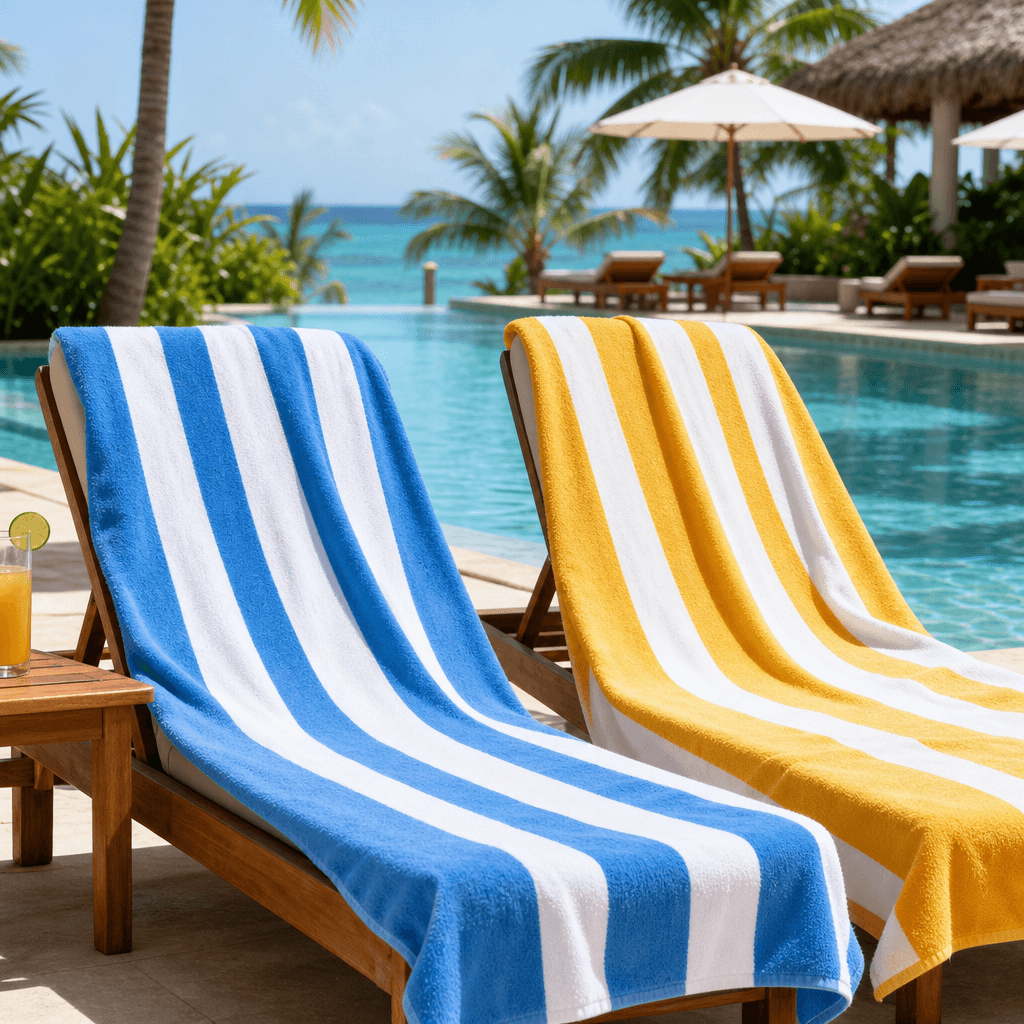
Color considerations matter significantly for commercial buyers. White remains the top choice for hotels and spas because it demonstrates cleanliness and accepts bleaching for sanitation purposes. The psychological impact of white towels communicates hygiene standards to guests, while practical benefits include universal matching with any décor and simplified inventory management. Black gains popularity in salons where it conceals hair dye stains, though bleaching becomes impossible with darker colors. Striped patterns work well for beach clubs wanting decorative appeal while maintaining commercial durability.
Who are reputable manufacturers for private label or white label beach towels?
Established towel manufacturers with commercial experience understand the specification requirements that separate successful products from quick failures. Look for companies serving the hospitality industry specifically, as they comprehend the durability and performance standards necessary for commercial success. Manufacturers working exclusively with retail or consumer markets often lack the technical expertise for proper commercial specifications. The difference appears in weight consistency, construction quality, and understanding of commercial washing requirements.
Private label minimums typically start at 100-500 units per design for established manufacturers, though some specialty producers accept smaller quantities at higher per-unit costs. Lead times for custom production range from 7-10 days for embroidery additions to 4-6 weeks for full custom weaving and dyeing. Rush orders cost premium pricing but remain available for established accounts with urgent needs. Custom colorway development requires 8-12 weeks for dye lot testing and approval, making planning essential for seasonal operations.
Quality manufacturers provide detailed specifications including cotton source, construction methods, and expected wash cycle performance. They understand commercial buyers need predictable performance data rather than marketing claims. Reputable suppliers offer samples for testing before large orders and stand behind performance claims with replacement guarantees. After nearly six decades serving over 10,000 commercial clients, we see successful partnerships develop when manufacturers demonstrate expertise in commercial specifications rather than simply offering low pricing.
Volume pricing becomes significant for commercial buyers placing 100-500+ unit orders. Established wholesale operations offer transparent tier pricing: 5% discounts at 5 units, 10% at 10 units, and 15% at 15+ units. This pricing structure reflects real manufacturing economies rather than arbitrary quantity breaks. Shipping typically runs 2-3 business days for standard inventory, while custom embroidered orders require 7-10 days. The best manufacturers maintain sufficient inventory depth to handle emergency orders without compromising quality standards.