
Benefits of Stocking Beach Towels for Your Business
In this guide:
- Why Stock Beach Towels for Your Business?
- What GSM Weight Is Best for Beach Towels?
- How to Care for Beach Towels to Extend Their Lifespan
- Beach Towels vs Bath Towels: What Is the Difference?
- How Many Beach Towels Should You Order?
- Frequently Asked Questions
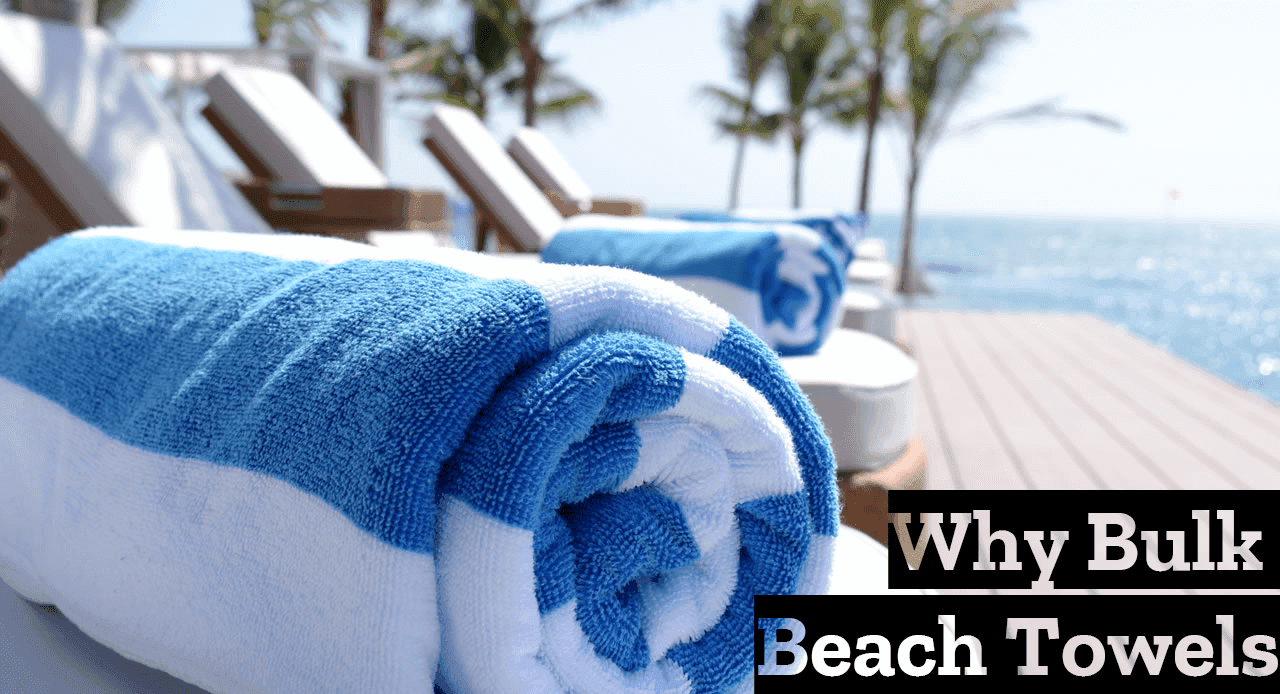
If you run a hotel, gym, spa, or restaurant that serves poolside or beachfront guests, stocking quality beach towels is a practical investment. Beach towels pull double duty: they dry guests after swimming and provide a clean lounging surface. For B2B buyers buying in bulk, the per unit cost drops significantly while guest satisfaction rises.
Stocking beach towels gives your business a high margin product and a daily essential for guests. Choose 400 to 500 GSM cotton or cotton polyester blend towels for durability and quick drying. With proper care they last 200 to 300 commercial washes.
Why Stock Beach Towels for Your Business?
Beach towels are not seasonal extras. Hotels with pools use them every day. Gyms with saunas or steam rooms rely on them. Spas place them on outdoor lounge chairs. Restaurants with patios can offer them on hot afternoons. The common thread is guest comfort and convenience. If a customer expects a towel after a swim and none is available, that impression sticks.
Beach towels also drive revenue. Many hotels charge a rental fee or require a deposit at the front desk. A towel that costs you $4.50 in bulk can be rented for $10 per use. That is a 122% markup per transaction. Guests appreciate not having to pack a wet towel home. They are less likely to bring one from their room, which keeps your bath towel inventory intact. The EPA recommends reducing disposable paper products in commercial settings. Reusable beach towels cut waste and lower your environmental footprint.
Our company has supplied commercial linens since 1967. We have seen wholesale beach towels perform best when businesses buy in consistent batches. A steady supply means no scrambling during peak summer months. For more details on selecting the right type for your facility, explore our wholesale bath towels and wholesale hotel towels collections.
What GSM Weight Is Best for Beach Towels?
GSM stands for grams per square meter. It measures towel density. For commercial beach towels the sweet spot is 400 to 500 GSM. Towels under 400 GSM feel thin and do not absorb enough water. Guests complain they stay wet after one use. Towels over 500 GSM are heavy. They take longer to dry in the laundry and hold moisture longer. In humid environments that leads to mildew and a shorter lifespan.
A 400 to 500 GSM towel made from ring spun cotton offers the best balance. It dries fast enough to turn around in a 45 minute wash and dry cycle at 150°F (65°C). That speed is critical for high turnover locations. A hotel with a busy pool area needs towels back on the shelf within two hours. A 450 GSM cotton polyester blend can handle 300 commercial washes before showing frayed edges. Compare that to a 700 GSM bath towel, which might only last 200 cycles because the dense loops trap detergent and wear faster.
Many buyers ask about microfiber. Microfiber towels can be as low as 200 GSM, but they do not feel plush. Guests prefer the texture of cotton. Stick with natural fibers for guest facing environments. If you need a lightweight towel for a budget gym, a 350 GSM cotton polyester blend works, but expect replacements sooner. Test a sample before ordering bulk. Towel Depot offers free swatches for any GSM you request.
How to Care for Beach Towels to Extend Their Lifespan
Proper care starts with water temperature. Wash beach towels at 140°F (60°C) to kill bacteria and remove sunscreen residue. Higher temperatures like 160°F (71°C) can break down cotton fibers over time. Use a mild detergent with a neutral pH. Avoid chlorine bleach. It yellows cotton and weakens polyester blends. If you need whitening, use oxygen bleach at 130°F (54°C) for 15 minutes.
Fabric softeners are the enemy of commercial towels. They coat the fibers and reduce absorbency. After 50 washes with softener a 450 GSM towel can drop to 400 GSM effective absorption. The build up also traps odors. Instead use white vinegar in the rinse cycle once a month to remove residues. Dry on medium heat. High heat shrinks cotton and damages elastic in blended towels. Tumble dry at 160°F (71°C) max. A typical commercial dryer cycle runs 30 to 45 minutes.
Rotate your stock. Do not always use the same towels from the top of the pile. Rotating extends the life of all towels evenly. Label each batch with a wash date. Replace towels after 200 to 300 cycles. A towel that starts to shed or show thin spots should be pulled immediately. The CDC recommends replacing linen at the first sign of wear to maintain hygiene standards. Check the CDC guidelines for environmental cleaning for more specifics on commercial laundry protocols.
Beach Towels vs Bath Towels: What Is the Difference?
Size is the first difference. A standard beach towel measures 30 by 60 inches. A bath towel is usually 27 by 52 inches. The extra width and length let guests lie completely on the towel without their feet touching sand or deck. GSM also differs. Beach towels range from 400 to 500 GSM. Bath towels range from 600 to 700 GSM. The lower weight makes beach towels dry faster. That matters when they are used outdoors and laundered multiple times per day.
Fabric content varies too. Many beach towels include a small percentage of polyester to speed drying. Bath towels are often 100 percent cotton for maximum absorbency. Polyester in a beach towel helps it resist mildew in humid pool areas. A 70 percent cotton 30 percent polyester blend is common. The Federal Trade Commission regulates fiber labeling. Check the FTC Textile Fiber Products Identification Act for accurate labeling requirements.
Construction matters. Beach towels often have a flat weave or a looped terry on one side only. Bath towels have terry loops on both sides. The single side terry on a beach towel reduces weight and drying time. For commercial use, this construction means less energy spent in the laundry. If you buy beach towels that look like bath towels but thinner, check the weave. A proper beach towel should have a tight edge hem to resist fraying in industrial washers.
How Many Beach Towels Should You Order?
The answer depends on your turnover. A hotel with 100 rooms and a pool needs at least three towels per room for guest use plus a reserve. That is 300 towels minimum. For a gym with 200 daily members, plan on 600 towels. This number allows for laundry cycle time. If your laundry runs three cycles per day, you need three sets of towels for each user. Count a set as one towel per guest or member.
Consider peak season. Beachfront hotels see demand double in July and August. Order 50 percent more towels for those months. A good rule is to have one towel in use, one in the laundry, and one in storage. That is a 3:1 ratio. For a spa with 10 treatment rooms and an outdoor pool, multiply the daily expected guests by three. If you serve 50 guests per day, order 150 towels. This covers loss through theft or damage. Industry reports show 5 to 10 percent annual shrinkage in commercial linen.
Start with a smaller order if you are unsure. Towel Depot allows you to order 100 units for a trial. Test the water absorption and drying time. Once you confirm the GSM and fabric work for your operation, scale up. Bulk orders of 500 units give you the best per unit price. Your sales representative can help you calculate the exact number based on your laundry capacity. Check the EPA commercial laundry water reuse guidelines for ways to reduce water costs when washing high volumes of towels.