
Beach Towel Materials: Cotton vs Microfiber vs Blends
In this guide:
- Cotton Beach Towels: Absorbency and Comfort
- Microfiber Beach Towels: Speed and Durability
- Cotton Polyester Blends: The Middle Ground
- GSM and Weight: What Buyers Need to Know
- Wash Care and Longevity for Commercial Use
- Frequently Asked Questions
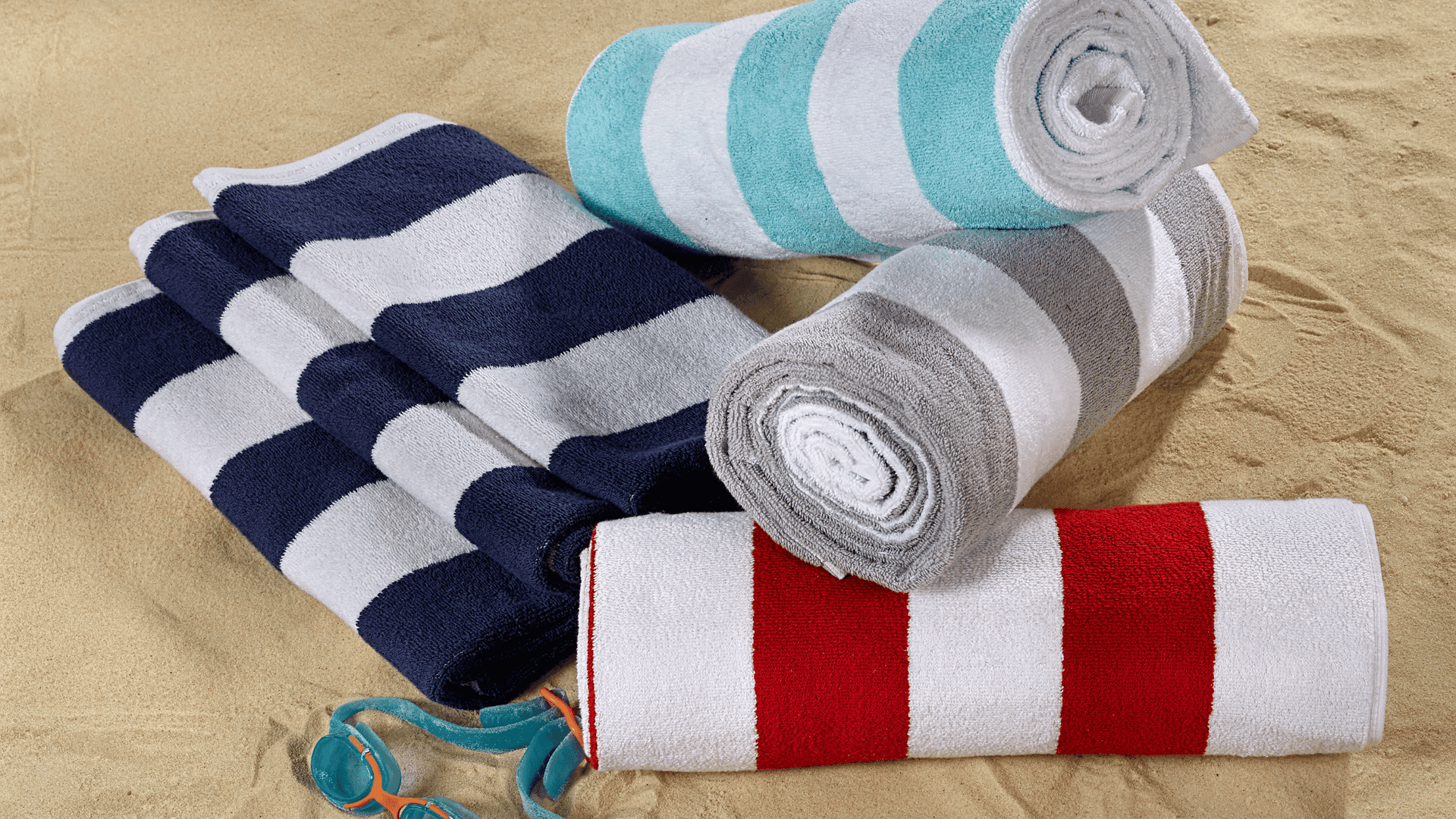
Choosing the right beach towel material for your business is not a simple decision. Every buyer wants towels that dry fast, feel good, and last through hundreds of commercial wash cycles. At Towel Depot, we have been supplying wholesale beach towels to hotels, spas, gyms, and restaurants since 1967. This guide compares cotton, microfiber, and blended fabrics so you can buy with confidence.
Cotton offers the best absorbency and guest comfort but requires longer drying times. Microfiber dries quickly and lasts longer but feels less natural. Blends give you a practical compromise with good absorbency and faster drying. Your choice depends on your turnover needs and budget.
Cotton Beach Towels: Absorbency and Comfort
Cotton has been the gold standard for beach towels for decades. The natural fibers hold water well and feel soft against the skin. For a hotel or resort where guest satisfaction is top priority, 100% cotton towels are the safest choice. A standard 450 GSM ring spun cotton towel can absorb about 1.5 times its own weight in water. That means a 500 gram towel can soak up 750 grams of moisture. Guests step out of the ocean or pool and dry off quickly without much rubbing.
The downside of cotton is drying time. In a commercial laundry, cotton towels take 45 to 60 minutes in a dryer at 135 F (57 C). Air drying at room temperature can take 2 hours or more. For high volume operations that turn over hundreds of towels a day, that extra drying time slows down the laundry cycle. It also increases energy costs. Cotton towels also lose their softness and absorbency after about 200 wash cycles if washed at high temperatures above 160 F (71 C). Keeping wash water at 140 F (60 C) extends their life to 250 or 300 cycles.
For buyers who prioritize guest experience over speed, cotton is the clear winner. Wholesale hotel towels made from combed cotton offer a smoother feel than carded cotton. Combed cotton removes short fibers and leaves longer, stronger threads. That reduces linting and fraying. If your business operates a high end spa or a luxury beach club, invest in 100% cotton towels with a GSM of 500 or higher. They will cost more per unit but deliver the plush feel your clients expect.
Microfiber Beach Towels: Speed and Durability
Microfiber towels entered the market about 15 years ago and quickly gained a following among gyms and outdoor event companies. The fabric is a blend of polyester and nylon, usually 80% polyester and 20% nylon. The fibers are split into fine filaments that create a large surface area. This structure wicks moisture away from the skin and spreads it across the towel for fast evaporation. A 300 GSM microfiber towel dries in about 30 minutes in a standard dryer at 110 F (43 C). Air drying takes 45 minutes to an hour.
Absorbency is lower than cotton, about 80% of the towel's weight. But for many commercial uses that is enough. A gym manager who hands out towels for a quick post workout shower does not need the same absorbency as a beach resort. Microfiber also resists stains and odors better than cotton. The synthetic fibers do not hold onto body oils and sunscreen as tightly. That means fewer wash cycles at lower temperatures. Microfiber can last 400 to 500 washes before losing its wicking ability. That is nearly double the lifespan of a typical cotton towel.
The trade off is feel. Microfiber does not have the softness of cotton. Some users describe it as silky but thin. For outdoor events and sports facilities, that is acceptable. For spa operators or fine dining restaurants where towels are part of the guest experience, microfiber feels cheap. Buyers should also note that microfiber can snag on rough surfaces like wood or concrete. The edges fray faster if the towel comes into contact with abrasive materials. If you choose microfiber, order towels with reinforced edges to extend their life.
Cotton Polyester Blends: The Middle Ground
Cotton polyester blends combine the best traits of both materials. A typical blend ratio is 70% cotton and 30% polyester. The cotton provides absorbency and softness. The polyester adds strength and speeds up drying. In our commercial tests, a 450 GSM blend towel absorbs about 90% of what a pure cotton towel holds. But it dries in about 35 to 40 minutes at 135 F (57 C). That is 25% faster than all cotton. For a hotel that runs six laundry loads per day, that time saving adds up.
Blends also handle harsh wash conditions better than pure cotton. The polyester fibers resist shrinkage and fading. After 200 wash cycles, a blend towel retains around 85% of its original absorbency. Cotton at the same point drops to 70%. For B2B buyers ordering wholesale bath towels for high use environments, blends offer better value per wash. The cost per towel is typically 15% to 20% lower than premium cotton. Over a 500 unit order, that can save several hundred dollars.
The only real downside is a slightly less plush surface. The polyester fibers do not fluff up as much as cotton. In a direct comparison, guests can feel the difference. However, most hotels and gyms that use blended towels receive no complaints. The towels look white and clean after repeated washing. They also dry faster, which reduces the risk of mildew in humid storage areas. For buyers who need a workhorse towel at a reasonable price, blends are the smart choice.
GSM and Weight: What Buyers Need to Know
GSM stands for grams per square meter. It tells you the density of the towel fabric. Higher GSM means more material, more absorbency, and more weight. Lower GSM means lighter, faster drying towels. For beach towels used by hotels and resorts, the sweet spot is 400 to 500 GSM. A 450 GSM towel weighs about 500 grams for a standard 30 by 60 inch size. That is heavy enough to feel substantial but light enough to dry in a reasonable time. For spas, 500 to 600 GSM provides a luxurious feel but adds drying time.
Gyms and outdoor event companies often prefer 300 to 400 GSM towels. They are lighter, easier to carry, and dry in half the time of a 500 GSM towel. A 300 GSM microfiber towel weighs about 350 grams. That reduces shipping costs for bulk orders of 100 to 500 units. It also means less weight in laundry carts and less strain on washing machines. However, the trade off is lower absorbency. A 300 GSM towel can only hold about 240 grams of water. For light use after a swim or a workout, that is sufficient. For heavy use at a beach front resort, it will leave guests damp.
When comparing GSM numbers across materials, remember that cotton and microfiber behave differently. A 400 GSM cotton towel feels much denser than a 400 GSM microfiber towel. That is because cotton fibers are thicker and trap more air. Microfiber is compact and smooth. Always ask for a sample before placing a large order. Feel the towel in your hand. Test it with water. GSM is a starting point, but the real test is performance in your specific environment.
Wash Care and Longevity for Commercial Use
Proper washing extends the life of any beach towel. For cotton and cotton blends, the ideal wash temperature is 140 F (60 C). This kills bacteria and removes salt, sand, and sunscreen oils without damaging the fibers. Higher temperatures above 160 F (71 C) accelerate wear. Fibers break down faster, and colors fade. After 100 washes at 180 F (82 C), a cotton towel loses about 30% of its tensile strength. At 140 F (60 C), the loss is only 10% after the same number of cycles. Always follow the care label, but 140 F is a safe standard for commercial laundry.
Microfiber requires cooler water. Wash at 105 F to 120 F (40 C to 49 C). Hot water can melt the synthetic fibers or cause them to clump. This reduces the wicking performance. Use a mild detergent without bleach or fabric softener. Softener coats the microfiber filaments and cuts absorbency by up to 30%. For drying, use low heat at 110 F (43 C). High heat above 130 F (54 C) can permanently damage the fabric. Microfiber towels last 400 to 500 cycles if handled correctly. That is a significant advantage for high volume operations.
No matter the material, inspect towels regularly for frayed edges and thinning spots. Replace towels after 200 to 300 cycles for cotton, 250 to 350 for blends, and 400 to 500 for microfiber. The OSHA guidelines for workplace hygiene do not specify towel replacement intervals, but good practice is to retire towels once they lose absorbency or show visible wear. For seasonal beach clubs, a towel that lasts 3 to 4 seasons on a 500 unit order is a solid investment. Track your usage. If towels are fading or fraying after 150 cycles, check your wash temperature and detergent. Small adjustments can double the lifespan of your towels.