
Automotive Shop Rags: Complete B2B Buying Guide for Pros
Automotive professionals know that the right towels can make or break a job. Whether you're running a detail shop, collision center, or general repair facility, your choice in automotive shop rags directly affects work quality, efficiency, and customer satisfaction. Poor towel selection leads to scratched paint, streaky glass, and contaminated work areas that cost time and money.
Professional automotive shops need specialized towels for different tasks: microfiber for paint and glass, cotton terry for adhesive removal, and separate color-coded rags to prevent cross-contamination between engine work and finish detailing.
What type of towels are best for removing stubborn adhesives and residues from vehicles?
Heavy-duty cotton terry towels in the 500-600 GSM range work best for adhesive and residue removal. These towels provide the necessary texture and absorbency to break down sticky substances without damaging vehicle surfaces. The higher GSM density gives you more fiber contact with the adhesive, while cotton's natural absorbency pulls solvents and residues away from the surface.
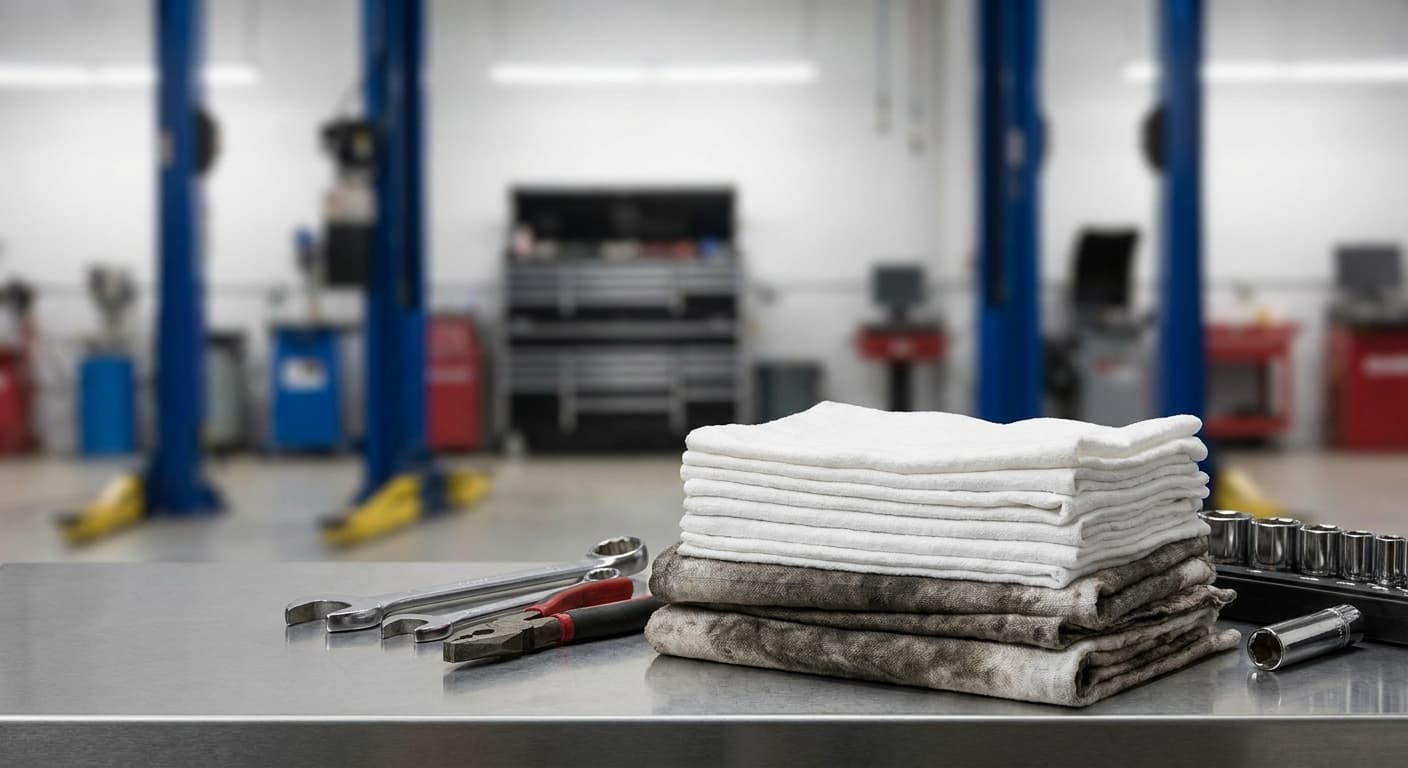
For particularly stubborn adhesives, shops often pair these towels with heat guns or adhesive removers. The cotton fibers hold cleaning chemicals longer than synthetic alternatives, giving products more time to work. Many automotive professionals prefer white cotton terry for this work because it shows contamination levels clearly. You can see when the towel is saturated and needs replacement, preventing you from spreading residue around the vehicle.
Commercial-grade cotton terry towels built for 200+ wash cycles handle repeated exposure to adhesive removers and high-temperature washing. Retail towels typically fail after 50-100 cycles when exposed to these harsh chemicals. At Towel Depot, we've supplied automotive shops since 1967 and consistently see professionals order 15-25 unit quantities of 500 GSM cotton terry specifically for adhesive work. The volume discounts make sense: 5% off at 5 units, 10% off at 10 units, and 15% off orders of 15 or more units.
What towels should be used for automotive paint correction and water spot removal?
Paint correction requires split-weave microfiber towels with a GSM between 350-400. These towels remove water spots and minor scratches without creating new defects. The split-weave construction creates thousands of micro-hooks that lift contaminants away from the paint surface instead of dragging them across. Standard terry cloth or cotton towels will scratch clear coat during correction work.
Color matters significantly in paint correction. Many detail shops use specific colors for different stages: light gray or white microfiber for initial cleaning, darker colors for polish removal, and fresh towels for final wipe-down. This prevents cross-contamination between products and stages. Black microfiber towels hide polish stains and can be reused longer between washings, which explains their growing popularity in detail shops.
Professional detailers typically order wholesale shop rags in quantities of 50-100 units because paint correction work consumes towels quickly. Each vehicle might require 8-12 clean microfiber towels depending on the correction level needed. Quality microfiber maintains its effectiveness through 200+ wash cycles when properly cared for. Budget alternatives lose their split-weave structure after 50-75 washes, requiring frequent replacement that increases operating costs.
How can automotive shops prevent towel contamination during engine repairs?
Preventing towel contamination starts with a strict color-coding system. Red towels for engine work, blue for general cleaning, white for final detail work. This separation prevents oil, grease, and engine chemicals from contaminating towels used on vehicle exteriors or interiors. Many shops dedicate specific washing machines or washing schedules for engine bay towels to prevent cross-contamination in the laundry process.
Cotton terry towels in the 400-500 GSM range handle engine work best. They absorb oils and fluids effectively while maintaining durability through repeated washings with heavy-duty detergents. Synthetic towels often retain petroleum odors and stains even after washing, making them unsuitable for other shop tasks. Cotton naturally releases oils during washing, allowing proper cleaning and reuse.
Storage plays a critical role in contamination prevention. Clean engine towels should be stored separately from finish towels, preferably in labeled containers or dedicated storage areas. Many shops designate specific shelving or bins for different towel types. When disposing of heavily soiled shop rags, proper disposal prevents environmental contamination. Towels saturated with oils or chemicals require special handling according to local regulations.
What type of towels work best for streak-free automotive glass cleaning?
Waffle-weave microfiber towels in the 300-350 GSM range produce the best streak-free glass results. The waffle pattern increases surface area contact while creating channels that guide moisture away from the glass. This construction prevents the circular smearing patterns common with flat-weave towels or paper alternatives.
Glass cleaning requires towels completely free of fabric softeners or detergent residues. These products leave invisible films that create streaking and reduce visibility. Professional wholesale bath towels and automotive towels should be washed separately from regular shop towels using specialized detergents formulated for microfiber. Many shops maintain dedicated glass-cleaning towels that never touch other surfaces or cleaning products.
Temperature affects glass cleaning performance significantly. Slightly damp microfiber works better than completely dry or soaking wet towels. Many professionals keep glass towels at room temperature and lightly mist them before use. The moisture helps lift dirt and film without over-saturating the surface. Quality microfiber towels maintain their effectiveness through hundreds of wash cycles when properly maintained, making bulk purchasing economical for busy shops.
What towels are safest for cleaning delicate automotive interior surfaces?
Ultra-soft microfiber in the 250-300 GSM range safely cleans leather, vinyl, and plastic interior surfaces. Lower GSM creates gentler contact pressure while still providing effective cleaning. Higher GSM towels can create texture marks on soft leather or leave lint on dashboard surfaces. The key is matching towel density to surface sensitivity.
Interior cleaning towels should never be used for other shop tasks. Cross-contamination from engine oils, polishing compounds, or glass cleaners can damage leather and vinyl surfaces. Many detail shops maintain separate inventory specifically for interior work, often in distinctive colors to prevent mixing. Light colors like white or cream show contamination immediately, helping maintain cleaning standards.
Professional automotive shops typically order interior towels in smaller quantities, 10-20 units, because interior cleaning generates less towel consumption than exterior work. However, these towels require more careful handling and washing. They should be laundered separately using mild detergents and never exposed to bleach or fabric softeners. Quality microfiber maintains its softness through proper care, protecting expensive interior surfaces while reducing replacement costs.