
Automotive Shop Rags: Bulk Buying Guide for Commercial Buyers
Shop rags look like the cheapest line on a purchasing sheet, which is exactly why they get bought badly. The wrong rag smears instead of wipes, sheds lint onto polished surfaces, and ends up in the trash after one wash. We have supplied commercial buyers since 1967, and these are the five questions we hear most from people who buy rags by the pallet.
Buy reclaimed 100% cotton surgical huck rags by weight and size, check the fabric and edges before you commit to a pallet, run cost-per-use math instead of comparing sticker prices, and launder them correctly so they last well past 50 washes.
What GSM range should purchasing managers look for when buying automotive shop rags for heavy-duty cleaning in a salon, spa, or hotel back-of-house?
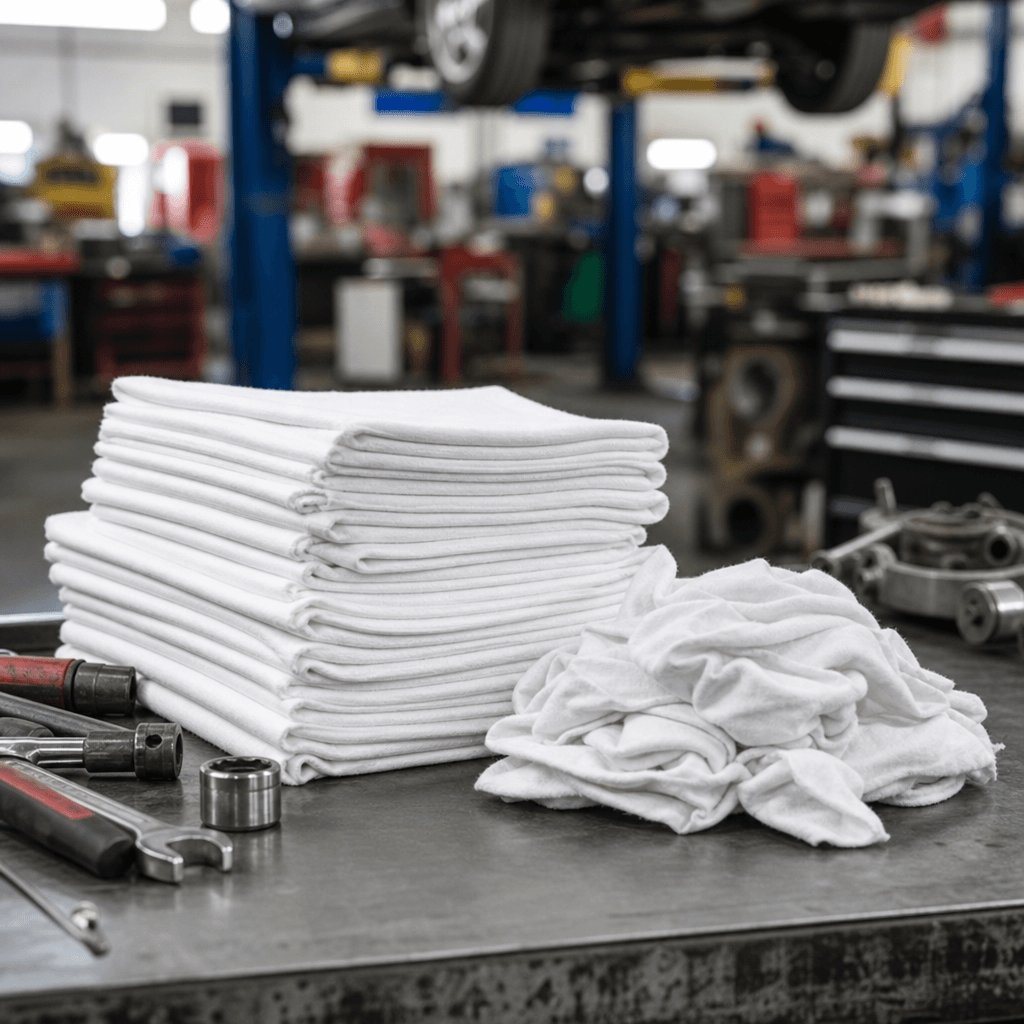
Here is the first thing to unlearn: shop rags are not sold by GSM. Terry towels and bath linens are graded that way. Rags move by weight and size, so the numbers you need on your purchase order are pounds and dimensions. Our reclaimed 100% cotton surgical huck rags ship in 10 lb bags, 50 lb bags, and 1000 lb bales. Individual huck towels come as 14x14 or 15x26 in blue or white, and we also stock 16x16 and 24x36 utility rags for bigger jobs.
For heavy-duty back-of-house work, the question to ask is what the rag will absorb and how much surface it needs to cover. A 14x14 huck handles drips, fixture wipes, and tool cleanup. The 15x26 gives you room to fold into quarters and still have a clean face, which matters when a housekeeper is working through a full floor of bathroom hardware. The 24x36 utility size earns its place under equipment, on service carts, and for spills that would soak through a smaller rag in seconds.
Buyers who come from retail sometimes assume heavier means better. It does not. Surgical huck has a open, ribbed weave that pulls liquid in fast and releases soil in the wash. A thick terry cloth holds water but pushes grease around and takes far longer to dry. If your team is wiping up oil, product residue, or adhesive, the huck weave and the absence of synthetic fibers are what you are paying for.
How do you tell a quality bulk-order shop rag from a low-grade one before you commit to a pallet, and which fabric and stitching details signal real durability?
Ask for a sample bag and do three tests before you sign anything. First, fiber content. Reclaimed surgical cotton should be 100% cotton, with no polyester blend. Synthetic fibers are the ones that smear grease and repel water, so a blend defeats the purpose of buying a rag at all. Second, rub a dry rag across a dark glossy surface, like a black countertop or a dark phone screen. Lint-free means nothing visible comes off. Third, drop a few drops of water on it and count. Quality huck pulls the water in almost at once. A rag that beads or sits on top is either blended or coated with finishing chemicals.
Next, look at the edges and the weave. Hemmed or cleanly finished edges resist unraveling through repeated washing. Loose threads, ragged cut edges, and thin patches you can see light through will fail early. Hold a rag up to a window. An even weave with consistent density is what you want, and big gaps tell you the fabric was already worn out before it reached you.
Also check consistency across the bag, not just the top layer. Reputable suppliers sort reclaimed stock, and every rag in a 50 lb bag should look like it belongs there. When you are buying bulk shop rags in 1000 lb bale quantities, a mixed bale with stained, torn, or non-cotton pieces costs you real money in sorting labor. We are family-owned and have sold linen wholesale for 59 years, and we see this problem constantly with marketplace sellers and dropshippers who have never touched the product they ship.
How does bulk pricing for automotive shop rags work, and what cost-per-use math should hotels, gyms, and Airbnb hosts run before choosing between new rags and reclaimed ones?
Bulk pricing for automotive shop rags scales on pack size. A 10 lb bag suits a salon or a single property. A 50 lb bag fits a hotel or gym chain with several locations. The 1000 lb bale is for large operations, laundry contractors, and distributors. On our standard orders, volume discounts run 5% at 5 units, 10% at 10 units, and 15% at 15 or more units, and the tiers are published, not negotiated behind a curtain. Our 10,000+ B2B clients place orders in the 100 to 500 unit range, and our minimums and pricing were built around that kind of volume.
Now the math. Use this formula: purchase price divided by number of uses, plus laundering cost per use. For illustration only, suppose a rag costs $1.00 and survives 50 washes. That is two cents per use before laundering. A cheaper rag at $0.60 that falls apart after 10 washes costs six cents per use. The cheap rag loses by a factor of three. Consumer-grade textiles typically fail at 50 to 100 wash cycles, while commercial-grade goods are built for 200 or more. Hotels and gyms that buy retail-grade towels for commercial use often end up replacing them every 3 to 6 months, compared with 2 to 3 years for commercial grade.
New versus reclaimed comes down to the job. Reclaimed surgical cotton has already been washed hundreds of times, which is why it is soft, highly absorbent, and lint-free from day one. New cotton rags shed more in early washes. For gyms and hosts managing vacation rental linens alongside cleaning supplies, reclaimed huck is usually the better value for wipe-down duty, and new towels belong on guest-facing surfaces. One more cost note: our standard orders ship in 2 to 3 business days, so you can order closer to need and carry less stock.
A word on color. Buyers sometimes search for red shop rags in bulk because that is what the old garage supply closet used. Red is a dye choice, not a performance one. For hospitality and personal care, white huck wins because you can bleach it and see at a glance whether it is clean, and blue is useful when you want to separate rag types by department.
What is the best way to launder and rotate shop rags so they hold up across 50 or more wash cycles without linting, shedding, or retaining odors in a commercial setting?
Start with safety, because people searching for how to clean oily rags are often skipping the hazard. Rags soaked with oils, solvents, or some salon products can heat up and ignite on their own, especially when piled warm in a bin or dryer. OSHA's flammable liquids standard (29 CFR 1910.106) requires oily waste to go in approved, covered metal containers. Do not let oily rags sit in a heap, and do not mix them into a general hotel load.
For the wash itself, sort first. Keep oily or greasy rags in their own loads, away from white hospitality linens. Use a hot wash with a commercial alkaline detergent, a full rinse cycle, and no fabric softener. Softener coats the cotton fibers and kills absorbency, and it is the most common reason we hear that a rag has stopped working. For odor, add an oxygen bleach or a sour step, and dry completely. A rag that goes into storage damp is where mildew starts.
Rotation keeps the whole stock alive. Run a par system of at least two sets per work area, so one set is always in the wash while the other is in use. Mark bags or bins by date, and retire rags by wash count or condition rather than waiting for failure. Because reclaimed cotton is already broken in, linting should stay minimal. If you are seeing heavy shedding after 20 or 30 washes, check for overloaded machines, high-heat drying, or a detergent that is too harsh before blaming the rag. Properly handled commercial-grade cotton goes well beyond 50 cycles.
Which shop rag materials and sizes work best for specific jobs like equipment wipe-downs in gyms, polishing fixtures in hotels, and cleaning styling stations in salons?
For gym equipment, the 15x26 white or blue huck is the workhorse. Fold it into quarters for a clean face on each pass across benches, handles, and cardio consoles. Disinfectant sprays dilute quickly into thick fabrics, but huck spreads and lifts them evenly. Many gyms assign blue to equipment and white to locker rooms so staff do not cross-contaminate. For heavy floor-level jobs like mat edges and machine bases, step up to the 24x36 utility rag.
Hotels get the most from the lint-free quality. Polishing chrome faucets, glass shower doors, mirrors, and stainless trim is where lint and streaks show up, and where synthetic blends fail. The 14x14 white huck is a good housekeeping cart size, since a housekeeper can carry a stack in a pocket or apron and drop used ones straight into the laundry bag. Our white towels are the top choice for hotels and salons because you can bleach them and a stain is visible rather than hidden.
Salons need rags that handle color, product, and the occasional adhesive. The 16x16 utility rag is a practical size for styling station wipe-downs, shampoo bowl rims, and tool trays. White still leads, but black is growing in salons because it hides hair dye, though it should be reserved for color work so staff are not wiping a client's counter with a rag that cannot show contamination. Spas can follow the same logic, with white for treatment rooms and blue for equipment. Whatever your setting, buy by job type, keep the sizes consistent, and your team will stop reaching for guest towels when a rag runs out.