
Aprons & Towels: Keys to Running a Great Restaurant
In this guide:
- What apron and towel materials best fit my business?
- How should I wash and care for bulk linens to maximize lifespan?
- What safety and health regulations apply to linens in food service?
- How do I balance upfront cost with long term durability?
- What eco friendly linen options are available for my business?
- Frequently asked questions
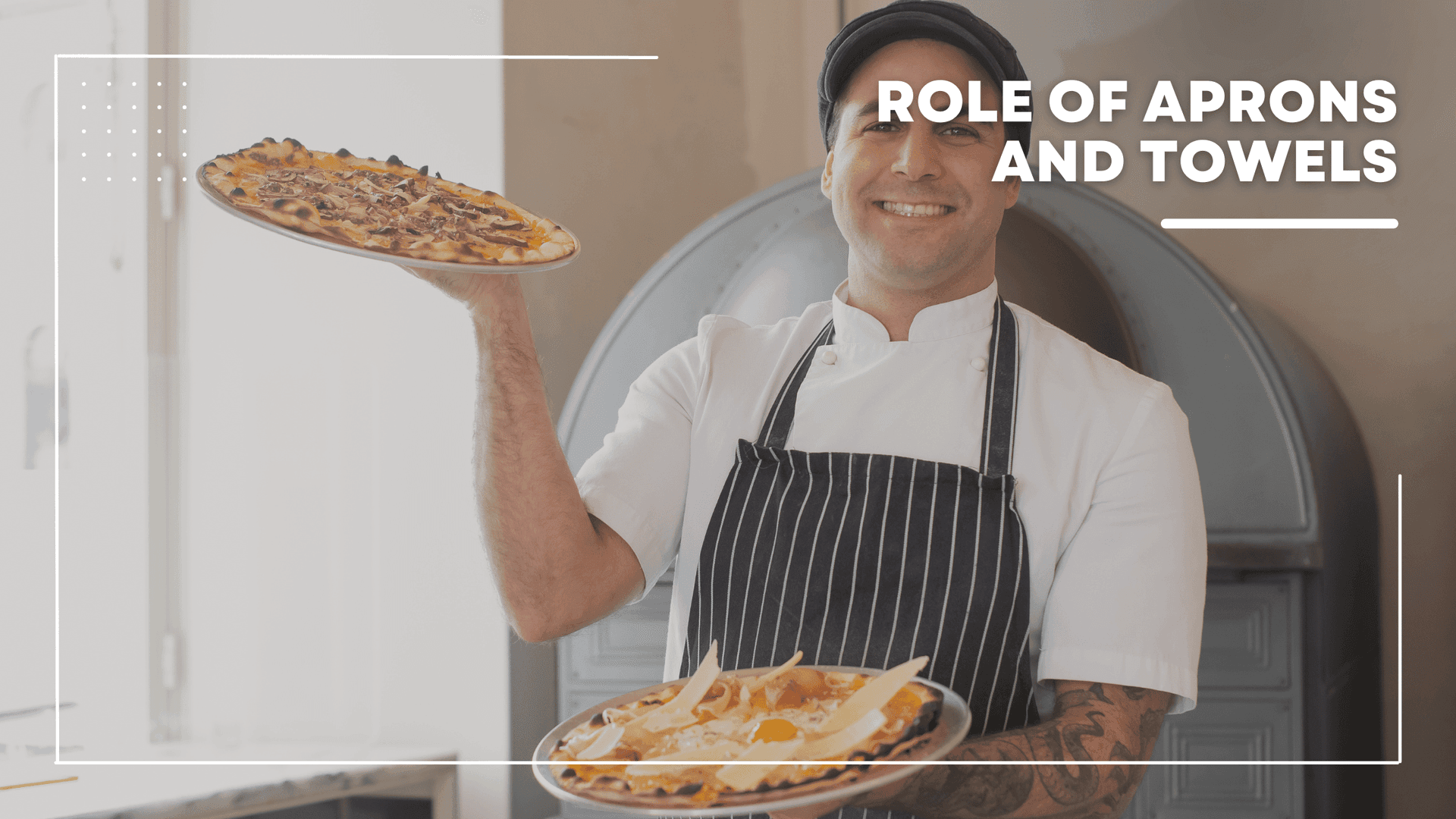
Aprons and towels do more than keep a restaurant looking sharp. They protect food from contamination and staff from burns. For buyers ordering 100 to 500 units, choosing the right linens means fewer replacements, safer kitchens, and better customer perception. This guide covers material selection, care, compliance, costs, and eco friendly options so you can order with confidence.
Buy high GSM cotton polyester blend towels and aprons designed for commercial use. Wash them at 160°F (71°C) and replace after 60 to 80 cycles. Bulk ordering 500 units cuts per unit cost by up to 15 percent.
What apron and towel materials best fit my business?
Cotton remains the standard for restaurant linens. It absorbs water fast and feels soft against the skin. But 100 percent cotton shrinks in hot water and wears down faster in commercial washers. A 65 percent cotton 35 percent polyester blend resists shrinkage and keeps its shape after hundreds of washes. For kitchen towels, look for a GSM of 400 to 600. Heavier towels soak up spills quicker. Lighter towels around 300 GSM work better for polishing glassware because they dry without lint.
Aprons need more structure. Waist aprons for servers run 200 to 300 GSM. Full bib aprons for cooks should be 500 to 700 GSM. The higher weight protects against splashes and carries the weight of tools. Polyester blends also hold color better. You will not see fading after 30 washes like you would with pure cotton. Microfiber towels are another option for quick drying tasks. They pick up grease and oil without scratching surfaces. But they do not handle high heat well. Keep microfiber away from hot pans and ovens.
Consider the work environment. A grill station needs flame resistant fabrics. Cotton is naturally flame resistant but must be treated for commercial use. A cotton nylon blend gives extra abrasion resistance for dishwashers who scrub constantly. Always order a sample before buying 500 units. Test the fabric against your specific kitchen conditions. Wash it ten times in your machine. Check for pilling, fraying, and color loss. That investment of time saves thousands in mistaken orders.
How should I wash and care for bulk linens to maximize lifespan?
Commercial washing at 160 degrees Fahrenheit (71 degrees Celsius) kills bacteria and removes heavy soils. Most health codes require a wash cycle of at least 150°F (66°C) for linens used in food prep. Use a detergent with a neutral pH, around 7.0. Alkaline detergents damage cotton fibers over time. Chlorine bleach should be used sparingly. Limit it to every fifth wash for whites only. Chlorine weakens polyester blends and causes yellowing. Oxygen bleach works well for colors and does not degrade fabric.
Never overload a commercial washer. A 60 pound washer holds no more than 60 face towels or 30 heavy aprons. Overloading prevents proper agitation. Soils remain embedded and detergent does not rinse out. This shortens fabric life by 30 to 40 percent. After washing, tumble dry on medium heat, around 150°F (66°C). High heat causes fibers to break down faster. Remove linens while they are still slightly damp to prevent set in wrinkles. Fold immediately to save ironing time.
Track wash cycles with a simple log. Mark the date each load enters service. After 60 cycles, inspect every towel and apron. Look for frayed edges, holes, or loss of absorbency. When a towel no longer absorbs a cup of water within two seconds, it is done. Replace in batches rather than one at a time. This keeps your inventory consistent. Check with your wholesale bath towels supplier for bulk pricing on replacement orders. Ordering 200 towels at once often saves 10 percent versus ordering 50 every quarter.
What safety and health regulations apply to linens in food service?
The Occupational Safety and Health Administration requires employers to provide a slip free work environment. Wet towels on the floor create trip hazards. Use a color coded system for different tasks. Red towels for raw meat areas. Blue for fish. Green for produce. White for general cleaning. This prevents cross contamination and meets Hazard Analysis Critical Control Point standards. The Centers for Disease Control and Prevention recommends separate linens for each shift to limit bacterial buildup. Never use the same towel for wiping counters and drying hands.
Your local health department inspects linen storage. Store clean linens in a closed cabinet separated from soiled linens. Temperature must remain below 70 degrees Fahrenheit (21 degrees Celsius) in the storage area. Soiled linens should be placed in a covered hamper and removed from the kitchen at the end of each shift. If linens sit wet for more than two hours, bacteria doubles every 20 minutes. This violates most state health codes. The Ohio Department of Health, for example, mandates that all food contact surfaces be wiped with a clean towel changed every four hours.
Aprons worn by cooks must be changed when soiled. An apron used for raw meat cannot touch ready to eat food. Provide at least three aprons per cook per shift. For a dinner service with 10 cooks, that means 30 aprons per shift. Multiply by two shifts and you need 60 aprons daily. Order 500 aprons to cover a weekly rotation with extras for laundry cycles. Check OSHA guidelines on slip resistance and employee training at osha.gov. Your linen program is part of your safety plan.
How do I balance upfront cost with long term durability?
A cheap 300 GSM towel costs $1.50 but lasts only 40 washes. A quality 500 GSM towel costs $3.00 and lasts 80 washes. The cost per use is the same at 3.75 cents. But the heavier towel performs better every day. It absorbs twice as much water and does not shred in the washer. For aprons, the difference is even bigger. A thin apron at $4.00 wears out in 30 washes. A reinforced bib apron at $8.00 goes 70 washes. The per use cost favors the heavier apron every time.
Bulk orders of 100 to 500 units bring down per unit price. A 100 towel order might cost $3.00 each. Ordering 500 drops the price to $2.55 each. That is a 15 percent savings. But do not overorder. Storing linens for more than two years degrades the fabric through humidity and dust. Calculate your daily usage. If you use 50 towels per day and wash them on a five day cycle, you need 250 towels in rotation. Order 300 to cover losses and laundry backups. The same math applies to aprons.
Look at total cost of ownership. Include water, detergent, energy, and labor. A heavier towel costs more to wash per load. But you wash less frequently because it stays clean longer. The energy difference is minimal. The real savings come from reduced replacement frequency. Set a replacement schedule. Replace all bar towels every six months. Replace all kitchen towels every three months. This smooths out spending and keeps quality consistent. For wholesale beach towels used in poolside or patio settings, choose a looped terry weave that stands up to sun and chlorine.
What eco friendly linen options are available for my business?
Organic cotton towels are grown without synthetic pesticides. They cost 10 to 15 percent more upfront. But they last just as long as conventional cotton if the GSM is the same. Look for Global Organic Textile Standard certification. This guarantees the fiber is organic from field to finished product. Another option is recycled polyester made from plastic bottles. These towels dry faster and resist stains. A 70 percent recycled polyester 30 percent cotton blend weighs 450 GSM and works well for front of house polishing tasks.
Bamboo towels are marketed as eco friendly but require processing chemicals to turn bamboo into fiber. The manufacturing process uses sodium hydroxide. It is not as green as marketing suggests. A better choice is linen made from flax. Flax grows with less water than cotton and the fibers are naturally antimicrobial. Linen towels in 400 GSM cost about the same as high end cotton. They last longer because linen is stronger wet. However they wrinkle easily. For aprons, linen gives a premium look but needs ironing.
Reduce environmental impact through better washing practices. Wash at 140 degrees Fahrenheit (60 degrees Celsius) instead of 160°F (71°C) when possible. This cuts energy use by 20 percent. Use high efficiency washers that reclaim water. The Environmental Protection Agency recommends water reuse systems for commercial laundries. Install lint filters to prevent microfibers from entering waterways. Find guidelines for sustainable laundry at epa.gov/saferchoice. For wholesale hotel towels in bulk, ask about carbon neutral shipping options.